New Promotional Products for Modern Brand Growth
New promotional products are becoming a more strategic part of how businesses build visibility, engage employees, support events, strengthen customer relationships, and keep their brands memorable. Instead of relying on generic giveaways, companies are increasingly choosing useful, well-designed merchandise that people actually want to keep.
For organizations evaluating new branded merchandise, the opportunity goes beyond putting a logo on an item. The right products can support onboarding, corporate gifting, trade shows, recognition programs, sales campaigns, conferences, recruiting, and long-term merchandise programs. Digitized Logos provides branded apparel and promotional product solutions for organizations seeking coordinated sourcing, customization, and fulfillment. Explore available options at https://products.digitizedlogos.com/.
Quick Answer: What Are the Best New Promotional Products?
Short Answer: The best new promotional products combine everyday usefulness, strong brand visibility, appropriate quality, and relevance to the recipient. Popular opportunities include premium drinkware, tech accessories, custom apparel, bags, travel products, desk accessories, event merchandise, employee kits, and practical lifestyle products.
For business buyers, the strongest choice is not necessarily the newest item on the market. It is the product that fits the audience, campaign objective, budget, distribution method, and expected lifespan while presenting the brand consistently.
What Are New Promotional Products?
Definition: New promotional products are contemporary branded items selected and customized for marketing, employee engagement, corporate gifting, events, customer retention, recruiting, and other business initiatives. They can include newly introduced product styles as well as updated versions of established categories featuring better materials, decoration options, functionality, or design.
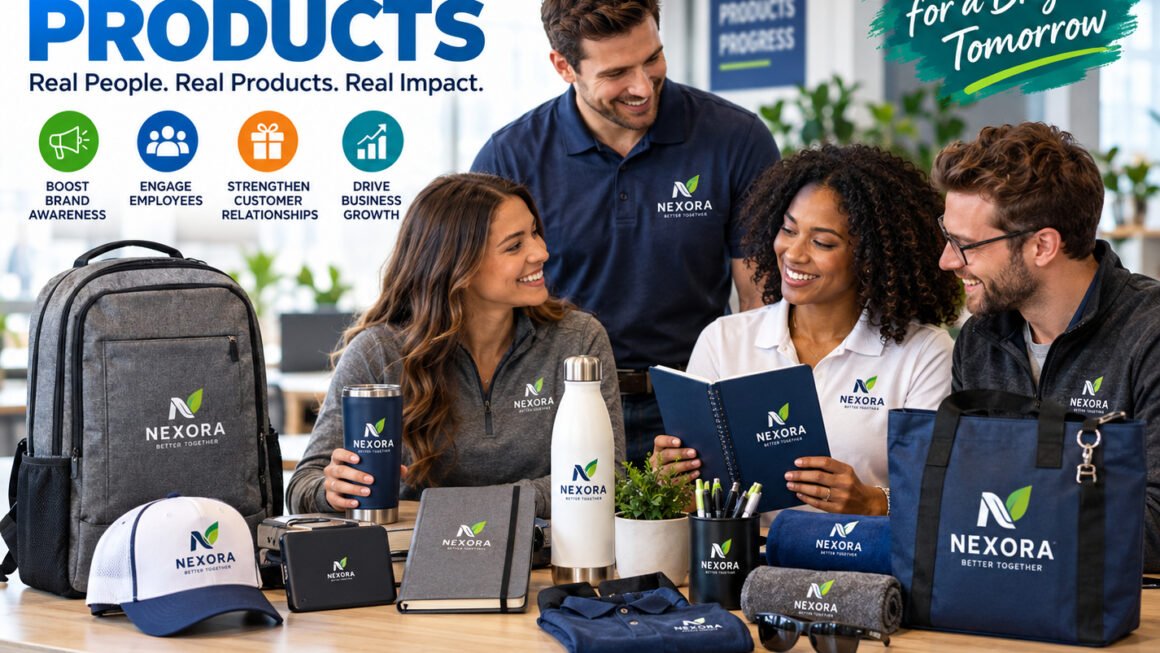
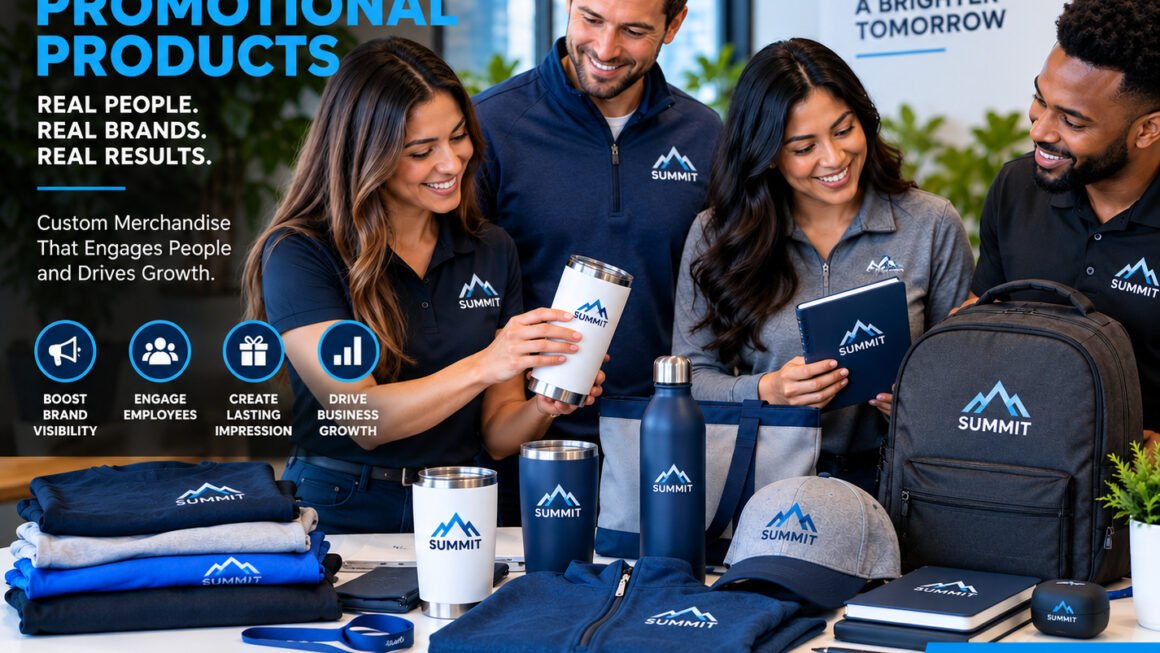
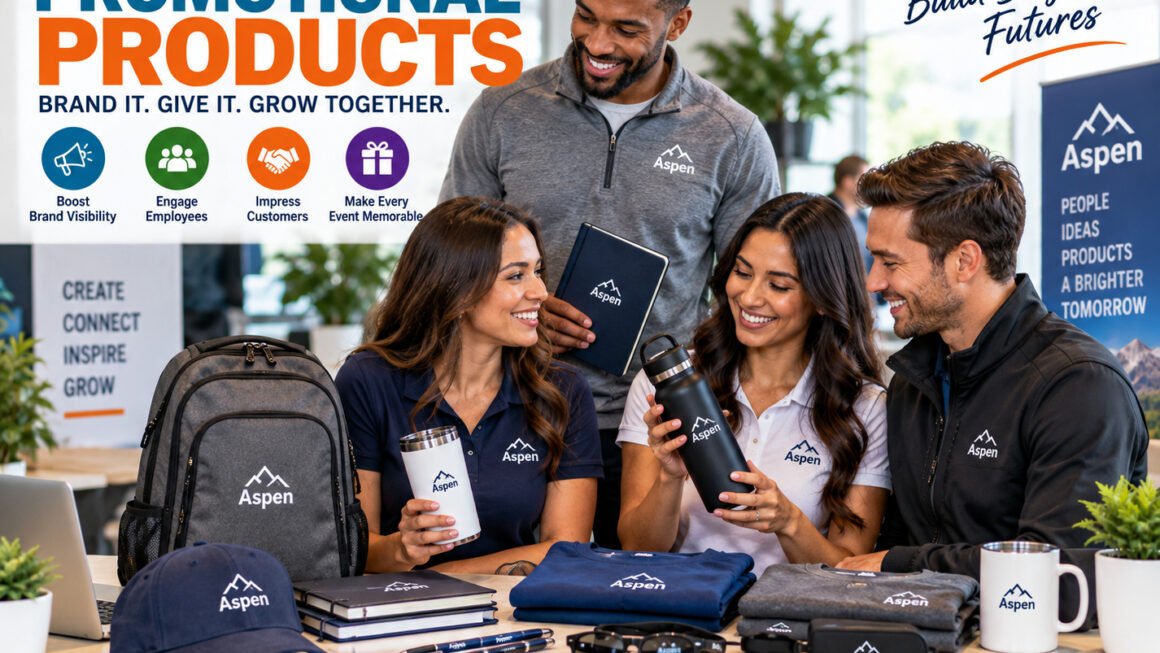
The category extends well beyond pens and basic giveaways. Modern corporate merchandise can include premium apparel, reusable drinkware, charging accessories, travel gear, totes, backpacks, notebooks, performance products, recognition gifts, event kits, and coordinated merchandise collections.
Why New Branded Merchandise Matters to Businesses
A promotional item occupies physical space in a way a digital advertisement cannot. A useful tumbler can sit on a desk for months. A quality jacket may travel between offices, customer meetings, airports, and industry events. A well-designed tote can generate repeated exposure long after the campaign that funded it has ended.
This makes merchandise particularly valuable when a business needs more than a one-time impression. The objective becomes repeated brand interaction combined with practical utility.
For example, consider a company ordering 500 items at an average fully prepared cost of $12 each, creating a $6,000 merchandise investment. If 350 recipients regularly use their item for six months, the program continues generating brand exposure without purchasing another impression every time the product is used.
The precise return depends on product selection, recipient behavior, distribution, campaign objectives, and measurement methodology. That is why experienced buyers evaluate promotional merchandise against business outcomes rather than treating unit price as the only purchasing criterion.
Promotional Product Trends Buyers Should Watch
Promotional merchandise is moving toward products that feel more intentional and less disposable. Business buyers increasingly expect merchandise to align with the same standards they apply to employee experience, customer experience, brand identity, and procurement.
- Practical utility: Products that solve an everyday need have a stronger chance of remaining in use.
- Retail-inspired design: Employees and customers increasingly expect branded apparel and accessories they would willingly use outside a corporate event.
- Smarter kits: Companies are combining complementary items into onboarding, event, appreciation, and executive gifting packages.
- Flexible decoration: Embroidery, screen printing, dye sublimation, heat transfer, engraving, and other methods allow merchandise to match different products and creative requirements.
- Program consistency: Larger organizations are placing greater emphasis on repeatable colors, approved artwork, standardized products, and controlled distribution.
How to Choose New Promotional Products: A 7-Step Framework
Product selection becomes much easier when the buying process starts with the business objective instead of a catalog. The following framework helps procurement teams, marketers, event planners, HR departments, and business owners make more defensible merchandise decisions.
- Define the business objective. Determine whether the merchandise should generate awareness, support an event, welcome employees, reward customers, encourage sales conversations, or strengthen retention.
- Identify the recipient. Consider role, environment, demographics, likely usage, geographic location, and relationship with the organization.
- Set the usable budget. Account for the product, decoration, setup, packaging, freight, fulfillment, and potential rush requirements rather than comparing blank-product prices alone.
- Choose the product category. Match merchandise to how recipients actually work, travel, attend events, exercise, commute, or interact with the brand.
- Select the decoration method. Choose printing, embroidery, sublimation, engraving, or another process based on material, artwork, durability, quantity, and desired appearance.
- Confirm production and logistics. Review quantities, proofing, production windows, inventory availability, shipping destinations, and event deadlines before final approval.
- Measure the outcome. Track distribution, recipient engagement, event performance, employee participation, customer feedback, or campaign-generated actions where appropriate.
Use Cases for New Branded Merchandise
Short Answer: New branded merchandise works particularly well when it connects a physical product with a defined business moment, such as onboarding an employee, attending a trade show, thanking a customer, launching a campaign, recognizing performance, or supporting an organization-wide merchandise program.
Employee Onboarding Kits
A coordinated onboarding kit can make the first day feel intentional. A company might combine a branded polo, insulated bottle, notebook, backpack, and welcome material into a single package for new employees.
For a business hiring 100 employees across several locations, standardizing the kit also simplifies internal operations. HR can work from an approved merchandise assortment instead of sourcing different items for every hiring cycle.
Trade Show Giveaways and Event Merchandise
Trade show merchandise should support the reason a company is exhibiting. Lower-cost giveaways can help increase booth traffic, while more valuable merchandise may be reserved for qualified prospects, scheduled meetings, customers, speakers, or VIP attendees.
For example, a business attending a three-day conference could prepare 1,000 general giveaways but only 150 premium kits. Sales representatives can use the premium merchandise selectively for high-value conversations, making the merchandise budget more intentional.
Businesses planning an event can review promotional products and branded merchandise at https://products.digitizedlogos.com/ while considering quantities, decoration options, audience fit, and delivery requirements.
Corporate Gifting
Corporate gifts are most effective when they feel appropriate to the relationship. An executive client may justify a different product tier than a large customer-appreciation mailing.
Packaging also matters. A carefully selected product presented in a coordinated box creates a substantially different experience from the same product shipped without context.
Branded Apparel Programs
Apparel can support uniforms, field teams, sales organizations, conferences, employee recognition, recruiting, company stores, and customer promotions. Product selection should account for sizing, climate, work environment, garment construction, decoration area, and expected frequency of use.
Comparing Promotional Product Categories
Short Answer: There is no universally best promotional product category. Apparel offers strong wearable visibility, drinkware provides frequent everyday use, bags create mobile exposure, tech accessories provide functional value, and premium gifts can strengthen high-value business relationships.
Branded apparel works well for teams, events, uniforms, recruiting, and customer merchandise because it turns the recipient into a visible extension of the brand.
Drinkware is useful for offices, events, employee programs, customer appreciation, and wellness initiatives because recipients may use it repeatedly.
Bags and totes provide larger decoration areas and practical carrying capacity, making them useful for conferences, travel, onboarding, retail promotions, and community programs.
Technology accessories can fit professional and remote-work audiences, particularly when the product solves a genuine everyday problem.
Premium corporate gifts are better suited to high-value relationships, employee milestones, leadership programs, customer retention, and executive outreach where presentation and perceived value matter.
Customization: Decoration Method Changes the Result
A strong product can still underperform when the decoration method does not fit the material or artwork. Product selection and customization should therefore be treated as one decision rather than two separate purchasing steps.
Embroidery can provide a dimensional, professional finish on polos, jackets, caps, and selected bags. Screen printing can be efficient for many apparel applications. Full-color transfer technologies can accommodate detailed artwork. Engraving can create a refined finish on compatible drinkware and hard goods. Dye sublimation can enable highly integrated, full-color designs on suitable polyester products.
Practical operational insight: Buyers should evaluate usable imprint area before finalizing creative. Artwork designed for a website header may not translate effectively to a narrow pen barrel, curved bottle, cap panel, or embroidered chest location.
Behind the Scenes: What Happens After You Choose a Product?
A professional merchandise order involves considerably more than selecting an item and uploading a logo. Behind the scenes, the process may include inventory verification, artwork review, decoration-method selection, color evaluation, proof preparation, production scheduling, quality control, packing, freight coordination, and multi-location fulfillment.
Timing becomes especially important because production is only one part of the schedule. Artwork revisions, proof approvals, inventory changes, transit time, individual-address fulfillment, and event receiving requirements can all affect the final delivery date.
Practical operational insight: Buyers with immovable event dates should work backward from the required in-hand date, not forward from the day the order is placed. Building approval and transportation buffers into the schedule reduces avoidable rush costs and delivery risk.
Buyer Considerations Before Placing an Order
Experienced buyers compare more than unit prices. They consider whether the merchandise can be produced consistently, delivered reliably, customized correctly, and reordered when the program expands.
- Total landed cost: Evaluate decoration, setup, packaging, shipping, and fulfillment in addition to product price.
- Minimum quantities: Confirm minimums before building a campaign around a particular item.
- Inventory availability: Large or multi-location programs may require deeper stock than smaller campaigns.
- Brand consistency: Establish approved logos, artwork, color expectations, and decoration locations.
- Recipient experience: Consider usefulness, perceived quality, sizing, packaging, and delivery.
- Reorder potential: Recurring programs benefit from products that can be sourced and reproduced consistently.
- Deadline sensitivity: Events, employee start dates, conferences, and campaign launches require realistic production buffers.
Cost, ROI, Turnaround and Fulfillment: What Buyers Need to Know
Short Answer: Promotional product cost depends on the item, quantity, decoration, packaging, freight, and fulfillment requirements. ROI improves when businesses select merchandise for a defined audience and objective instead of purchasing solely on the lowest unit price.
How Much Should a Business Spend?
Budget should reflect the recipient and objective. A broad event giveaway might require a relatively low cost per item, while an executive gift, employee anniversary package, or strategic customer kit can justify substantially more investment per recipient.
A useful planning model is to calculate cost per meaningful recipient. A $3 product distributed indiscriminately to 5,000 people costs $15,000 before additional expenses. A $20 item sent to 500 highly relevant recipients costs $10,000. The less expensive unit is not automatically the better investment.
What About Turnaround Time?
Turnaround varies by product, inventory, customization method, quantity, proofing requirements, packaging, and shipping destination. Buyers working against a fixed launch or event should communicate the required delivery date at the beginning of the project.
Can Orders Be Customized at Different Quantities?
Minimum order quantities vary across products and production methods. Some merchandise is suitable for smaller programs, while other items become more economical at higher volumes. A flexible sourcing strategy allows businesses to balance creative ambition with quantity and budget.
How Does Multi-Location Fulfillment Work?
Organizations may need bulk shipments to one headquarters, cartons distributed among branch locations, individual kits shipped to employees, or event merchandise delivered directly to a venue. These requirements should be identified before production because packaging and distribution can affect cost, timing, and product selection.
Digitized Logos manages sourcing, customization, and fulfillment for branded apparel and promotional product programs. Buyers evaluating operational requirements can explore new branded merchandise at https://products.digitizedlogos.com/ and align product choices with quantities, customization, timing, and distribution needs.
How to Build a Scalable Merchandise Program
One successful promotional order does not automatically create a scalable merchandise program. Growth requires standards that allow different departments, locations, events, and campaigns to present the organization consistently.
A scalable program typically establishes approved product categories, logo treatments, brand colors, decoration methods, budget tiers, ordering responsibilities, inventory rules, and fulfillment processes. This reduces the likelihood of teams independently purchasing merchandise that looks inconsistent or fails to meet brand expectations.
For organizations operating across Maryland, Virginia, Washington DC, and other markets throughout the United States of America, centralized standards can be particularly valuable when merchandise needs to support multiple offices, field teams, events, customers, or community initiatives.
Common Promotional Merchandise Mistakes
The most expensive merchandise mistake is not necessarily paying too much per unit. It is purchasing products that do not get used, arrive too late, communicate the brand poorly, or create unnecessary operational work.
- Choosing products because they are inexpensive rather than useful
- Ignoring the recipient’s work environment and lifestyle
- Waiting too long to begin sourcing before an event
- Approving artwork without considering the actual imprint area
- Comparing vendors using unit price without considering total program cost
- Ordering excessive inventory without a distribution plan
- Using inconsistent logos, colors, or merchandise standards across departments
- Failing to plan for packing, shipping, and multi-location fulfillment
How to Evaluate a Promotional Products Vendor
Vendor selection matters more as programs become larger or more complex. A supplier should be able to help buyers move from an objective to a workable product, customization, production, and fulfillment plan.
Ask how the vendor handles artwork, proofs, production timelines, inventory changes, quality issues, shipping, repeat orders, and multi-destination programs. For larger initiatives, determine who owns each step and how problems are escalated before committing to production.
Digitized Logos provides branded apparel and promotional product solutions and manages sourcing, customization, and fulfillment. The company is an MDOT, DDOT, and VA SWaM Certified Small, Minority, Female-Owned Business, supporting organizations seeking both merchandise expertise and qualified supplier relationships.
Decision Support: Is Premium Merchandise Worth the Extra Cost?
Premium merchandise can be worth the additional investment when retention, repeated use, recipient perception, or relationship value matters. The business case should compare useful life and recipient impact rather than simply comparing two unit prices.
Suppose Product A costs $5 and is used twice, while Product B costs $15 and becomes part of the recipient’s weekly routine for a year. Product B costs three times more initially, but its repeated use may make it significantly more valuable as a brand touchpoint.
The same logic applies to employee merchandise. A comfortable, well-fitting garment that employees voluntarily wear can deliver greater practical value than a cheaper shirt that stays in a drawer.
New Promotional Products and the Future of Corporate Swag
The future of corporate swag is less about distributing the maximum number of items and more about creating relevant physical brand experiences. Businesses are becoming more selective about what they give, who receives it, when it is delivered, and what purpose it serves.
This creates an opportunity for marketing, HR, procurement, sales, and event teams to work more strategically. Merchandise can become part of a coordinated customer journey, employee experience, recruiting strategy, event plan, or relationship-building program rather than an isolated purchase.
Key Takeaways
- Business value: Useful promotional merchandise can create repeated brand exposure and strengthen customer or employee experiences.
- Implementation: Start with the objective, audience, budget, deadline, and distribution plan before selecting products.
- ROI: Measure value by meaningful recipient engagement and product usage, not unit price alone.
- Buyer benefit: Coordinated sourcing, customization, production, and fulfillment reduce operational complexity.
- Scalability: Standardized merchandise programs improve brand consistency across departments, locations, campaigns, and events.
Frequently Asked Questions About New Branded Merchandise
What new promotional products are best for corporate events?
The best products for corporate events are useful, portable, brand-appropriate, and matched to the audience. Drinkware, bags, tech accessories, notebooks, apparel, travel items, and curated kits can work well. Consider booth strategy, recipient value, transportation, quantity, decoration area, and post-event usefulness before selecting an item.
How far in advance should promotional products be ordered?
Order as early as practical, particularly when an event date cannot move. The required timeline depends on inventory, quantity, customization, proof approval, production, packaging, and shipping. Starting early provides more product choices and reduces the risk that rush production or expedited freight will increase costs.
What is the difference between promotional products and branded merchandise?
The terms overlap substantially. Promotional products are typically branded items distributed to support marketing, events, awareness, or customer engagement. Branded merchandise is a broader term that can also include employee apparel, corporate gifts, merchandise-store products, onboarding kits, uniforms, and items designed for longer-term internal or external use.
How can companies measure promotional merchandise ROI?
ROI can be evaluated using distribution rates, cost per recipient, event leads, campaign responses, employee participation, customer feedback, product usage, repeat engagement, or attributed sales where tracking is practical. The measurement method should match the original business objective rather than relying on a single universal promotional-products metric.
Can Digitized Logos support multi-location merchandise programs?
Digitized Logos provides sourcing, customization, and fulfillment support for branded apparel and promotional products. Businesses planning multi-location programs should define quantities, delivery destinations, packaging requirements, deadlines, brand standards, and reorder expectations early so the merchandise strategy can be designed around operational requirements.
Ready to Explore New Promotional Products?
The strongest new promotional products do more than display a logo. They create useful brand interactions, support important business moments, strengthen merchandise consistency, and help organizations stay visible with employees, customers, prospects, and event audiences.
Digitized Logos can help businesses evaluate products, customization options, quantities, turnaround requirements, and fulfillment needs. For organizations preparing for an event, building an employee program, refreshing corporate swag, or developing a scalable merchandise strategy, early planning creates more flexibility and reduces unnecessary production risk.
Call 301-963-3553 or visit https://products.digitizedlogos.com/ to explore promotional products and new branded merchandise for your next program. Build stronger brand visibility with flexible ordering, customization support, dependable merchandise consistency, event-ready planning, and fulfillment designed around your business requirements.
#PromotionalProducts #NewPromotionalProducts #BrandedMerchandise #CorporateSwag #BrandedApparel #CorporateGifts #EmployeeOnboarding #TradeShowGiveaways #MerchandisePrograms #DigitizedLogos