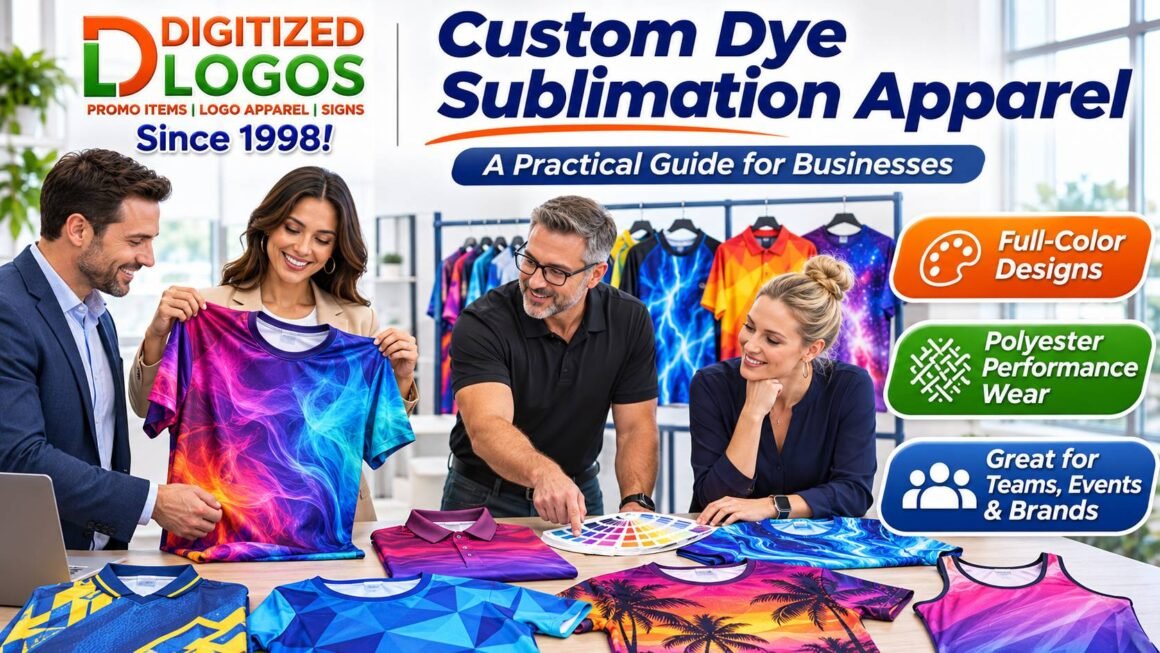
Branded clothing does more than display a company logo. It helps employees look consistent, gives event teams a recognizable appearance, and creates merchandise that people can wear beyond a single occasion. For businesses that want detailed graphics, vibrant colors, and greater design flexibility, custom dye sublimation apparel is an option worth considering.
Unlike traditional printing methods that place a design on the surface of fabric, dye sublimation transfers color into compatible synthetic fibers. This makes it particularly useful for polyester-based garments featuring detailed artwork, repeating patterns, gradients, and large printed areas.
However, sublimation is not suitable for every fabric or clothing project. Understanding the materials, printing process, design requirements, and production considerations helps businesses select apparel that meets their branding needs and practical expectations.
What Is Custom Dye Sublimation Apparel?
Custom dye sublimation apparel is clothing decorated through a heat-transfer printing process that bonds specialized dyes with compatible synthetic fibers, primarily polyester. The process produces detailed, multicolor graphics without creating the thick surface layer associated with certain traditional printing methods.
Because the color becomes part of the compatible fabric fibers, sublimated designs generally do not crack or peel like a surface-applied transfer. The durability of the garment still depends on fabric quality, manufacturing, washing conditions, and proper use.
Dye sublimation is commonly used for sports jerseys, performance shirts, promotional clothing, event apparel, and branded garments with large or continuous designs.
How Does Dye Sublimation Printing Work?
Dye sublimation uses specialized inks, heat, and pressure to transfer artwork into compatible textile fibers. The production process generally follows several stages.
1. Artwork Preparation
The design team prepares digital artwork that includes the intended colors, logos, text, patterns, and printing areas. High-resolution images and properly prepared vector graphics help maintain detail in the finished garment.
Artwork should account for garment dimensions, seams, collars, sleeves, and other construction features. If the design extends across multiple garment panels, the placement of important graphics requires additional attention.
2. Printing the Design
In a common transfer-sublimation workflow, the artwork is printed onto specialized transfer paper using sublimation inks. The printed transfer is prepared for application to a compatible fabric.
3. Applying Heat and Pressure
Controlled heat and pressure activate the sublimation dyes, allowing them to penetrate compatible polyester fibers. The appropriate temperature, pressure, and application time depend on the materials, inks, and equipment being used.
4. Garment Production and Inspection
Depending on the production method, fabric may be printed before garment assembly or an existing garment may be decorated. Finished apparel should be inspected for color consistency, print positioning, construction quality, and visible defects.
One important distinction is between printing a finished garment and printing fabric panels before sewing. Panel-based production can provide greater control over all-over designs, while printing finished garments may create lighter areas or inconsistencies around folds, seams, and other difficult-to-reach surfaces.
Why Businesses Choose Full Color Sublimated Clothing
Full color sublimated clothing gives organizations the flexibility to incorporate more than a small chest logo into their apparel designs. Businesses can combine brand colors, photography, illustrations, patterns, and promotional messages within a coordinated garment design.
Detailed Multicolor Graphics
Sublimation supports complex graphics, gradients, and photographic artwork on compatible materials. This can be valuable for promotional campaigns and corporate clothing programs that require detailed visual elements.
Comfortable Printed Surfaces
Because properly applied sublimation dyes become part of the compatible fibers, the printed design does not create a separate, raised ink layer. This can help preserve the feel of the original fabric.
Breathability and moisture management, however, are determined largely by the garment’s fabric construction and performance characteristics rather than the decoration method alone.
Design Flexibility
Businesses can create coordinated apparel using consistent colors and design elements while adapting layouts for different garment styles. For example, an event organizer may use the same visual identity on staff polos, volunteer shirts, and event jerseys.
Durability of the Decoration
Sublimation prints are generally resistant to cracking and peeling because the color is not simply attached as a surface film. Color retention still varies based on the material, dye quality, laundering, environmental exposure, and garment care.
Which Fabrics Work Best for Dye Sublimation?
Polyester is the primary fabric used for conventional dye sublimation. Its synthetic fibers are compatible with the dyes and heat-transfer process.
Fabric selection matters because not every garment responds to sublimation in the same way.
- 100% polyester: Generally provides strong color reproduction and is commonly preferred for vibrant sublimated graphics.
- High-polyester blends: May be suitable, although non-polyester fibers can affect color intensity and the finished appearance.
- Performance polyester: Often selected for athletic uniforms, activewear, and apparel designed for physical activity.
- Light-colored fabrics: Usually provide better results because standard sublimation inks are transparent and do not include white ink.
Conventional dye sublimation is not an appropriate direct-printing method for ordinary 100% cotton garments. Businesses seeking predominantly cotton apparel should consider alternative decoration methods such as screen printing, direct-to-garment printing, or suitable transfer processes.
Dark fabric also presents limitations. Standard sublimation cannot print opaque white graphics onto a dark garment, and the fabric’s existing color affects the appearance of transferred artwork.
Popular Types of Custom Dye Sublimation Apparel
Custom Sublimated T-Shirts
Polyester T-shirts offer an accessible format for promotional campaigns, team clothing, and casual branded apparel. Businesses can incorporate logos, campaign artwork, graphic patterns, and other visual elements.
When selecting T-shirts, consider the fabric weight, intended use, fit, and whether the design requires localized printing or broader garment coverage.
Custom Sublimated Polo Shirts
Sublimated polos can support coordinated employee clothing for events, hospitality teams, service organizations, and branded corporate programs.
Designs may include contrasting panels, sleeve details, collar coordination, or repeating graphics. Fabric structure and available production methods determine which effects are achievable.
Sports Jerseys and Team Uniforms
Sports apparel is a common application for dye sublimation because team uniforms often require multiple colors, player numbers, names, logos, and distinctive graphic patterns.
Businesses organizing company sports teams or sponsored athletic events can use coordinated jerseys to establish a consistent team appearance.
Performance and Event Apparel
Polyester performance shirts are commonly used for outdoor activities, staff identification, exhibitions, and organized events. Fabric performance, comfort, and sizing should be evaluated alongside the appearance of the printed design.
Custom Jackets and Other Apparel
Some polyester-based jackets and specialty garments may be suitable for sublimation, depending on their construction and heat tolerance. Linings, coatings, zippers, and other components can restrict printing methods or available design areas.
Compatibility should be confirmed for the specific garment rather than assumed from its general product category.
How Businesses Use Custom Dye Sublimation Apparel
Custom dye sublimation apparel can support several business needs, especially when visual consistency and detailed graphics are important.
Corporate Events and Trade Shows
Businesses can use coordinated sublimated shirts to identify staff members, reinforce event branding, and incorporate promotional artwork.
For example, consider a technology company preparing for a trade show. Its marketing team wants employee shirts featuring company colors, a product illustration, and an event-specific graphic. Sublimation may provide a practical way to reproduce the detailed artwork on compatible polyester apparel.
This is an illustrative scenario, not a documented customer project.
Hospitality and Service Teams
Hotels, restaurants, and service organizations may use customized clothing for promotional activities, seasonal events, or selected employee roles.
As a hypothetical example, a hotel organizing a branded outdoor guest event could select lightweight polyester polos featuring its visual identity and event theme. Before production, the purchasing team would need to evaluate the garment’s suitability for the employees’ working conditions, appearance standards, and comfort requirements.
Employee Programs and Company Merchandise
Organizations can incorporate sublimated garments into employee recognition programs, internal events, branded merchandise collections, and company apparel programs.
When several departments or locations use similar merchandise, consistent artwork files and product specifications help reduce unintended variation between orders.
Community Events and Promotional Campaigns
Fundraising events, sponsored activities, and community programs often use apparel to establish a shared visual identity. Sublimation enables organizers to incorporate campaign-specific designs that extend beyond simple logo placement.
How to Design Effective Sublimated Apparel
A successful sublimation project begins with more than choosing a visually appealing graphic. The artwork must work with the garment’s fabric, dimensions, and construction.
Start With the Garment’s Purpose
Determine who will wear the apparel and under what conditions. Clothing for an outdoor event may require different fabric performance and fit considerations than apparel intended for indoor corporate activities.
Use Suitable Artwork Files
Vector logos and high-resolution raster graphics are generally preferable to small images enlarged beyond their intended dimensions. Suppliers may request specific file formats, color settings, templates, or resolution requirements.
Consider Seams and Garment Panels
Important lettering and logos should not be positioned across seams or folds without considering potential distortion.
For complex all-over prints, garment-specific artwork templates can help designers plan how patterns connect across the front, back, sleeves, and side panels.
Review Color Expectations
Colors displayed on a computer monitor may not perfectly match colors reproduced on fabric. Differences can result from display settings, fabric composition, dye behavior, equipment calibration, and production conditions.
When brand color accuracy is particularly important, request suitable color references or physical samples and establish acceptable tolerances before approving production.
Custom Dye Sublimation vs. Other Apparel Printing Methods
The appropriate decoration method depends on fabric choice, artwork complexity, quantity, garment color, and intended use.
Dye Sublimation vs. Screen Printing
Screen printing applies ink through a stencil onto the garment. It is widely used for branded T-shirts, uniforms, and promotional apparel.
Sublimation can be preferable for detailed multicolor artwork on compatible polyester, particularly when the design covers large areas. Screen printing may be more appropriate for certain cotton garments, dark fabrics, or repeat production runs with simpler designs.
Dye Sublimation vs. Embroidery
Embroidery uses stitching to create a logo or design. It is commonly used on corporate polos, jackets, caps, and uniforms.
Embroidery can provide a textured, dimensional appearance for logos, while sublimation is better suited to detailed flat graphics and large printed patterns. The two decoration methods serve different aesthetic and functional purposes.
Dye Sublimation vs. Direct-to-Garment Printing
Direct-to-garment printing applies specialized inks directly to apparel and is frequently used for cotton-based clothing.
Sublimation is generally better suited to compatible polyester garments, while DTG may be a practical alternative when cotton fabric is a priority.
What Affects the Cost of Custom Sublimated Apparel?
There is no single standard price for every sublimated garment. The final cost depends on the product specification, production method, supplier, and order requirements.
Important pricing variables include:
- Garment type: T-shirts, polos, athletic jerseys, and specialty apparel have different material and manufacturing requirements.
- Fabric and construction: Fabric quality, weight, finishing, and garment complexity influence costs.
- Order quantity: Quantity can affect unit pricing, setup allocation, and production efficiency.
- Print coverage: All-over printing and panel-based production may require different workflows from localized decoration.
- Personalization: Individual names, numbers, or variable artwork may add production steps.
- Shipping and fulfillment: Multiple delivery destinations, packaging, and distribution requirements can affect total project expense.
When comparing supplier quotes, buyers should evaluate total project costs rather than unit pricing alone. Artwork preparation, samples, applicable setup charges, shipping, and any additional services should be clearly identified.
Minimum order quantities and production timelines vary by supplier and product. These details should be confirmed before committing to an event date or company distribution schedule.
How to Order Custom Dye Sublimation Apparel for Your Business
A structured purchasing process helps reduce errors and provides a more consistent outcome, particularly when ordering for several employees, locations, or events.
- Define the intended use. Identify whether the apparel is needed for uniforms, events, promotions, company merchandise, or another business purpose.
- Choose suitable garments. Evaluate polyester content, available styles, fabric performance, sizing, and construction.
- Prepare the artwork. Gather brand logos, approved colors, graphics, placement instructions, and personalization requirements.
- Confirm quantities and sizes. Create an accurate size breakdown and identify any additional requirements for individual recipients.
- Review samples or proofs. Verify artwork placement, spelling, colors, sizing information, and garment specifications before approving production.
- Confirm the production schedule. Discuss artwork deadlines, approval requirements, manufacturing time, delivery arrangements, and any event-related deadlines.
- Plan distribution and reorders. Determine how the finished clothing will be delivered and maintain approved artwork and product records for future purchases.
Common Mistakes to Avoid When Purchasing Sublimated Clothing
Many apparel issues can be prevented through early planning and clearer supplier communication.
- Choosing incompatible fabric: Standard sublimation requires suitable synthetic material, and conventional cotton garments do not provide comparable results.
- Assuming dark garments can receive opaque white prints: Standard sublimation inks do not provide an opaque white layer.
- Using low-resolution artwork: Poor-quality source files can produce visibly pixelated or unclear graphics.
- Ignoring garment construction: Seams, folds, pockets, and other features may affect design positioning and print coverage.
- Approving without checking sizing: Apparel sizing varies between products and manufacturers, so a size chart should be reviewed carefully.
- Leaving production decisions too late: Artwork revisions, sample reviews, manufacturing, and shipping all require adequate scheduling.
How to Choose a Dye Sublimation Apparel Supplier
Businesses should evaluate suppliers based on their ability to support the complete project, not simply the number of products displayed in a catalog.
Useful questions to ask include:
- Which garment materials and styles are suitable for the requested design?
- Is the artwork produced through panel printing, finished-garment printing, or another process?
- What artwork specifications and approval steps are required?
- Are physical samples or production proofs available?
- What are the applicable minimum quantities and pricing conditions?
- How will color consistency and print placement be reviewed?
- What are the confirmed production and shipping arrangements?
- Can approved artwork and garment specifications be retained for future orders?
Clear answers help purchasing teams compare suppliers on quality, operational compatibility, and total project requirements.
Caring for Sublimated Apparel
Proper care helps maintain the appearance and functionality of sublimated clothing. Always follow the instructions provided on the garment’s care label.
For many polyester garments, gentle washing with mild detergent, avoiding excessive heat, and following recommended drying instructions can help reduce unnecessary wear. Care requirements may differ when apparel includes special finishes, trims, coatings, or additional decoration methods.
Although properly sublimated designs generally resist surface cracking and peeling, garments are not immune to fabric damage, discoloration, abrasion, or deterioration caused by improper care.
Frequently Asked Questions About Custom Dye Sublimation Apparel
Can dye sublimation produce full-color designs?
Yes. Dye sublimation can reproduce detailed multicolor graphics, gradients, and photographic designs on compatible materials. The finished appearance depends on the artwork, printing equipment, dye system, and fabric. White or light polyester generally offers the most flexibility for vibrant color reproduction.
Can you use dye sublimation on 100% cotton shirts?
Conventional dye sublimation does not bond properly to untreated cotton fibers. Polyester or compatible synthetic materials are normally required. Businesses that prefer cotton clothing should explore screen printing, direct-to-garment printing, or suitable transfer methods instead.
Does sublimated apparel fade after washing?
Properly produced sublimated designs can retain their appearance through repeated laundering, but fading and fabric wear remain possible. Results depend on dye quality, material composition, washing conditions, heat exposure, and garment care. Following the manufacturer’s care instructions is recommended.
Is dye sublimation suitable for employee uniforms?
Yes, when the garment material, design, durability, and working conditions are appropriate. Sublimation can support coordinated employee apparel with detailed graphics and brand colors. Businesses should assess comfort, fit, fabric performance, and any workplace-specific uniform requirements before choosing a product.
How long does custom dye sublimation apparel take to produce?
Production time varies according to garment availability, order quantity, design complexity, personalization, approval requirements, and supplier capacity. Shipping adds another scheduling consideration. Businesses should obtain a confirmed production and delivery schedule rather than assume a standard turnaround period.
Key Takeaways for Business Buyers
- Custom dye sublimation is especially useful for detailed, multicolor designs on compatible polyester apparel.
- Fabric composition and base color influence the quality and appearance of the finished print.
- Design preparation, seam placement, and garment construction should be considered before production.
- Total project cost depends on garment specifications, quantity, production requirements, and fulfillment arrangements.
- Supplier communication, artwork approval, and clear deadlines help reduce ordering mistakes.
Explore Custom Dye Sublimation Apparel With Digitized Logos
Choosing custom dye sublimation apparel involves balancing brand presentation, garment performance, production requirements, and budget. The right combination depends on how the clothing will be used, who will wear it, and the visual results the organization wants to achieve.
Digitized Logos provides branded apparel, promotional products, and merchandise solutions for businesses. Organizations exploring sublimated clothing can discuss garment options, customization requirements, artwork preparation, and fulfillment considerations with the Digitized Logos team.
Whether your organization is planning coordinated event clothing, employee apparel, or promotional merchandise, reviewing the garment and design requirements early can help make purchasing decisions clearer.
Explore custom dye sublimation apparel and other branded merchandise options through Digitized Logos.
For assistance with your project, contact Digitized Logos at 301-963-3553 or email info@DigitizedLogos.com to discuss your requirements and available customization options.