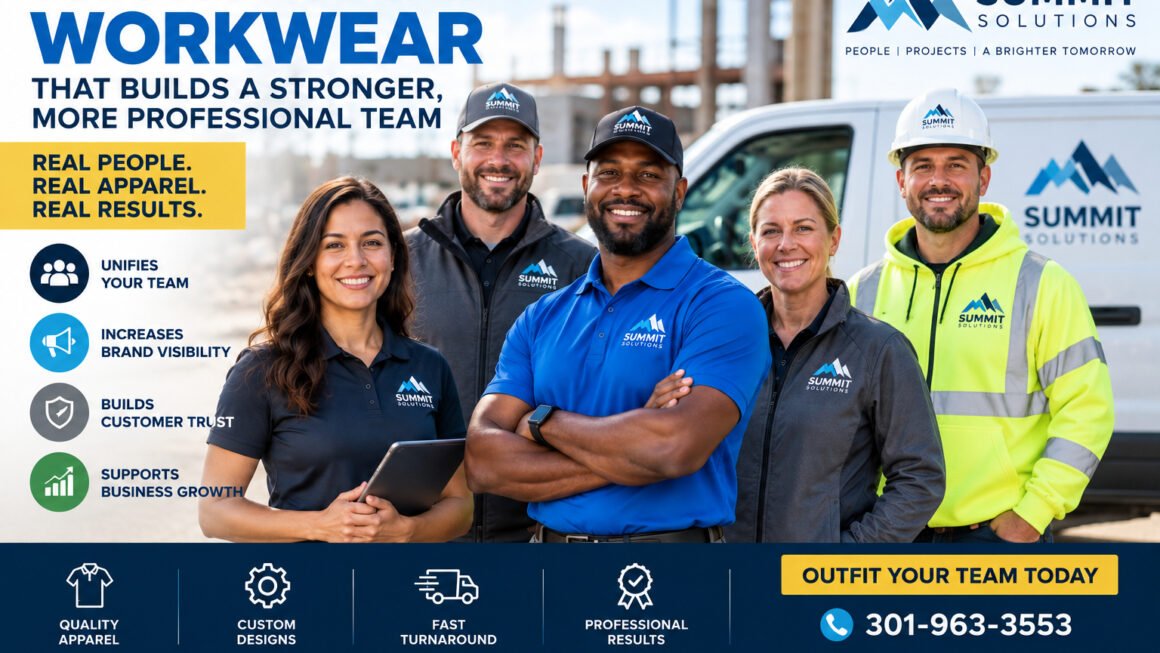
Custom Branded Workwear That Builds a Stronger, More Professional Team
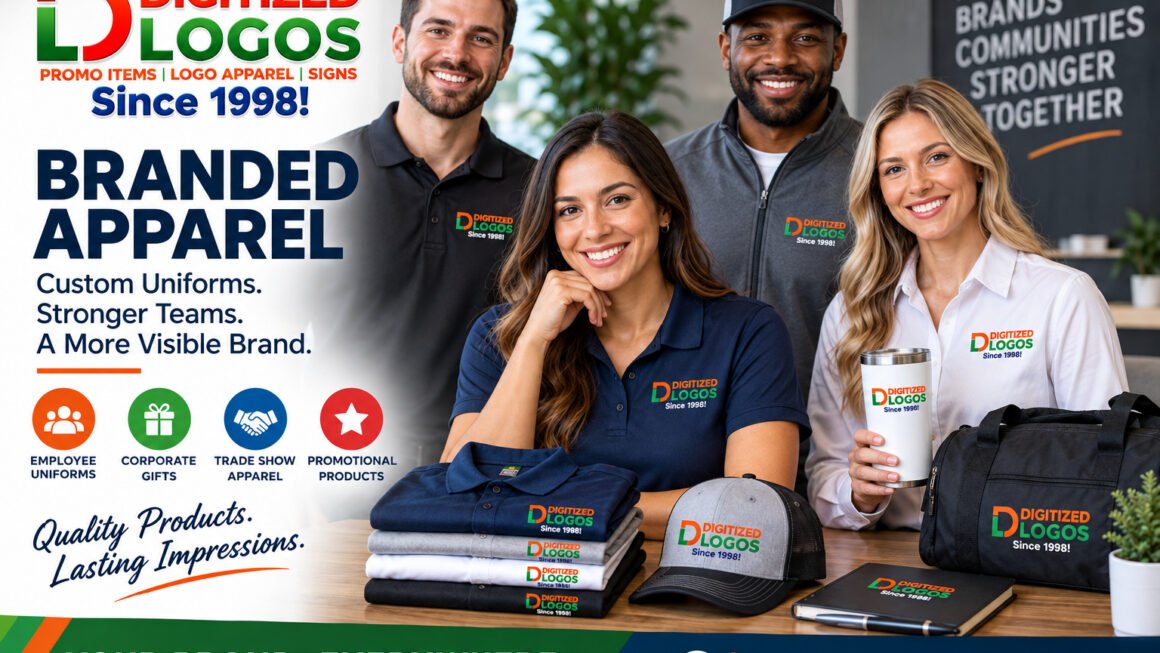
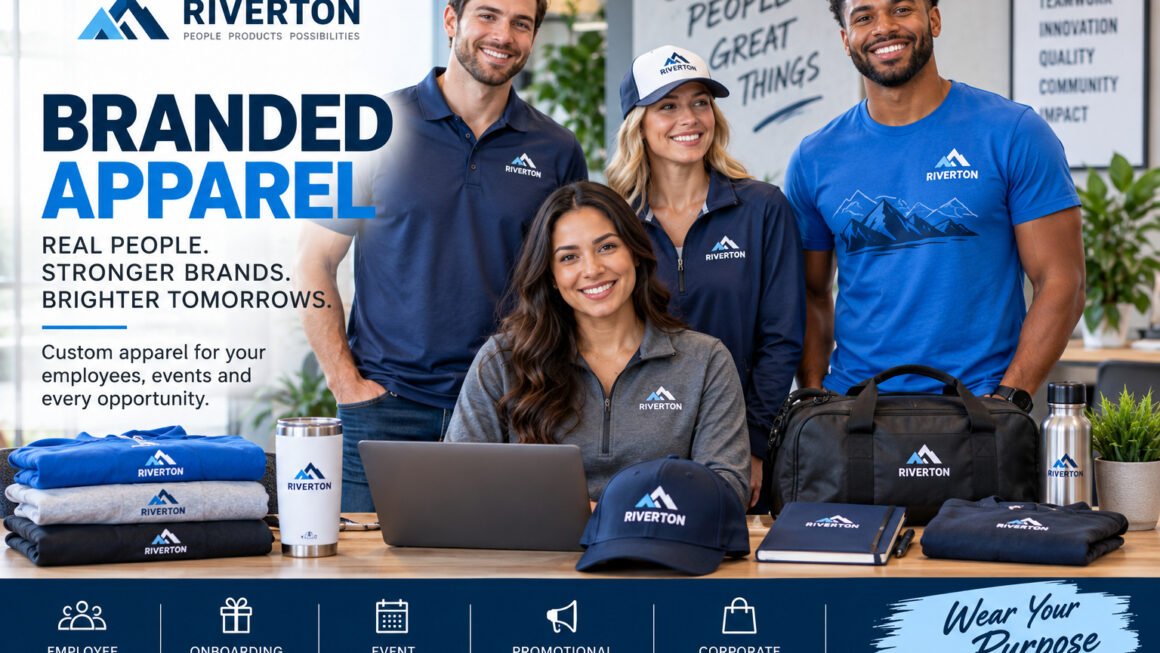
Custom branded workwear turns everyday employee clothing into a practical extension of your company identity. From polos and performance shirts to jackets, button-downs, uniforms, and headwear, the right apparel can help employees look professional, make teams easier to recognize, and reinforce your brand wherever business happens.
For organizations purchasing branded apparel, however, the challenge is rarely just putting a logo on a shirt. Buyers must coordinate garment quality, sizing, decoration, brand colors, inventory, production schedules, shipping, and future reorders. Digitized Logos helps businesses manage these moving parts through coordinated sourcing, customization, and fulfillment.
Quick Answer: What Is Custom Branded Workwear?
Short Answer: Custom branded workwear is job-appropriate apparel customized with a company’s logo, colors, graphics, employee information, or other approved brand elements. It can include polos, T-shirts, performance apparel, button-down shirts, jackets, outerwear, hats, and uniforms designed for employees to wear while representing the organization.
The best workwear programs balance three priorities: the clothing needs to function well for the employee, accurately represent the brand, and remain practical to order and replenish.
Why Branded Workwear Matters to Businesses
Employees frequently become some of the most visible representatives of a company. Field technicians visit customer properties. Sales representatives attend meetings. Construction teams work at visible project sites. Hospitality employees interact directly with guests. Event staff may speak with hundreds of attendees in a single day.
Professional branded apparel gives these interactions a consistent visual identity. It can also reduce uncertainty for customers by making company representatives easier to recognize.
- Professional presentation: Give employees a coordinated appearance during customer and stakeholder interactions.
- Brand recognition: Reinforce logos, colors, and visual identity beyond offices and digital channels.
- Team identity: Create visual consistency across employees, departments, and locations.
- Practical employee apparel: Provide clothing selected around the actual working environment.
- Event visibility: Make staff identifiable at trade shows, conferences, recruiting events, and community programs.
- Merchandise consistency: Establish repeatable standards instead of allowing departments to order unrelated apparel independently.
Branded Apparel Versus Branded Workwear: What Is the Difference?
Short Answer: Branded apparel is a broad category of customized clothing used for marketing, employees, events, gifting, and merchandise. Branded workwear is specifically selected around the employee’s job, working conditions, expected wear, and professional requirements.
A premium quarter-zip may be ideal for an executive meeting or corporate gift. A field employee may need a durable performance shirt that handles movement, outdoor conditions, and frequent laundering. Event staff may benefit from lightweight apparel that remains comfortable throughout a long conference day.
That distinction should influence purchasing decisions. Instead of asking which shirt looks best in a catalog, ask which garment will work best when an employee wears it for eight hours.
Who Uses Custom Branded Workwear?
Workwear programs can support organizations ranging from small local businesses to enterprises with employees distributed across the United States. Requirements vary considerably by industry, which makes product selection an important part of the customization process.
Construction and utility businesses may prioritize durability and field usability. Healthcare organizations may value clean, professional presentation and employee identification. Hospitality businesses often need apparel that combines appearance with all-day comfort. Professional services companies may prefer polos, button-down shirts, quarter-zips, and jackets appropriate for customer-facing environments.
Organizations throughout Maryland, Virginia, Washington DC, and other U.S. markets can also use standardized apparel programs to maintain a recognizable brand across offices, events, job sites, and customer interactions.
How to Build a Branded Workwear Program Step by Step
A successful program begins before products are selected. Establishing requirements first helps buyers avoid unsuitable garments, inconsistent branding, unnecessary rush charges, and complicated reorders.
- Define who will wear the apparel. Identify departments, employee roles, working environments, and customer-facing responsibilities.
- Determine how it will be used. Consider everyday uniforms, field work, customer meetings, conferences, seasonal clothing, onboarding, or occasional events.
- Select appropriate garments. Compare fit, fabric, durability, comfort, performance features, laundering requirements, available colors, and size ranges.
- Choose a decoration method. Match embroidery, screen printing, dye sublimation, heat transfer, or digital decoration to the garment and artwork.
- Standardize branding. Establish approved logo versions, colors, dimensions, decoration locations, and garment combinations.
- Collect accurate sizing. Use employee size information whenever possible rather than estimating an entire order.
- Approve the decorated product. Confirm artwork, placement, colors, garment style, quantities, sizes, and other specifications before production.
- Plan distribution and replenishment. Decide where finished apparel goes and how future employees, replacements, or additional locations will be supported.
Choosing the Right Garment for the Job
Garment selection has a direct impact on whether employees actually want to wear branded workwear. Fit, fabric, weight, breathability, durability, movement, and climate should be considered alongside price and appearance.
Polos and Professional Shirts
Polos provide a balance between casual comfort and professional presentation. They can work well for sales teams, customer service employees, management, technicians, trade show staff, and organizations that need a versatile company uniform.
Performance Shirts
Performance fabrics can be useful for active roles, outdoor programs, warm environments, events, and jobs involving substantial movement. Buyers should compare fabric characteristics and construction rather than assuming all performance apparel behaves identically.
Button-Down Shirts
Branded button-down shirts provide a more formal option for account teams, executives, professional services employees, hospitality staff, and customer-facing roles. Decoration should complement the garment rather than overwhelm it.
Jackets and Outerwear
Outerwear offers a highly visible branding opportunity and can provide strong perceived value to employees. Jackets, vests, and layering pieces can also become recognition gifts or premium additions to corporate merchandise programs.
T-Shirts and Sweatshirts
T-shirts and sweatshirts can support employees, volunteer initiatives, internal events, recruiting, company celebrations, and promotional campaigns. Product quality should be selected according to intended frequency of wear rather than price alone.
Which Customization Method Works Best?
Short Answer: The best decoration technique depends on the garment, artwork, quantity, intended use, and desired visual effect. Embroidery suits many professional garments, screen printing works well for numerous promotional applications, and dye sublimation enables extensive full-color designs on compatible fabrics.
Embroidery
Embroidery produces a stitched, dimensional appearance frequently used on polos, jackets, button-down shirts, hats, and uniforms. Logo detail and decoration size should be evaluated because extremely fine artwork may not reproduce effectively at small dimensions.
Screen Printing
Screen printing is commonly used for T-shirts, sweatshirts, event apparel, and larger production runs. Design complexity, number of colors, quantity, garment type, and print locations can affect production requirements and cost.
Dye Sublimation
Dye sublimation allows extensive full-color artwork, gradients, patterns, and visually distinctive designs on compatible polyester apparel. It can be particularly effective for performance shirts, event apparel, jerseys, and programs that need more creative freedom than a conventional left-chest logo.
Heat Transfer and Digital Methods
Transfer and digital decoration can support detailed graphics, names, numbers, smaller quantities, and applications that do not fit traditional production methods. A supplier should evaluate the artwork and garment together before recommending a process.
Behind the Scenes: Why Apparel Programs Become Complicated
A finished shirt may look simple, but producing a consistent multi-employee program involves several dependencies. The garment must be available in the correct color and complete size range. Artwork must work with the selected decoration technique. Decoration placement must suit the garment’s seams, pockets, buttons, zippers, and construction.
Then production must align with the required delivery date. If apparel is being distributed to multiple locations or individual employees, packing and shipping become another operational layer.
This is why sourcing and fulfillment should be discussed early. Selecting a product before confirming inventory, decoration feasibility, and distribution requirements can create problems later in the project.
Operational Insight: Standardization Makes Reordering Easier
One practical way to reduce workwear purchasing friction is to create an approved core collection. For example, a business might standardize one polo, one performance shirt, one button-down, one jacket, and one hat.
Each product can have documented garment colors, logo artwork, decoration size, placement, and approved production method. When a department needs another 25 polos, the buyer is replenishing an established program rather than rebuilding the specification from the beginning.
Real-World Example: A 75-Person Field Team
Consider a service company with 75 employees that provides each employee with five branded shirts. The initial requirement is 375 garments before replacements, new hires, or contingency stock are considered.
At an illustrative decorated cost of $24 per shirt, 375 garments represent a $9,000 apparel investment before applicable freight, taxes, or special services. A small product-selection mistake therefore becomes significant when multiplied across the entire workforce.
Testing fit, confirming sizing, reviewing decoration, and verifying inventory before scaling the order can reduce that risk.
Real-World Example: Trade Show Staff Apparel
A company preparing 15 employees for a three-day conference might provide three shirts per employee, creating a base requirement of 45 shirts. Additional sizes may be kept available for staffing changes or unexpected needs.
The same company may need trade show giveaways, executive gifts, tote bags, drinkware, or other corporate swag. Coordinating these products with employee apparel creates a more unified event presence and simplifies the production schedule.
Digitized Logos can support branded apparel alongside promotional products and corporate merchandise, allowing organizations to plan multiple campaign components within a coordinated merchandise strategy.
How to Evaluate the Cost and ROI of Branded Workwear
Unit price is important, but it should not be the only metric used to evaluate a workwear program. Buyers should consider durability, employee adoption, frequency of wear, replacement rate, brand presentation, and administrative efficiency.
Suppose a decorated jacket costs $60 and an employee wears it 40 times. That represents an apparel cost of $1.50 per wear. A cheaper $25 item worn only twice costs $12.50 per wear.
This simple calculation does not measure every branding benefit, but it demonstrates why purchasing the lowest-priced garment does not automatically create the lowest-cost program.
Common Branded Workwear Mistakes to Avoid
- Choosing apparel entirely by price: Poor comfort or fit can reduce employee adoption.
- Ignoring the working environment: Office apparel and field apparel solve different problems.
- Assuming inventory will remain available: Check required colors and sizes before committing to a product.
- Using oversized branding: More prominent decoration does not automatically create a more professional result.
- Skipping proof approval: Verify the complete specification before production.
- Ordering too close to an event: More planning time provides more options when inventory or production conditions change.
- Ignoring future reorders: A successful first order should be designed with replenishment in mind.
Decision Support: Questions to Ask Before Placing an Order
What Determines Cost?
Pricing can be influenced by garment choice, quantity, decoration method, artwork, number of decoration locations, personalization, setup requirements, packaging, freight, and turnaround expectations. Ask what is included so competing quotations can be compared on a similar basis.
What Are the Minimum Quantities?
Minimum order quantities can vary according to product and decoration method. If you expect small recurring orders for new hires or replacement garments, make this requirement part of the initial sourcing conversation.
How Long Does Production Take?
Production schedules vary according to inventory, quantity, customization, artwork approval, personalization, and shipping. Organizations with fixed event or launch dates should work backward from the required in-hand date and allow time for approvals and logistics.
Can Different Employees Receive Different Sizes or Personalization?
Many programs require multiple sizes, employee names, departments, locations, or job-specific variations. Identify these requirements before production because personalization affects artwork management, order organization, quality control, and fulfillment.
How Is Quality Consistency Maintained?
Document the approved garment, color, artwork, decoration dimensions, placement, and production technique. This creates a reference for subsequent orders and helps prevent visual differences between departments or ordering periods.
Can Orders Be Shipped to Multiple Locations?
Distribution should be treated as part of the program design. A bulk shipment to one Maryland headquarters has different operational requirements from individually packed orders going to employees in Virginia, Washington DC, and locations throughout the United States.
How Branded Workwear Fits Into a Larger Merchandise Strategy
Employee apparel does not have to operate independently from other branded merchandise. Companies can build connected programs around onboarding, events, recognition, sales, recruiting, customer appreciation, and corporate gifting.
An onboarding kit, for example, might combine a company shirt with drinkware, a notebook, and another useful branded item. A trade show program might combine coordinated staff apparel with high-volume giveaways and premium gifts reserved for priority customers or prospects.
Connecting these purchases creates a clearer brand experience while giving procurement and marketing teams better visibility into merchandise spending.
Scaling Workwear Across Departments and Locations
Growth introduces complexity. A business with one location might manage apparel informally, but that approach becomes difficult when the organization expands to several departments, offices, job sites, or states.
A scalable program establishes core products, approved artwork, ordering responsibilities, size-management procedures, replenishment rules, and delivery processes. Special event merchandise can remain flexible while everyday employee apparel stays standardized.
This structure is particularly useful for organizations operating across Maryland, Virginia, Washington DC, and broader U.S. markets because local teams can maintain a consistent company identity without independently reinventing merchandise specifications.
What Should You Look for in a Branded Apparel Partner?
Short Answer: Look for a supplier that can support product sourcing, customization, artwork coordination, quality control, production planning, and fulfillment. A strong partner should help solve operational problems rather than simply provide a catalog of products.
- Product recommendations based on actual employee use
- Clear explanations of decoration options
- Reliable artwork and proofing procedures
- Access to apparel and promotional merchandise
- Support for repeat and scalable programs
- Transparent production and delivery planning
- Multi-location fulfillment capabilities when required
Digitized Logos provides branded apparel and promotional product solutions while supporting sourcing, customization, and fulfillment. The company is an MDOT, DDOT, and VA SWaM Certified Small, Minority, Female-Owned Business, providing an additional consideration for organizations with supplier diversity and procurement objectives.
Key Takeaways
- Match workwear to the job. Employee environment, comfort, durability, and actual use should guide product selection.
- Look beyond unit price. Repeat wear, useful life, employee adoption, and replacement frequency influence real program value.
- Standardize before scaling. Approved products and decoration specifications make future orders easier and more consistent.
- Plan logistics early. Inventory, sizing, production, approvals, shipping, and replenishment should be treated as one workflow.
- Connect apparel with corporate merchandise. Workwear can support broader onboarding, event, gifting, recognition, and promotional strategies.
Frequently Asked Questions About Branded Workwear
What types of businesses benefit from branded workwear?
Branded workwear can support construction companies, utilities, healthcare organizations, hospitality businesses, professional services firms, field service companies, educational organizations, government contractors, nonprofits, and corporate teams. The appropriate garment depends on employee responsibilities, working conditions, customer interaction, climate, frequency of wear, and the company’s visual identity.
How much should a company budget for branded apparel?
Budgets vary according to garment quality, quantity, decoration technique, number of branding locations, personalization, packaging, and shipping. Instead of establishing a budget from blank garment prices alone, calculate the total decorated and delivered cost and compare that amount with expected frequency of use and replacement requirements.
What is the best logo placement for branded workwear?
Left-chest decoration is common for professional shirts, polos, and jackets, but the best location depends on garment construction and branding objectives. Sleeves, backs, and other locations may also work. Logo dimensions should complement the garment and remain readable without making the employee uniform feel excessively promotional.
Can branded workwear be ordered for multiple company locations?
Yes. Multi-location programs can be designed around standardized garments and decoration specifications while distributing finished merchandise to different offices, teams, or individual recipients. Planning fulfillment before production helps businesses coordinate quantities, employee sizing, packing requirements, delivery destinations, and future replenishment more efficiently.
How can businesses keep branded apparel consistent over time?
Create an approved merchandise standard documenting garment styles, colors, logo files, decoration methods, dimensions, and placement. Maintain accurate records of previous orders and establish a process for substitutions when products become unavailable. This makes recurring purchases easier while reducing unintended differences between departments, locations, and ordering periods.
Build Branded Workwear Employees Will Actually Want to Wear
Successful branded apparel should make life easier for both the employee wearing it and the team responsible for purchasing it. Comfortable garments, appropriate customization, consistent branding, predictable production, and organized fulfillment transform workwear from another purchasing task into a scalable business program.
Digitized Logos helps organizations coordinate branded workwear, corporate apparel, promotional products, onboarding merchandise, trade show giveaways, corporate swag, and branded gifts. By managing sourcing, customization, and fulfillment together, businesses can create merchandise programs that support brand visibility while reducing purchasing complexity.
Ready to build or refresh your company apparel program? Call 301-963-3553 or visit https://products.digitizedlogos.com/ to explore branded apparel and promotional products for employee programs, events, corporate gifting, and growing merchandise needs. Plan early to improve product choice, customization flexibility, merchandise consistency, turnaround options, and event readiness.
#BrandedApparel #BrandedWorkwear #CustomWorkwear #CorporateApparel #EmployeeUniforms #PromotionalProducts #CorporateMerchandise #CorporateSwag #CustomApparel #DigitizedLogos