
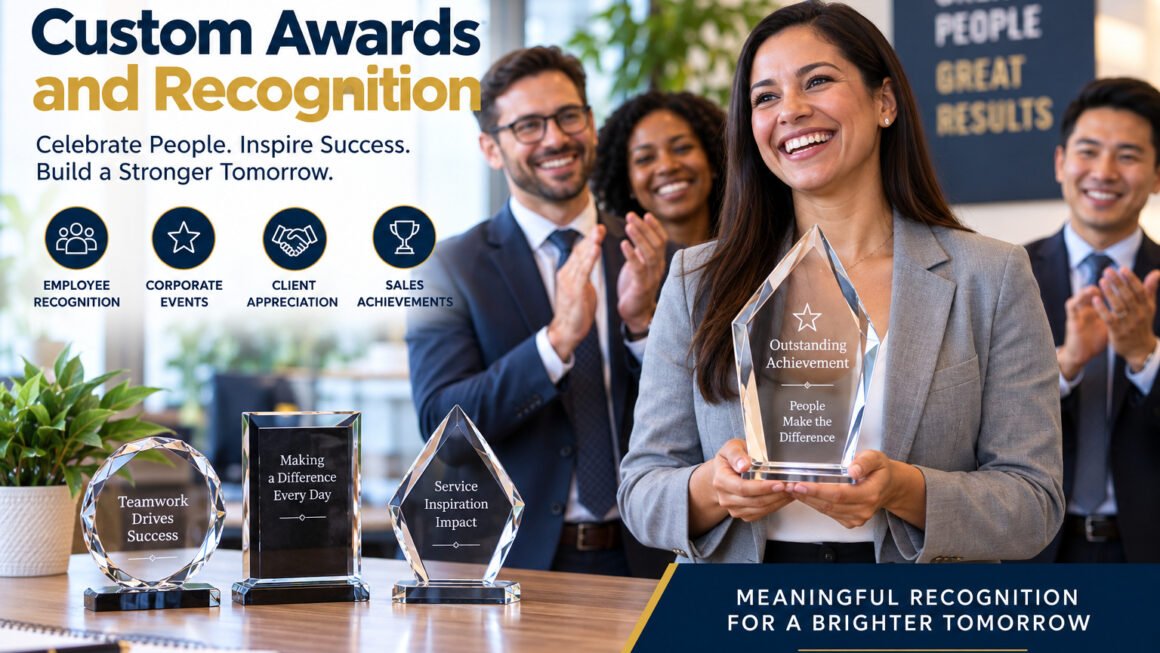
Custom Awards and Recognition: A Business Guide to Meaningful Recognition Programs
Custom awards and recognition programs help organizations celebrate performance, reinforce company values, recognize service milestones, and create memorable experiences for employees, customers, partners, volunteers, and event participants. The strongest programs combine thoughtful award selection with professional customization, reliable production, and organized fulfillment.
For businesses evaluating custom awards, the objective should extend beyond putting a logo on a trophy. Recognition should feel intentional, appropriate to the achievement, consistent with the organization’s brand, and valuable enough that recipients want to display or keep it. Digitized Logos supports organizations with promotional products, branded apparel, corporate merchandise, and recognition solutions through :contentReference[oaicite:0]{index=0}.
Quick Answer: What Are Custom Awards and Recognition?
Short Answer: Custom awards and recognition are personalized physical items used by organizations to acknowledge achievement, service, leadership, participation, milestones, or business relationships. They can include trophies, plaques, crystal awards, acrylic awards, desk pieces, commemorative gifts, and other branded recognition products customized with names, dates, logos, messages, or achievement details.
For business buyers, a successful recognition program depends on more than the award itself. Product quality, personalization accuracy, branding, production timelines, packaging, recipient data, and distribution all affect the final experience.
Why Custom Awards Matter to Businesses
Recognition makes an achievement tangible. An email congratulating an employee may be appreciated for a day, while a well-designed physical award can remain on a desk or shelf for years. That visibility can continuously reinforce the achievement and the organization associated with it.
Custom recognition also creates an opportunity to connect company values with specific behaviors. Instead of presenting a generic trophy, an organization can recognize leadership, safety, customer service, innovation, sales performance, community impact, years of service, or another measurable contribution.
The business value becomes especially clear when recognition is part of a repeatable program rather than an isolated purchase. Standardized award families, approved artwork, defined personalization fields, and established ordering processes can make annual or quarterly recognition considerably easier to manage.
Common Custom Awards and Recognition Use Cases
Short Answer: Businesses use custom awards for employee recognition, service anniversaries, sales achievements, corporate events, customer appreciation, leadership programs, conferences, community initiatives, academic recognition, and partner awards.
Typical applications include:
- Employee achievement: Recognizing exceptional performance, leadership, innovation, safety, attendance, or customer service.
- Years of service: Celebrating five-year, ten-year, twenty-year, or other career milestones.
- Sales recognition: Rewarding quota attainment, revenue milestones, top performers, or regional teams.
- Corporate events: Presenting awards during annual meetings, conferences, retreats, galas, and leadership events.
- Customer and partner appreciation: Thanking strategic clients, suppliers, sponsors, distributors, and business partners.
- Trade associations and nonprofits: Recognizing volunteers, donors, community leaders, sponsors, and program participants.
- Competitions and tournaments: Creating trophies or commemorative awards for sports, golf tournaments, fundraising events, and company competitions.
Recognition can also be incorporated into a broader branded merchandise strategy. An award may be paired with branded apparel, a presentation box, a commemorative gift, or corporate swag to create a more complete recipient experience.
How to Choose the Right Custom Awards
The best award is not necessarily the largest or most expensive. It is the award that matches the importance of the achievement, reflects the organization appropriately, fits the presentation environment, and can be reproduced consistently when the program grows.
- Define what is being recognized. Determine whether the award celebrates performance, tenure, participation, leadership, sales, safety, partnership, or another achievement.
- Identify the recipient group. Executive recognition may call for a different presentation than a large employee appreciation program or tournament.
- Set a realistic budget. Consider the complete delivered cost, including personalization, setup, packaging, shipping, and potential individual fulfillment.
- Select an appropriate award format. Compare plaques, crystal, glass, acrylic, metal, wood, desk awards, trophies, and commemorative merchandise.
- Plan personalization fields. Establish exactly which names, titles, dates, achievements, departments, or messages will change between recipients.
- Approve artwork and proofs carefully. Confirm logo treatment, spelling, dates, hierarchy, positioning, and personalization before production.
- Build backward from the presentation date. Allow sufficient time for sourcing, customization, proofing, production, quality control, packaging, and delivery.
Comparing Popular Custom Award Formats
Crystal and Glass Awards
Crystal and glass are frequently suited to executive recognition, leadership awards, major anniversaries, donor recognition, and high-profile corporate ceremonies. Their substantial appearance can communicate prestige, but buyers should also consider protective packaging and shipping requirements.
Acrylic Awards
Acrylic can provide a contemporary appearance while offering considerable flexibility in shapes, printing, engraving, and dimensional designs. It can work particularly well for technology companies, modern corporate environments, conferences, and scalable employee recognition programs.
Plaques
Plaques remain practical for service recognition, achievement programs, institutional awards, donor recognition, and wall display. They offer space for names, logos, longer messages, dates, and achievement descriptions.
Trophies
Trophies work naturally for competitions, sales contests, tournaments, team recognition, and recurring achievement programs. Organizations can use a consistent trophy style while changing recipient names, categories, years, or performance levels.
Commemorative Corporate Gifts
Not every recognition item needs to resemble a traditional trophy. Premium desk accessories, presentation pieces, branded gifts, and curated merchandise can recognize milestones while providing practical or commemorative value.
Customization Options That Make Recognition Personal
Short Answer: Custom awards can typically be personalized through engraving, printing, dimensional graphics, names, achievement titles, dates, corporate logos, branded colors, and individual messages. Available methods depend on the award material and design.
The hierarchy of information matters. A recipient should immediately understand what the award represents. The organization’s logo supports the recognition, but it should not overpower the recipient’s name or achievement.
A useful information hierarchy is the organization name or logo, award title, recipient name, achievement, and date. Some programs may also include a short message, company value, event name, department, performance category, or leadership signature.
Behind the Scenes: How a Business Award Order Moves Through Production
A professional recognition project begins before an engraving machine or printer is involved. Product availability must first be confirmed, the decoration method matched to the material, artwork prepared correctly, and variable recipient information organized for production.
For a 100-recipient program, for example, the buyer might provide a spreadsheet containing 100 names, departments, award categories, service years, and shipping destinations. The production workflow then needs to connect each data record to the correct award without introducing spelling, versioning, or packaging errors.
Operational insight: One of the easiest ways to reduce risk is to create a single approved data format before collecting recipient information. Changing naming conventions or adding personalization fields after production preparation has begun can introduce unnecessary complexity.
Operational insight: Award programs should also separate the artwork approval deadline from the event deadline. Waiting until the presentation date is approaching leaves little room for proof corrections, inventory changes, carrier delays, or replacement pieces.
Two Realistic Business Recognition Examples
Example 1: Annual Employee Recognition Program
Consider a regional organization recognizing 80 employees across multiple departments. Rather than sourcing unrelated awards every year, the company establishes three recognition levels using a coordinated family of award designs. Each piece carries consistent branding while the recipient name, achievement, and year change.
If the organization budgets an illustrative $75 per recipient, the award allocation is $6,000 before any applicable shipping, setup, special packaging, or other program costs. Standardizing the program can simplify future ordering because the core design and personalization structure have already been established.
Example 2: Corporate Conference Recognition
A company holding a 300-person annual conference wants to recognize 25 sales leaders while also providing branded merchandise to attendees. The recognition awards and event merchandise can be planned as connected components rather than separate last-minute purchases.
The organization might reserve premium personalized awards for the 25 recipients while coordinating apparel, event merchandise, and other promotional products for the larger audience. This creates visual consistency across the stage presentation, recipient experience, and event branding.
How Custom Awards Connect With Employee Recognition Programs
A recognition program becomes more effective operationally when employees understand why awards are given and how recipients are selected. Clear categories can help organizations connect recognition to behaviors they want to encourage, such as customer service, innovation, safety, teamwork, leadership, or performance.
Businesses can also create tiered recognition. Monthly achievements may receive smaller recognition items, annual winners may receive premium awards, and major service anniversaries may combine an award with branded gifts or apparel.
This approach creates a scalable recognition architecture rather than forcing purchasing teams to reinvent the program for every occasion.
Custom Awards, Corporate Gifts, and Promotional Products: What Is the Difference?
Short Answer: An award primarily recognizes a specific achievement, while a corporate gift expresses appreciation and a promotional product increases brand exposure or engagement. Businesses can combine all three when the recipient experience calls for recognition, appreciation, and branded merchandise.
For example, a twenty-year employee might receive a personalized award plus a premium branded gift. Conference attendees might receive promotional merchandise, while selected speakers or award recipients receive personalized recognition pieces. New employees might receive onboarding kits rather than awards because the business objective is welcome and engagement rather than achievement recognition.
Buyer Considerations Before Ordering Custom Awards
Procurement teams, HR departments, marketing teams, event planners, associations, government organizations, and executive offices should evaluate both the visible product and the operational process behind it.
- Material quality: Determine whether the award feels appropriate for the significance of the achievement.
- Decoration method: Make sure engraving, printing, or other customization works well with the selected material.
- Personalization capacity: Confirm whether every piece can carry unique recipient information.
- Proofing: Establish who will approve artwork and variable data before production.
- Inventory: Confirm product availability before committing to a presentation date.
- Packaging: Consider how recipients will receive, transport, or store the award.
- Distribution: Decide whether awards will ship to one event location or individual recipients.
- Repeatability: For recurring programs, determine whether the design can be reordered consistently.
Decision Support: Cost, Turnaround, Minimums, and Fulfillment
How Much Do Custom Awards Cost?
Pricing depends on material, dimensions, decoration method, personalization complexity, quantity, packaging, and shipping. A simple recognition item and a substantial executive crystal award serve different purposes, so buyers should compare total program cost rather than product price alone.
An illustrative 50-recipient program with a $60 product budget represents $3,000 in award value. Increasing the award budget by 20 percent would add $600 to that example. The relevant question is whether that incremental investment meaningfully improves the recipient experience for the importance of the occasion.
What Is the ROI of Recognition Merchandise?
A physical award should not be evaluated like an advertising impression alone. Its value may include employee experience, retention support, cultural reinforcement, event impact, partner appreciation, and visible acknowledgement of desired behaviors.
Organizations can measure program effectiveness through participation, employee feedback, internal engagement, nomination volume, manager adoption, event feedback, and year-over-year program usage. The goal is to connect recognition spending to a defined business purpose rather than distribute merchandise without a strategy.
How Long Does Production Take?
Turnaround varies by product availability, quantity, decoration technique, personalization, proofing, packaging, and destination. Buyers with fixed ceremonies or events should provide the required delivery date at the beginning of the project rather than after the award has been selected.
Are Minimum Quantities Required?
Minimum quantities depend on the product and production method. Some recognition programs may support small quantities or individual awards, while other customized products become more economical at larger volumes. Buyers should confirm minimums before finalizing a design.
Can Awards Be Shipped to Individual Recipients?
Individual distribution can be especially valuable for remote and geographically dispersed teams. It also adds operational requirements, including accurate recipient addresses, labeling, protective packaging, shipping coordination, and potentially multiple tracking records.
Digitized Logos manages sourcing, customization, and fulfillment across branded merchandise programs, helping buyers coordinate the product and operational sides of recognition. Organizations evaluating awards alongside broader merchandise needs can explore :contentReference[oaicite:1]{index=1}.
Common Mistakes to Avoid When Ordering Custom Awards
One frequent mistake is selecting an award before defining the achievement. The recognition purpose should guide the product, not the other way around.
Another is treating personalization data as an afterthought. Incorrect names, titles, dates, or service years can undermine an otherwise premium award. Recipient information should be reviewed systematically before production.
Other avoidable problems include ordering too close to the event, using artwork that does not reproduce well on the selected material, failing to account for packaging, and selecting a design that cannot scale when the program expands.
How to Scale Recognition Across Multiple Locations
Multi-location businesses face a different challenge: maintaining consistency without making recognition impersonal. A practical approach is to establish an approved core collection while allowing controlled personalization for individual locations, departments, recipients, or achievement categories.
For example, a company with offices in Maryland, Virginia, Washington DC, and other parts of the United States could maintain the same award family and branding standards while changing recipient names and local award categories. Centralized standards reduce visual inconsistency while still supporting local recognition.
Digitized Logos provides branded apparel and promotional product solutions and supports corporate merchandise programs involving sourcing, customization, and fulfillment. The company is an MDOT, DDOT, and VA SWaM Certified Small, Minority, Female-Owned Business.
Building Recognition Into a Broader Merchandise Program
Recognition often works best when it is connected to the wider employee or customer experience. Awards can be coordinated with onboarding kits, branded gifts, trade show giveaways, corporate swag, employee apparel, event merchandise, and other branded touchpoints.
A growing company might use welcome merchandise during onboarding, achievement awards throughout employment, anniversary gifts for service milestones, and premium recognition at annual meetings. Instead of unrelated purchases, these touchpoints become part of one coherent branded merchandise strategy.
Current Trends in Corporate Recognition
Recognition programs are becoming more personalized, distributed, and integrated with broader employee experiences. Remote and hybrid teams have increased the operational importance of direct-to-recipient fulfillment, while organizations increasingly want recognition products that look intentional rather than generic.
Another practical trend is controlled choice. Instead of giving every recipient the same merchandise, organizations may combine a standardized award with selected branded gift options. This maintains program consistency while giving recipients some flexibility.
Design preferences are also shifting toward cleaner branding, meaningful personalization, and display-worthy pieces. The award should communicate the achievement first and the corporate identity second.
How to Evaluate a Custom Awards Vendor
A vendor comparison should consider more than unit price. Buyers should evaluate whether the provider can manage the complete workflow reliably, particularly when multiple recipients, deadlines, locations, and merchandise categories are involved.
Ask prospective suppliers about product sourcing, artwork preparation, proofing, personalization data, production methods, quality control, packaging, replacement procedures, shipping, and repeat orders. For larger programs, ask how they maintain consistency when orders are repeated across departments or locations.
A provider that can also coordinate promotional products, branded apparel, corporate gifts, and merchandise programs may reduce the number of suppliers involved in a broader recognition initiative.
Key Takeaways
- Effective custom awards and recognition programs connect a meaningful achievement with an appropriate, professionally personalized product.
- Buyers should evaluate total program requirements, including product quality, customization, proofing, recipient data, packaging, deadlines, and fulfillment.
- Standardized award families can make recurring and multi-location recognition programs easier to scale while maintaining brand consistency.
- ROI should be considered in terms of employee experience, cultural reinforcement, event impact, relationship building, and program objectives rather than product cost alone.
- Combining awards with branded apparel, corporate gifts, promotional products, or merchandise programs can create a more cohesive recipient experience.
Frequently Asked Questions About Custom Awards
What information can be added to custom awards?
Custom awards can often include a company logo, recipient name, award title, achievement, date, department, service milestone, event name, or personalized message. Available options depend on the award material and production method. Establishing consistent personalization fields before production helps improve accuracy across larger recognition programs.
How far in advance should businesses order custom awards?
Businesses should begin as early as practical, especially when an award ceremony or conference has a fixed date. Timing depends on inventory, customization, quantity, proof approval, production, packaging, and shipping. Building additional time into the schedule reduces risk if artwork, recipient information, or availability changes.
Can custom awards be ordered for small employee recognition programs?
Yes, depending on the selected product and customization process. Some award options are suitable for individual or smaller recognition programs, while others have quantity requirements. Buyers should confirm minimums, setup requirements, personalization options, and reorder availability before selecting the final product.
Can custom awards be combined with corporate gifts or branded merchandise?
Yes. Companies can pair an award with branded apparel, corporate gifts, commemorative merchandise, or curated recognition packages. This approach works particularly well for service anniversaries, executive recognition, annual meetings, customer appreciation, and remote employee programs where the presentation experience matters.
What should businesses look for in a custom awards supplier?
Look for a supplier that can manage sourcing, artwork, personalization, proofing, production, quality control, packaging, and fulfillment. For recurring programs, also evaluate reorder consistency and scalability. Businesses using multiple merchandise categories may benefit from consolidating awards, apparel, promotional products, and corporate gifts with one experienced provider.
Turn Recognition Into a Lasting Brand Experience
The best custom awards and recognition programs do more than mark an occasion. They give achievements physical meaning, reinforce organizational values, strengthen recipient experiences, and create recognition that can remain visible long after an event ends.
Digitized Logos can help businesses coordinate custom awards, promotional products, branded apparel, corporate merchandise, customization, and fulfillment. Whether you are preparing for an annual awards ceremony, recognizing employee milestones, planning a corporate event, or building a scalable recognition program, thoughtful planning can improve consistency while reducing last-minute purchasing risk.
Call 301-963-3553 or visit :contentReference[oaicite:2]{index=2} to explore options for stronger brand visibility, flexible ordering, customization support, fast-turnaround needs, merchandise consistency, and event readiness.
#CustomAwards #CustomRecognition #EmployeeRecognition #CorporateAwards #CorporateGifts #BrandedMerchandise #PromotionalProducts #EmployeeEngagement #CorporateSwag #DigitizedLogos