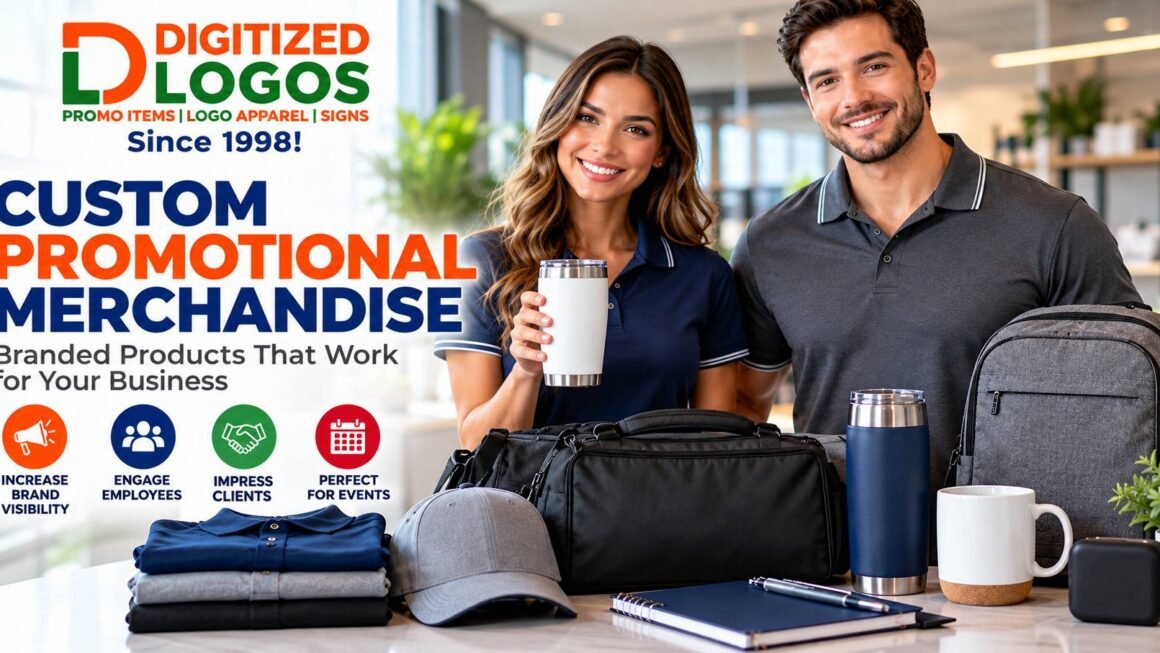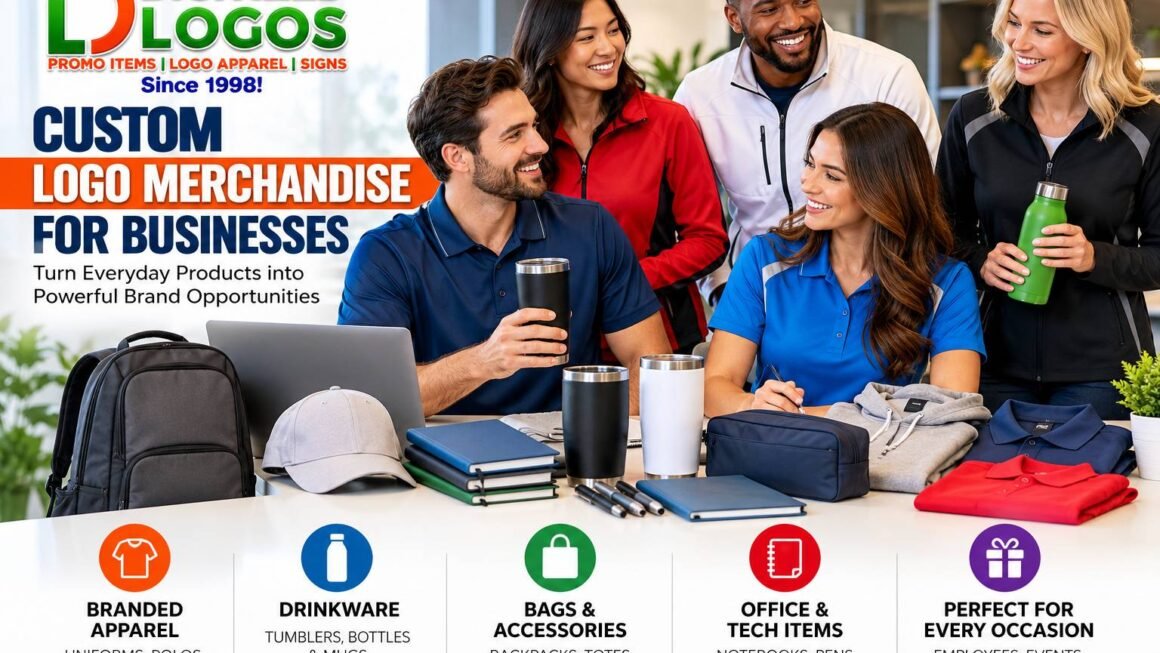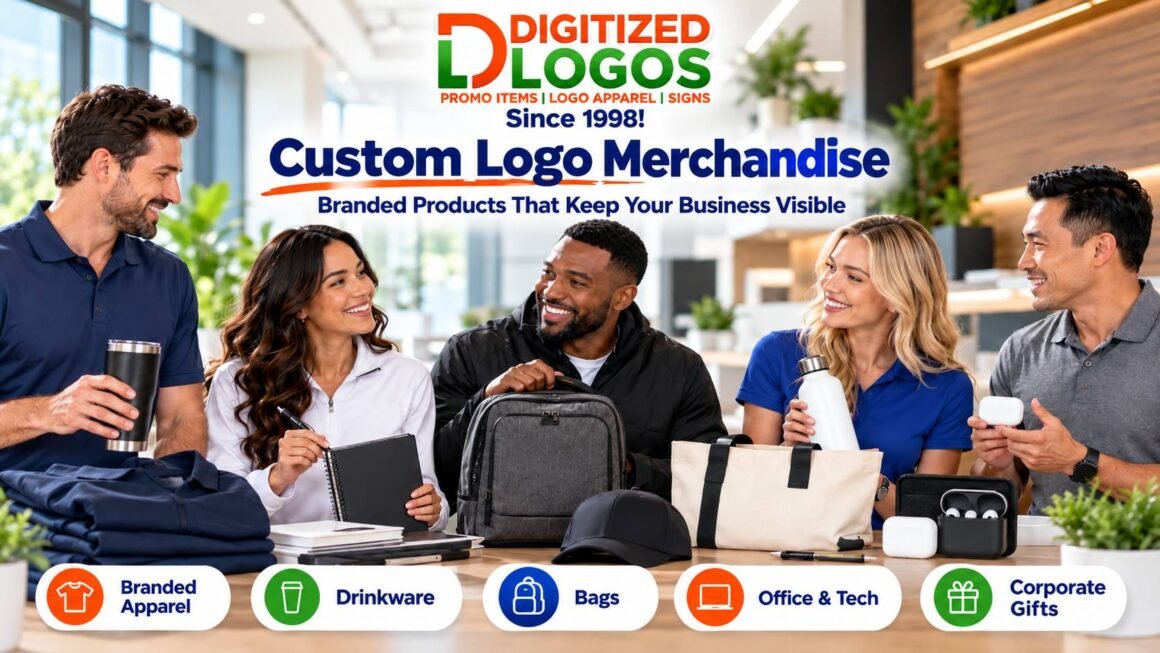
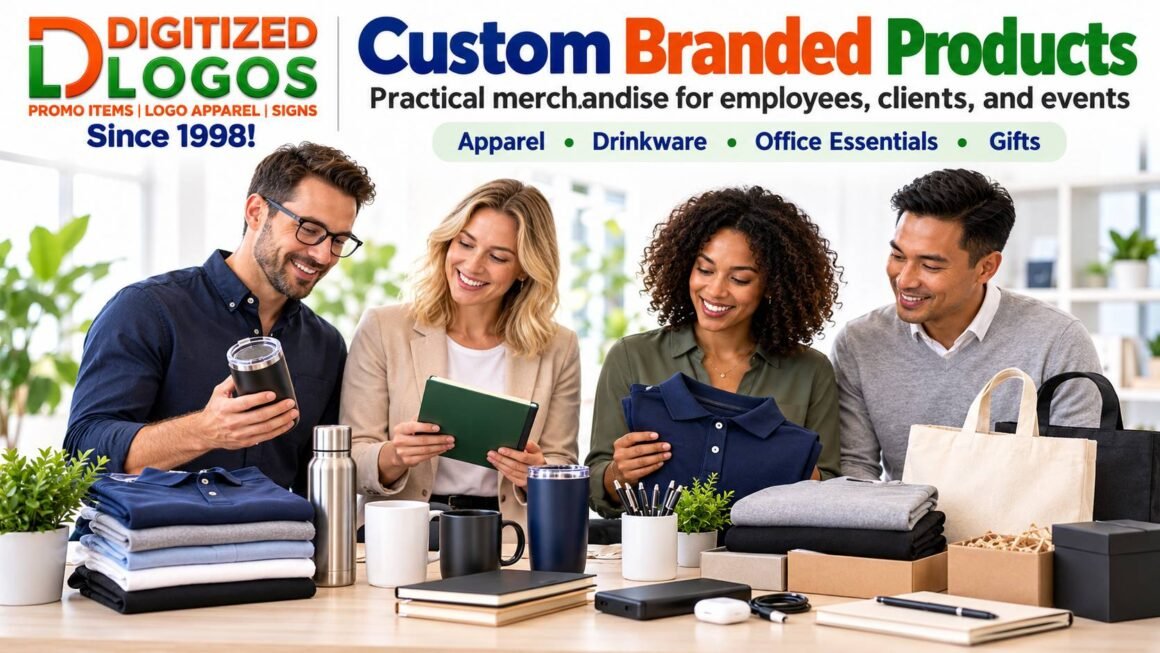
Custom branded products help businesses extend their identity beyond websites, advertising, and sales presentations. A thoughtfully selected polo shirt, insulated tumbler, notebook, or technology accessory can put a company logo into everyday settings while giving employees, customers, and business partners something useful.
For purchasing managers, marketing teams, human resources departments, and business owners, choosing custom branded products involves more than selecting merchandise and adding a logo. Product quality, decoration methods, order quantities, intended recipients, and delivery requirements all affect how well a branded merchandise program performs.
Digitized Logos provides promotional products, branded apparel, corporate merchandise, and customization solutions for businesses. This guide explains how to evaluate product options, understand production requirements, manage costs, and develop branded merchandise that supports practical business objectives.
What Are Custom Branded Products?
Custom branded products are physical items personalized with a company’s logo, name, colors, message, or other approved brand elements. Businesses use these products for employee uniforms, customer appreciation, promotional campaigns, corporate events, onboarding programs, and professional gifting.
Common examples include:
- Branded apparel: Polo shirts, jackets, performance shirts, hoodies, uniforms, and hats.
- Drinkware: Insulated tumblers, reusable water bottles, coffee mugs, and travel cups.
- Office essentials: Notebooks, pens, journals, desk accessories, and portfolios.
- Technology accessories: Wireless chargers, charging cables, device stands, and computer accessories.
- Bags and travel accessories: Backpacks, laptop bags, totes, and travel organizers.
- Corporate gifts: Curated gift sets, premium merchandise, and employee recognition items.
The distinguishing feature is intentional customization. Instead of distributing an ordinary retail item, a business selects a product that represents its identity and serves a defined purpose for the recipient.
Why Businesses Invest in Branded Merchandise
Branded merchandise can support several business functions, but the value depends on product relevance, recipient interest, and actual use. Merchandise that sits unused in storage offers less practical value than items employees and customers regularly carry, wear, or keep at their desks.
Increase Brand Visibility Through Everyday Use
A company logo on a frequently used item creates opportunities for repeated brand exposure. For example, a reusable water bottle carried to the office or a branded jacket worn by a service technician may display the company’s identity in environments beyond its primary workplace.
Repeated exposure does not automatically produce sales or measurable brand recognition. Businesses should evaluate merchandise according to its intended audience and broader marketing strategy rather than assuming every logo impression has equal value.
Maintain a Consistent Professional Appearance
Branded apparel can help employees present a recognizable company identity during customer visits, trade shows, training sessions, and daily operations.
For customer-facing teams, consistent logo placement, coordinated apparel colors, and appropriate garment styles may contribute to a more unified appearance. Uniform programs also make it easier for purchasing departments to establish approved products and replacement procedures.
Support Employee Onboarding and Recognition
Welcome kits can introduce new employees to a company’s visual identity while providing useful workplace essentials. Branded jackets, notebooks, drinkware, and accessories are common choices depending on the employee’s role and working environment.
Recognition gifts serve a different purpose. Their usefulness depends on perceived quality, recipient preferences, and how well the gift reflects the occasion.
Strengthen Customer and Business Relationships
Corporate merchandise can be incorporated into customer appreciation programs, business meetings, partner events, and account relationship initiatives.
A carefully chosen gift is more likely to be appreciated when it suits the recipient’s professional needs or personal interests. Expensive merchandise is not necessarily more effective than a modest, useful item.
How to Choose Custom Branded Products for Your Business
The most effective purchasing decisions begin with a clear purpose. Rather than selecting products solely because they are popular, businesses should evaluate who will receive them, how they will be used, and what operational requirements must be satisfied.
- Define the objective. Determine whether the merchandise is intended for brand awareness, employee recognition, uniforms, corporate gifting, or a specific event.
- Identify the recipients. Consider their work environment, preferences, daily routines, and practical needs.
- Establish a complete budget. Include product costs, customization, setup charges, packaging, shipping, and any applicable fulfillment expenses.
- Select appropriate products. Compare materials, durability, functionality, available colors, and decoration compatibility.
- Review logo requirements. Confirm artwork quality, permitted brand colors, imprint dimensions, and placement options.
- Confirm production and delivery requirements. Review minimum quantities, proofing, production schedules, shipping destinations, and event deadlines.
- Plan distribution and reordering. Determine whether merchandise will be distributed at one event, stored for future use, or ordered continuously.
This process helps purchasing teams identify practical constraints before approving a product rather than discovering them after an order has entered production.
Which Branded Products Work Best for Different Business Needs?
There is no universal best promotional product. The appropriate choice depends on the campaign’s purpose, the recipient, the environment, and the available budget.
Employee Uniforms and Team Apparel
Branded polo shirts, jackets, performance apparel, and headwear are suitable options for organizations seeking coordinated employee presentation.
For a hypothetical HVAC service company, moisture-management polos might be appropriate for warmer conditions, while branded outerwear could support technicians working in colder weather. The purchasing team would need to evaluate garment durability, available sizes, comfort, and any applicable workplace safety requirements.
Trade Shows and Corporate Events
Events often require merchandise that is easy to transport, distribute, and use. Pens, notebooks, reusable drinkware, phone accessories, and compact promotional items may fit these requirements.
Consider a hypothetical business preparing merchandise for a conference. Instead of ordering a large assortment of unrelated giveaways, the team could choose one practical item for general visitors and a more specialized gift for scheduled meetings with qualified prospects.
This approach allows the purchasing team to match product costs and distribution plans to different event objectives.
Client Appreciation and Corporate Gifting
Corporate gifts should reflect the relationship and the recipient’s likely preferences. Premium drinkware, professional bags, desk accessories, and curated merchandise sets can be appropriate for client appreciation programs.
Businesses operating in regulated industries or working with government organizations should review relevant gift acceptance policies before selecting merchandise.
New Employee Welcome Kits
Onboarding kits commonly combine useful products such as a branded notebook, drinkware, and apparel. Consistency matters when new employees join throughout the year or work at multiple locations.
For organizations with ongoing hiring, a standardized selection of approved merchandise can simplify ordering, improve inventory planning, and reduce repeated artwork approvals.
Understanding Customization and Logo Decoration Methods
One of the most important decisions in purchasing custom branded products is choosing a decoration method compatible with the item, artwork, and intended use.
Different production methods produce different results. A decoration process that works well on a cotton shirt may not be suitable for an insulated tumbler or a textured jacket.
Embroidery
Embroidery uses stitching to reproduce logos or artwork on fabric. It is commonly used for polos, jackets, hats, and professional uniforms.
Embroidery can create a textured, durable decoration, but very small lettering, intricate gradients, and fine details may require artwork simplification. Stitch count, fabric type, and design dimensions also influence production suitability.
Screen Printing
Screen printing applies ink to fabric through prepared screens. It is commonly used for T-shirts, sweatshirts, and larger apparel orders.
This method can be effective for designs with defined colors and consistent placement. However, setup requirements and the number of ink colors may influence cost and production decisions.
Dye Sublimation
Dye sublimation uses heat to transfer dye into compatible materials. For apparel, it is particularly suited to polyester fabrics designed for sublimation printing.
Full-color sublimation allows detailed artwork, gradients, and extensive garment decoration. It can be useful for custom jerseys, performance apparel, and visually distinctive corporate clothing. Results depend on compatible materials and production processes, so not every garment is suitable.
Heat Transfer Decoration
Heat transfer methods apply graphics to compatible surfaces using heat and pressure. Depending on the technology, they may accommodate detailed designs, multiple colors, and certain types of personalization.
Buyers should confirm garment compatibility, care instructions, and the expected appearance and feel of the finished decoration.
Laser Engraving and Other Product Decoration
Laser engraving can create a permanent marking on certain compatible materials, including select metal, wood, and coated products. Pad printing, digital printing, and other imprint processes may be available for drinkware, office items, and accessories.
Decoration options vary by product, material, and supplier. Buyers should review product-specific customization specifications before finalizing artwork.
Why Artwork Preparation Matters More Than Buyers Expect
A logo that looks sharp on a computer screen does not necessarily translate into a clean finished imprint. Artwork quality and production compatibility can significantly affect the appearance of branded merchandise.
For example, an embroidery design containing tiny text may become difficult to read when stitched onto a small chest area. A multicolor design intended for printing may also require a different production file than an engraved logo.
Before approving production, verify the following:
- The correct, approved company logo is being used.
- Artwork files meet the supplier’s requirements, including vector formats where appropriate.
- Brand colors and decoration color limitations have been reviewed.
- The imprint location and dimensions are suitable for the product.
- Small lettering and fine details remain legible at actual production size.
- Any required artwork proof has been reviewed and approved.
A digital proof is valuable for confirming layout, spelling, placement, and general appearance, but it may not reproduce every material or color characteristic of the final physical product. For significant orders, a physical sample may be worth considering when available.
What Determines the Cost of Custom Branded Products?
The cost of branded merchandise depends on more than the unprinted item’s advertised price. Product selection, order size, decoration requirements, setup charges, and shipping arrangements can all influence the final expense.
Important pricing variables include:
- Product quality and materials: Fabric composition, construction, capacity, finishes, and brand selection affect base pricing.
- Order quantity: Larger quantities may qualify for lower unit pricing, depending on the item and supplier.
- Decoration method: Embroidery, printing, engraving, and other processes have different cost structures.
- Number of decoration locations: Adding a second logo location or additional customization may increase costs.
- Artwork preparation: Certain designs require setup, conversion, or production adjustments.
- Packaging and fulfillment: Individual gift boxes, kitting, and multiple delivery addresses can introduce additional expenses.
- Production requirements: Special handling, expedited production when available, and shipping deadlines may affect the total.
Understanding the True Cost Per Item
Consider a hypothetical company purchasing 200 branded water bottles. Assume each bottle costs $8, the total setup charge is $60, and shipping costs $140.
The estimated total would be $1,800, or $9 per bottle, before any applicable taxes or other charges.
This example uses assumed figures, not actual Digitized Logos pricing. Its purpose is to show why comparing complete delivered costs is more informative than comparing product prices alone.
Businesses should request quotes that identify relevant charges and clarify what is included before authorizing an order.
Minimum Order Quantities and Flexible Purchasing
Minimum order quantity, often abbreviated MOQ, refers to the smallest number of units a supplier will accept for a particular product or decoration process.
Some products are available in small quantities, while others require larger orders because of manufacturing, printing setup, or supplier requirements.
Businesses should distinguish between three purchasing situations:
- One-time bulk purchases: Appropriate for planned events, major campaigns, and large employee distributions.
- Small or occasional orders: Useful for individual replacements, new hires, and limited gifting programs when supported by the selected product.
- Recurring merchandise programs: Designed for organizations that need approved products available over an extended period.
Digitized Logos offers company store solutions alongside promotional product sourcing and customization services. Specific minimums, personalization options, and setup requirements depend on the merchandise and ordering program selected.
How Online Company Stores Simplify Branded Merchandise Programs
An online company store is a dedicated ordering environment where an organization can make approved branded merchandise available to authorized buyers, employees, or other intended recipients.
Instead of having different departments independently source similar products, a company store can organize merchandise selections, approved logos, and ordering processes in one place.
This approach can be particularly valuable for businesses with distributed employees or recurring promotional needs.
Brand Consistency
Approved product selections help reduce the risk of outdated logos, inconsistent decoration, and mismatched apparel choices across teams.
Simplified Reordering
Employees or purchasing managers can return to previously established merchandise selections instead of restarting the sourcing process for every order.
Multi-Location Distribution
Organizations operating across offices, branches, or remote teams may benefit from coordinated fulfillment arrangements. Depending on the program, products can be shipped in bulk or distributed to multiple approved destinations.
Inventory and Purchasing Visibility
For programs with inventory management or reporting capabilities, centralized purchasing can improve oversight of frequently ordered items, stock planning, and departmental merchandise needs.
Actual features vary by store configuration and fulfillment arrangement, so businesses should confirm the capabilities required for their program.
Common Mistakes Businesses Make When Ordering Branded Products
Many merchandise problems are preventable when product specifications, artwork, quantities, and delivery expectations are addressed early.
Choosing Products Based Only on Price
A low unit price may be attractive, but it should not outweigh basic considerations such as product functionality, recipient suitability, and expected useful life.
Ordering Without Checking Product Dimensions
Catalog photographs can make products appear larger or smaller than their actual dimensions. Buyers should check physical specifications, capacities, material descriptions, and imprint areas.
Using Artwork That Is Not Production-Ready
Low-resolution images, outdated logos, and excessively complex designs can create additional artwork work or compromise the finished appearance.
Overlooking Apparel Sizing
Apparel programs require consideration of fit, style, size availability, and replacement needs. Sizing expectations can vary among manufacturers and garment collections.
Leaving Production Decisions Until the Last Minute
Artwork approval, product availability, production scheduling, and transit can each affect the delivery date. Event buyers should establish a required arrival date rather than relying exclusively on the event date itself.
Ignoring the Reordering Process
Organizations with ongoing merchandise needs should consider how approved artwork, product information, and purchasing records will be maintained for future orders.
How to Evaluate a Branded Merchandise Supplier
Choosing a supplier is a commercial decision that should account for service quality, operational capabilities, and product suitability, not just catalog size.
When comparing providers of branded products for business, ask how they handle artwork review, customization recommendations, order approvals, shipping coordination, and recurring purchasing needs.
A useful supplier evaluation should address the following questions:
- Can the supplier recommend products suitable for the audience and budget?
- Which decoration methods are available for the selected merchandise?
- Are product specifications and imprint limitations clearly communicated?
- Are setup charges, quantity requirements, and shipping expenses explained?
- What proofing or sample options are available?
- How are production and delivery expectations established?
- Can the supplier support ongoing reorders or multiple shipping locations?
- Are company store or fulfillment solutions available if the program expands?
Clear answers help businesses compare proposals on a consistent basis and reduce the risk of misunderstandings after purchase approval.
How to Measure the Value of a Branded Merchandise Program
Businesses often evaluate merchandise primarily by unit cost, but a useful program assessment also considers whether the products achieved their intended purpose.
For employee programs, evaluation might focus on practical adoption, employee feedback, replacement frequency, and ordering efficiency. For conferences, teams could review distribution quantities, remaining inventory, and follow-up activity associated with the event.
Depending on the objective, relevant measures include:
- Actual merchandise cost per distributed item.
- Percentage of ordered inventory distributed or used.
- Recipient feedback about product quality and usefulness.
- Employee participation in branded apparel programs.
- Time and administrative effort required to manage ordering.
- Inventory waste and unplanned replacement costs.
- Campaign-specific engagement or follow-up activity when reliably attributable.
Brand exposure and customer goodwill can be difficult to convert into a precise financial return. Businesses should avoid assigning unsupported revenue values to impressions or assuming that merchandise alone caused a sales outcome.
Frequently Asked Questions About Custom Branded Products
What are the best custom branded products for businesses?
The best choice depends on the recipient and intended use. Branded apparel can work well for employee programs, while drinkware, office accessories, and technology items may be suitable for customer gifts or conferences. Durability, usefulness, budget, and branding quality should guide product selection.
Can I order custom branded merchandise in small quantities?
Some promotional products and apparel can be ordered in small quantities, but minimums vary by item, supplier, and decoration method. Certain production processes require larger orders. Confirm minimum quantities and any setup charges for the specific product before assuming single-unit or low-volume ordering is available.
How long does it take to produce branded promotional products?
Production timelines vary based on product availability, order quantity, artwork requirements, customization method, and supplier workload. Shipping adds another consideration. Buyers with fixed deadlines should provide their required delivery date early and obtain a confirmed production and shipping plan before approving an order.
What type of logo file should I provide for customization?
Vector artwork is often preferred for many decoration methods because it can be scaled without losing resolution. Some suppliers also accept high-resolution raster files, depending on the product and imprint process. Always request the specific artwork requirements and review the production proof before approval.
Can one supplier manage promotional products for multiple company locations?
Yes, some branded merchandise suppliers offer centralized ordering, company stores, inventory coordination, and multi-location fulfillment. The available arrangements depend on the supplier and the program. Organizations should confirm shipping destinations, ordering permissions, customization consistency, and the procedures for ongoing replenishment.
Key Takeaways for Business Buyers
- Select branded merchandise according to recipient needs and a clearly defined business purpose.
- Evaluate total delivered cost, not just the advertised product price.
- Match decoration methods and artwork specifications to the product material and intended use.
- Confirm order quantities, approvals, and delivery requirements before production.
- Consider centralized ordering and company store solutions when merchandise needs are recurring or spread across multiple locations.
Build a More Effective Branded Merchandise Program With Digitized Logos
Successful merchandise programs begin with practical product selection, consistent branding, and a purchasing process that fits the organization’s needs. The right approach can help businesses use custom branded products across employee programs, customer relationships, corporate events, and ongoing marketing initiatives.
Digitized Logos supports businesses seeking promotional merchandise, branded apparel, corporate gifts, and company store solutions. From comparing product options to reviewing customization and distribution requirements, a coordinated approach can make branded merchandise purchasing more manageable.
Explore custom branded products from Digitized Logos to find merchandise suited to your organization’s goals, audience, and budget.
Ready to discuss your branded merchandise needs? Contact Digitized Logos at 301-963-3553 or email info@DigitizedLogos.com for assistance with product selection, customization, and purchasing options.