Branded Employee Uniforms Turn Employees Into Walking Billboards
Quick Answer
Branded employee uniforms are more than work attire. They are a long-term marketing asset that helps organizations create daily visibility, strengthen customer recognition, and support employee visibility marketing wherever team members interact with customers, prospects, and their communities.
When designed strategically, branded apparel turns employees into recognizable representatives of the business. The result is repeated brand exposure that can improve trust, local awareness, recall, and customer confidence without relying exclusively on recurring advertising spend.
Key Takeaways
- Employees can create brand impressions during customer interactions, travel, events, and community activity.
- Consistent uniforms make teams easier to recognize and can strengthen customer trust.
- Branded apparel creates repeat exposure long after the original purchase.
- Marketing value improves when apparel is treated as part of a larger visibility strategy.
- Scalable ordering, clear design standards, and employee adoption help maximize return on investment.
What Are Branded Employee Uniforms?
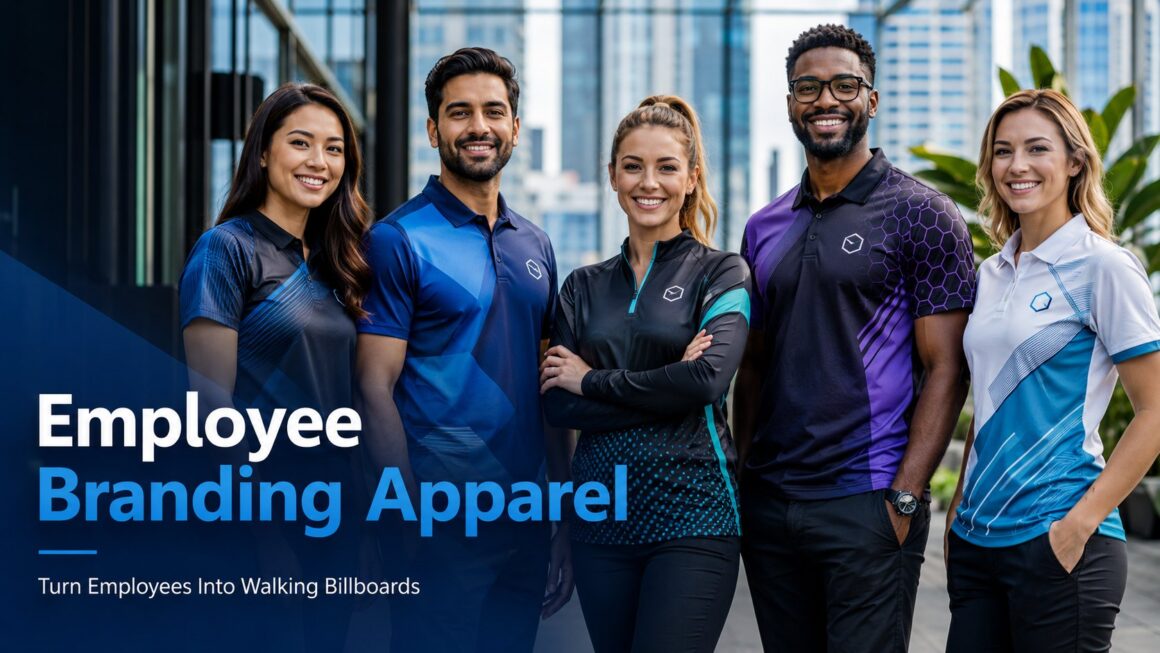
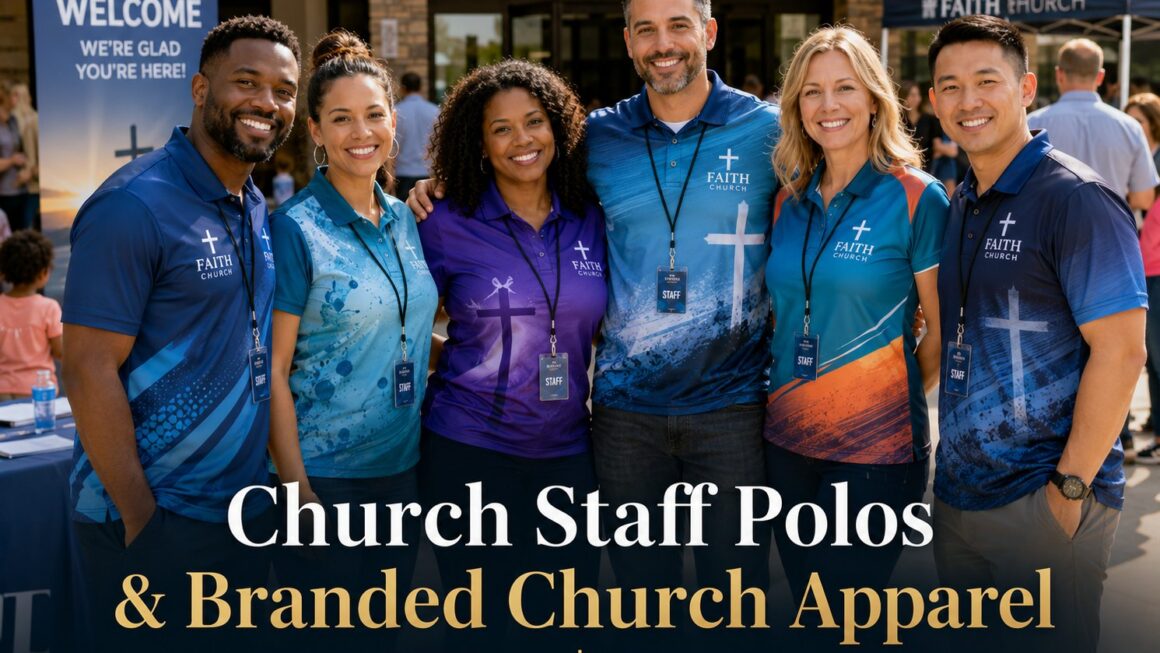
Branded employee uniforms are custom garments designed to make employees instantly recognizable while presenting a consistent company identity. They can include polos, shirts, quarter-zips, jackets, safety apparel, hospitality uniforms, team apparel, and other coordinated garments featuring company colors, logos, messages, or visual elements.
For growing organizations, uniforms should not be viewed only as an operational expense. They are a customer recognition tool, a workforce branding system, and a practical extension of the company’s marketing presence. Dye sublimation apparel gives organizations flexibility to create full-color, highly visible designs that reinforce brand identity across departments, locations, events, and customer-facing roles.
Employees are one of the most underutilized marketing assets in any organization. Unlike a digital ad that disappears after a campaign ends, branded workwear can continue representing the company through everyday customer interactions and public visibility.
How Branded Employee Uniforms Support Business Growth
Businesses invest in advertising to reach people who may need their products or services. A branded workforce reaches people in a different but highly credible way. Customers see real employees delivering service, solving problems, working on-site, attending events, making deliveries, and representing the business in their local market.
This visibility supports business growth because it helps move the company from unfamiliar to recognizable. Customers are more likely to remember a company that appears organized, established, and visible in the places where they live, shop, work, and make purchasing decisions.
Employee visibility marketing is especially valuable for businesses that rely on trust, repeat transactions, local awareness, referrals, and face-to-face service. Restaurants, HVAC companies, solar providers, dealerships, hospitality teams, furniture stores, retail businesses, and contractors all benefit when employees look consistent and identifiable.
The Walking Billboard Effect
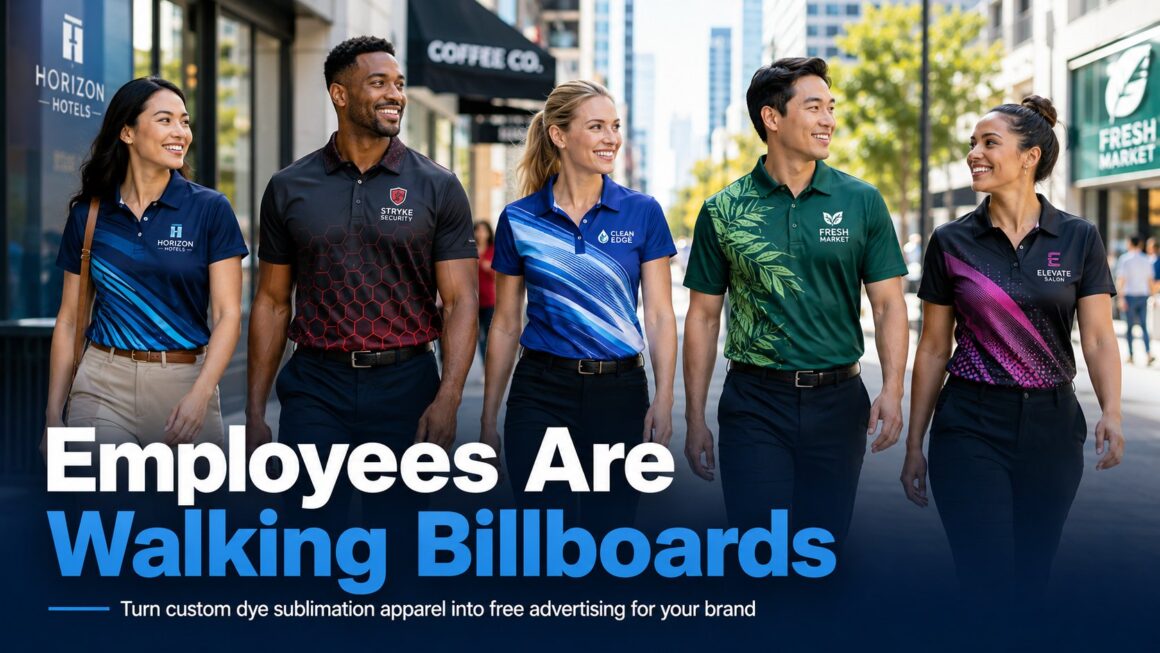
The walking billboard effect occurs when employees create repeated brand exposure simply by doing their jobs in branded apparel. Every interaction at a customer location, trade event, storefront, community gathering, service call, delivery route, or local business district becomes a potential visual impression.
Walking billboard marketing works because familiarity builds over time. A person may not contact a company after seeing its branding once, but repeated exposure can make the business easier to recall when a relevant need arises. This matters for local service companies, hospitality brands, restaurants, retailers, and organizations operating in competitive markets.
Branded apparel also creates exposure beyond formal work hours. Employees may stop for coffee, commute on public transportation, pick up supplies, attend community functions, or participate in local events while wearing company apparel. Each appearance reinforces visual familiarity without requiring a separate media purchase.
The long-term advantage is longevity. A paid social campaign, radio placement, print ad, or direct-mail drop has a defined run time. A well-made uniform can continue creating impressions across many months of service. The cost is paid once, but the visibility can continue through repeated use.
Employees are one of the most underutilized marketing assets in any organization because they already represent the company in the real world. A consistent uniform system makes that representation more memorable, more professional, and more useful for brand visibility.
Why Employees Are One of the Most Powerful Marketing Channels
Employees are often the most visible part of a customer’s experience with a company. They greet customers, answer questions, perform services, deliver products, attend events, visit job sites, and solve problems. Their appearance affects how customers perceive the company before a conversation even begins.
When employees wear coordinated company apparel, the business appears more established and easier to trust. Customers do not need to wonder who is authorized to help them, who belongs to the company, or whether a service professional is legitimate. That recognition can improve customer comfort, especially in industries where teams enter homes, work on-site, or manage high-value transactions.
Employee branding also supports community exposure. A company with a visible workforce can build local brand awareness through schools, neighborhoods, retail centers, sporting events, supplier visits, networking events, and nonprofit partnerships. This is particularly relevant in Maryland, Virginia, Washington DC, and other markets where local reputation can influence purchasing decisions.
Custom uniforms support trust because they make the organization look coordinated. Customers often associate visual consistency with operational consistency. A clean, recognizable team can communicate preparedness, accountability, and attention to detail before the employee explains a product or service.
Employee visibility marketing does not replace other marketing channels. It strengthens them. When customers see a company online, in a mailer, on a vehicle, and again through a uniformed employee, the brand becomes easier to remember and more credible.
Understanding the ROI of Branded Apparel
The return on investment of branded apparel comes from long-term visibility, customer familiarity, and repeat exposure. The most useful way to evaluate the investment is not simply by the price of a shirt or polo. It is by considering how often the garment is worn, how many people see it, where it is seen, and whether that exposure supports trust and recognition.
Custom uniforms can create a lower long-term cost per impression than many short-duration advertising channels. A digital advertisement may generate immediate reach, but it requires continued budget to remain visible. A uniform can create repeated impressions during every customer-facing workday without a recurring media placement cost.
ROI also includes retention value. When employees feel part of a professional, unified team, apparel can support pride, belonging, and confidence. Customers benefit from easier recognition, while employees benefit from a clearer sense of representation and consistency.
Organizations should measure value through practical indicators such as customer recognition, referral mentions, walk-in awareness, service-call confidence, employee adoption, repeat use, event visibility, and brand consistency across locations. The strongest programs connect apparel to broader marketing and operational objectives rather than treating it as an isolated purchasing decision.
Are Employees Walking Billboards?
Yes. Employees become walking billboards when they wear recognizable company apparel in customer-facing, community, travel, event, or service environments. Their visibility can create repeated brand impressions while also making the business easier to identify and trust.
How Many Impressions Can Employee Apparel Generate?
The number depends on workforce size, customer traffic, employee travel, public interaction, events, and how often garments are worn. A uniform program can generate hundreds or thousands of cumulative impressions over time because each garment is visible repeatedly across many workdays.
Is Custom Apparel a Marketing Investment?
Custom apparel is a marketing investment when it is designed to support recognizable branding, customer confidence, repeat exposure, and workforce consistency. The value increases when apparel is integrated with company vehicles, signage, digital campaigns, event marketing, and customer experience standards.
Business Examples: How Employee Apparel Creates Results
Restaurant Group Builds Local Recognition
A multi-location restaurant group introduces bold, consistent staff shirts featuring its colors, logo, and location-specific visual elements. Employees wear the apparel during shifts, food-truck activations, catering jobs, community events, and neighborhood promotions.
The outcome is stronger local recognition. Customers begin associating the restaurant’s visual identity with positive food experiences, friendly service, and community presence. The apparel also helps guests quickly identify staff during busy periods, improving service confidence and supporting repeat visits.
HVAC Company Increases Service-Call Trust
An HVAC provider outfits technicians in professional, easy-to-identify branded workwear. The design includes clear logo placement, coordinated colors, employee names, and visual elements that match the company vehicle fleet and website.
The business outcome is improved customer confidence at the door. Homeowners can identify technicians quickly, which reduces uncertainty and supports trust during service calls. The apparel also reinforces the company name throughout neighborhoods as technicians travel between appointments.
Solar Installer Strengthens Community Visibility
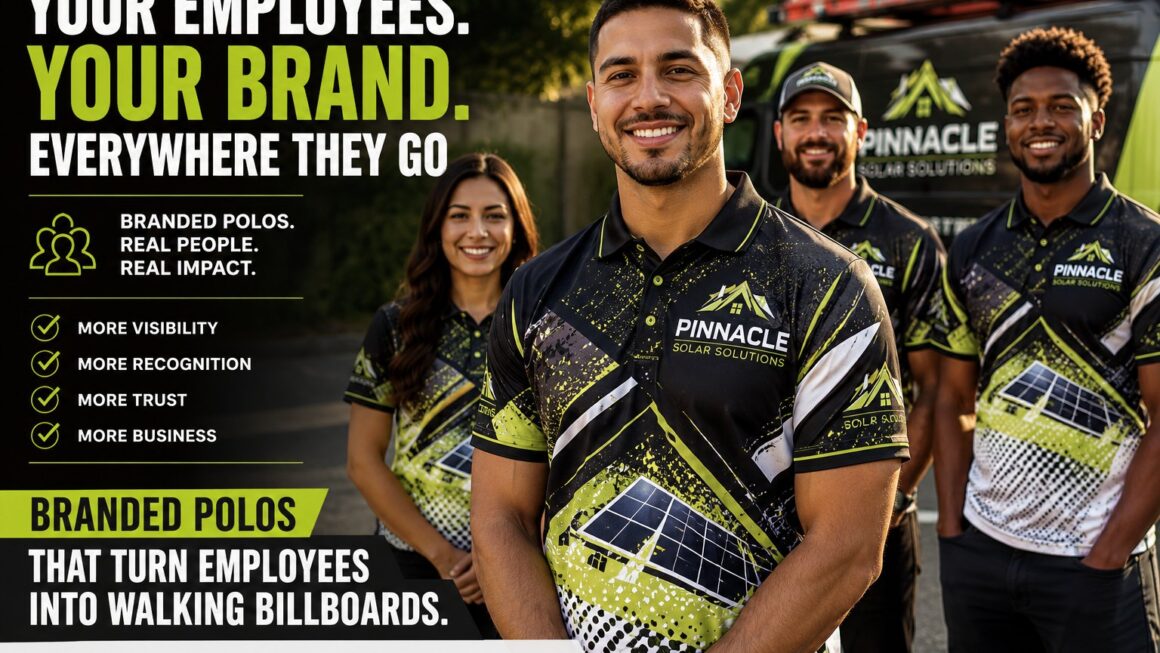
A solar company equips installation crews and sales representatives with coordinated full-color apparel that reflects its sustainability message and local service area. Team members wear the apparel at home consultations, installation sites, trade shows, neighborhood events, and referral appointments.
The outcome is sustained visibility in the communities where the company wants to grow. Neighbors see a recognizable team working on nearby homes, which can encourage questions, referrals, and future inquiries. Company apparel becomes a practical bridge between project activity and local market awareness.
Branded Apparel Compared With Traditional Advertising
Digital Advertising
Digital advertising can deliver targeted reach and measurable campaign data, but visibility usually ends when the budget pauses. Branded apparel creates a different type of exposure: personal, physical, and repeated. It works especially well when customers value familiarity and face-to-face trust.
Direct Mail
Direct mail can introduce an offer or message to a defined audience, but it is often discarded quickly. Employee apparel creates recurring exposure across many interactions and can reinforce the same message customers see through mail campaigns, signage, or local promotions.
Radio Advertising
Radio can reach broad local audiences, but listeners may not connect the message to a real-world experience. A uniformed employee creates a tangible brand encounter. Customers can see who represents the company, which can improve recognition and credibility.
Print Advertising
Print ads can support brand awareness, but they compete for limited attention. Branded workwear is not competing on a page. It is visible during actual customer service, community activity, and business interactions where trust matters most.
Outdoor Advertising
Outdoor advertising can create major visibility in high-traffic locations, but it often requires substantial ongoing investment. Employee apparel offers a smaller-scale but highly repeatable visibility advantage. It is particularly effective for companies that want broad local presence without relying only on high-cost media placements.
How Small Businesses Can Increase Visibility Without Large Advertising Budgets
Small businesses can increase visibility by focusing on the people and places they already reach. Employees, company vehicles, customer visits, local events, deliveries, service appointments, and community partnerships can all become visibility opportunities when branding is consistent.
A practical strategy is to create a simple apparel system with a recognizable color palette, readable logo placement, role-specific garments, and consistent design standards. The goal is not to overload the garment with messaging. The goal is immediate recognition.
Small businesses should also connect their uniforms to the broader brand experience. The colors, logo style, tone, and visual quality should align with the website, social profiles, vehicle graphics, packaging, business cards, storefront, and sales materials. This consistency helps every marketing touchpoint reinforce the others.
Decision Support: Budget, Implementation, and Scalability
Buyer hesitation often comes from questions about budget, adoption, logistics, and whether the apparel will genuinely be used. The strongest approach is to begin with a clear business purpose. Determine whether the objective is customer recognition, service-call trust, event visibility, local awareness, employee pride, or a combination of these outcomes.
Budget planning should account for the expected life of the garment, the number of workdays it will be worn, employee role requirements, and brand visibility goals. A lower-cost item that is rarely worn may create less value than a higher-quality garment employees choose to wear consistently.
Implementation is easier when organizations develop a simple approval process for logo use, colors, garment types, and placement standards. Employee branding should remain consistent across departments while still allowing flexibility for weather, job function, safety needs, and customer-facing responsibilities.
Ordering logistics matter as teams grow. Companies should consider onboarding needs, replacement garments, seasonal changes, location-specific requirements, event apparel, and employee size ranges. A scalable program can support a five-person local business, a multi-location operation, or a growing workforce across the United States.
Digitized Logos provides branded apparel and promotional product solutions, including sourcing, customization, production, and fulfillment support. As an MDOT, DDOT, and VA SWaM Certified Small, Minority, Female-Owned Business, Digitized Logos helps organizations build practical programs that connect custom apparel with brand visibility and workforce branding goals.
Frequently Asked Questions
What is the ROI of branded uniforms?
The ROI of branded uniforms comes from repeat brand exposure, customer recognition, trust, employee consistency, and long-term use. The value is strongest when apparel is worn frequently and supports broader marketing, sales, and customer experience goals.
Why does branded apparel improve brand recognition?
Branded apparel improves recognition by giving customers a consistent visual cue to associate with the company. Repeated exposure to the same logo, colors, and design elements helps the business become more familiar and easier to recall.
How does employee branding support business growth?
Employee branding supports growth by making the business more visible, more recognizable, and easier to trust. It can strengthen customer interactions, reinforce local awareness, improve referral potential, and create a more consistent company presence.
Will employees actually wear custom uniforms?
Employee adoption improves when garments are comfortable, role-appropriate, well-designed, and aligned with workplace needs. Involving employees in fit selection and offering practical options for different weather conditions can increase consistent use.
Can branded apparel scale as a company grows?
Yes. A structured uniform program can scale across departments, locations, seasonal teams, new hires, events, and customer-facing roles. Clear brand standards and organized ordering processes make it easier to maintain consistency as the workforce expands.
Make Every Employee a Stronger Brand Asset
Branded employee uniforms create value far beyond appearance. They help organizations build recognition, create trust, improve customer clarity, and turn routine employee activity into a lasting visibility strategy.
Employees are one of the most underutilized marketing assets in any organization. When businesses invest in branded employee uniforms as part of a larger employee visibility marketing strategy, they can strengthen local awareness, reinforce company culture, and create more opportunities for business growth.
To explore flexible dye sublimation apparel options for your workforce, call 301-963-3553 or visit Digitizedlogos. Digitized Logos helps organizations build consistent, high-visibility apparel programs with customization flexibility, dependable production support, fast turnaround options, and scalable solutions for growing teams.