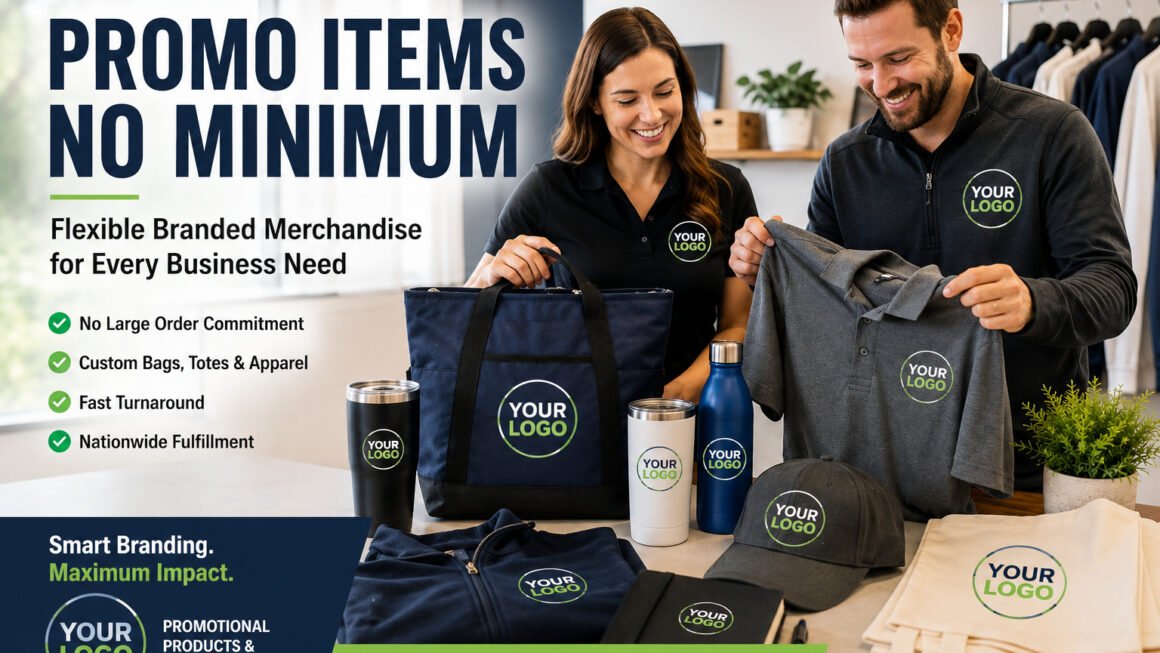
Promo Items No Minimum: Flexible Branded Merchandise for Businesses
Businesses increasingly need branded merchandise without being locked into large inventory commitments. Promo items no minimum ordering gives organizations the flexibility to purchase customized products in smaller quantities for employees, clients, events, sales teams, recognition programs, and targeted campaigns.
Digitized Logos provides branded apparel, promotional products, and corporate merchandise solutions for organizations that need flexibility without sacrificing professional presentation. Businesses can explore promotional merchandise and customization options through Digitized Logos, with support for sourcing, branding, production, and fulfillment.
The real advantage is not simply ordering fewer products. It is gaining better control over inventory, budgets, campaign testing, personalization, and distribution while still building a consistent brand experience.
Quick Answer: What Are Promo Items No Minimum?
Short Answer: Promo items no minimum are promotional products that can be customized without requiring a traditional large minimum order quantity. They are especially useful for small teams, executive gifts, employee onboarding, event testing, personalized merchandise, custom bags and totes, and programs where demand changes frequently.
Availability can vary by product, decoration method, branding requirements, and production process. A product that works economically at 12 units may require a different customization method than a program ordering 1,000 units.
Definition: What Does No Minimum Actually Mean?
No minimum promotional products generally means a buyer can order a product without meeting the larger minimum quantity commonly associated with traditional promotional manufacturing. Depending on the item and production method, this may mean ordering one piece, several pieces, or another very small quantity.
That distinction matters because promotional products have traditionally been priced around production efficiency. Setup, artwork preparation, decoration, packaging, and shipping all create costs before the merchandise reaches the recipient.
No-minimum and low-minimum programs give buyers another option. Instead of purchasing hundreds of units simply to reach a supplier threshold, organizations can align quantities more closely with actual demand.
What No Minimum Does Not Automatically Mean
No minimum does not necessarily mean every product, decoration technique, color, personalization option, or delivery schedule is available for a single unit. Buyers should evaluate the complete production specification rather than focusing only on quantity.
The important questions include product availability, decoration area, artwork requirements, production time, unit cost, shipping method, personalization requirements, and consistency with future reorders.
Why Businesses Choose Promo Items No Minimum
Short Answer: Businesses choose no-minimum promotional products to reduce excess inventory, test merchandise before scaling, support small teams, personalize gifts, respond quickly to events, and avoid committing budget to products that may never be distributed.
For procurement and marketing teams, flexibility can be more valuable than achieving the absolute lowest unit price. A lower unit price provides little value if 40 percent of the merchandise remains in storage after a campaign ends.
No-minimum ordering can be particularly useful for:
- Employee onboarding kits for new hires arriving at different times
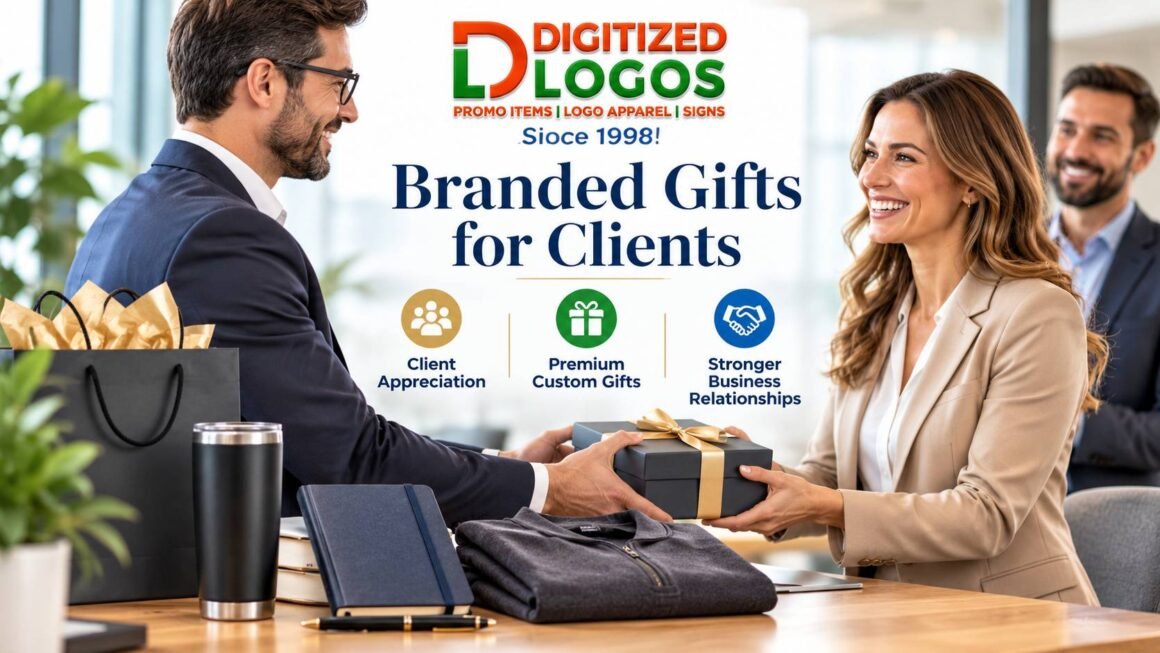
- Executive and VIP client gifts
- Trade show giveaways for smaller or specialized events
- Sales prospecting and account-based marketing campaigns
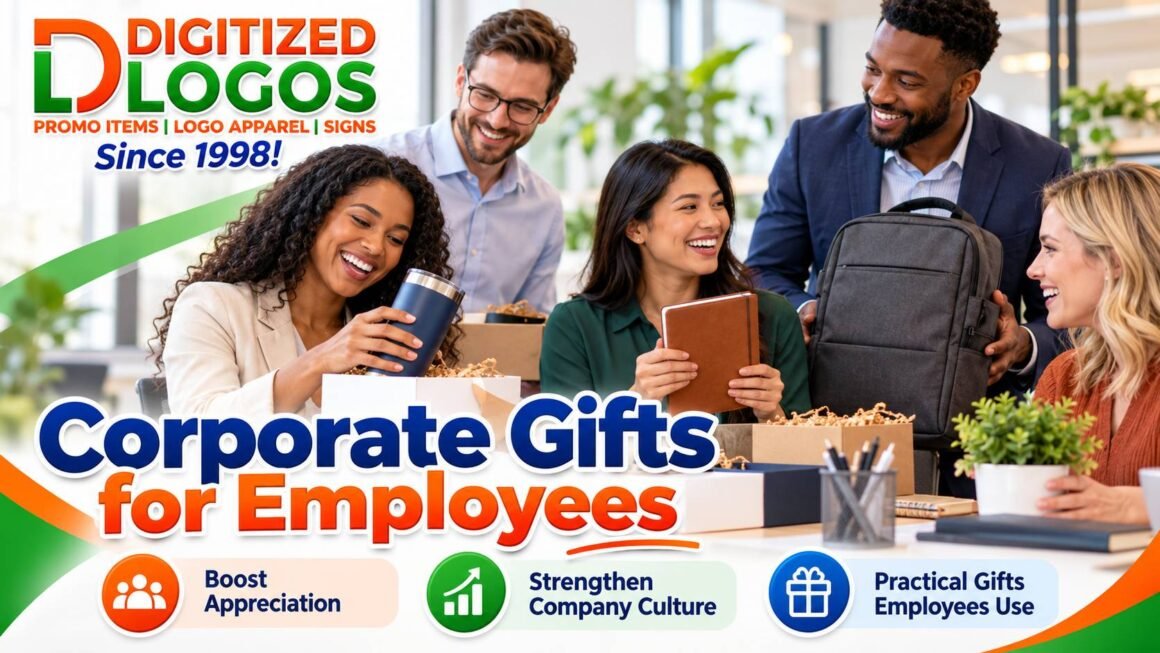
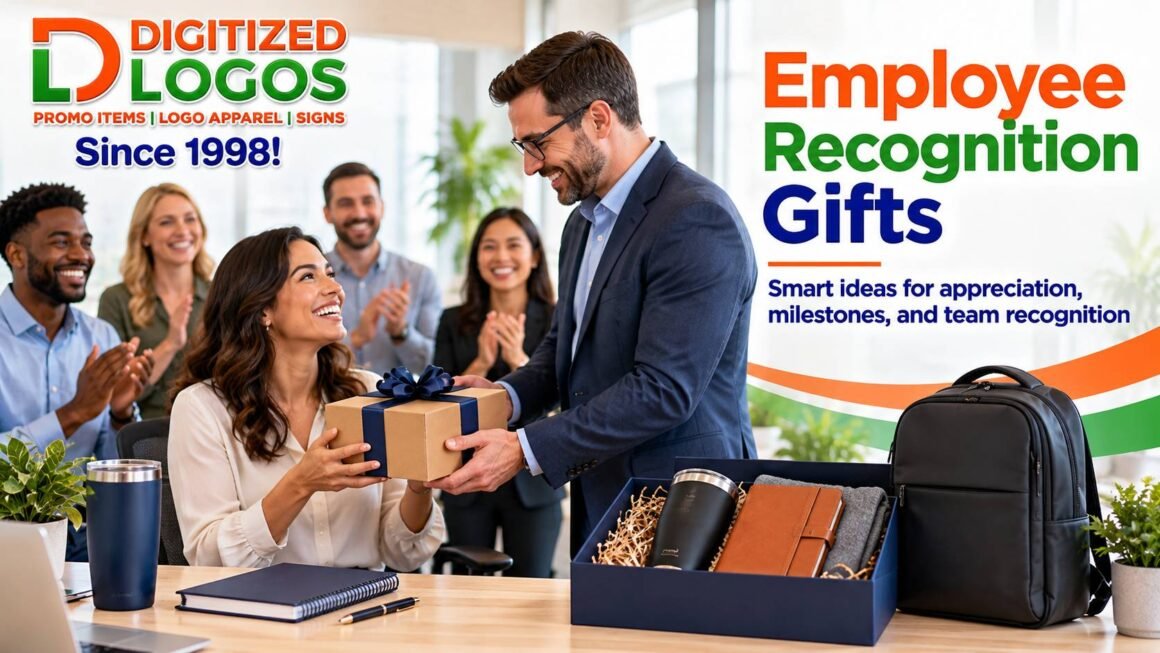
- Recognition gifts for individual employees
- Corporate swag for distributed and remote teams
- Custom bags and totes for meetings, events, and welcome packages
- Branded apparel for small departments or project teams
- Sample merchandise before a larger production run
- Short-term campaigns where demand is difficult to forecast
Promo Items No Minimum vs. Traditional Bulk Ordering
Neither purchasing model is universally better. The right choice depends on demand certainty, unit economics, storage capacity, customization, delivery requirements, and how the merchandise will be used.
No-Minimum Ordering
No-minimum ordering prioritizes flexibility. It can reduce inventory exposure and makes smaller, highly targeted programs practical. The tradeoff is that individual unit costs can be higher because setup and production costs are spread across fewer products.
Bulk Promotional Product Ordering
Bulk ordering usually produces stronger unit economics when demand is predictable. It can be the better choice for large conferences, nationwide employee programs, recurring customer giveaways, major product launches, and high-volume merchandise campaigns.
Hybrid Merchandise Programs
Many organizations benefit from combining both approaches. High-demand core products can be ordered in volume, while specialized items, employee gifts, executive merchandise, samples, and regional campaign products can be purchased in smaller quantities.
This hybrid model helps organizations balance cost efficiency with inventory flexibility.
Custom Bags and Totes for Flexible Merchandise Programs
Short Answer: Custom bags and totes are versatile promotional products because they combine practical utility, reusable branding space, event functionality, and broad audience appeal. They can support conferences, onboarding kits, retail promotions, corporate gifting, employee programs, and community events.
A tote bag is more than packaging when designed correctly. It can carry other promotional merchandise during an event and continue displaying the organization’s identity afterward.
Businesses can use custom bags and totes for:
- Conference registration packages
- Employee welcome kits
- Client appreciation packages
- University and recruiting programs
- Retail promotions
- Nonprofit events
- Healthcare outreach
- Association meetings
- Corporate gifting
- Local community campaigns
Material, handle construction, weight capacity, decoration area, color consistency, and intended use should all influence selection. An inexpensive lightweight tote may work well for a one-day conference, while an executive gift program may justify a heavier canvas, insulated, recycled, or premium bag.
Real-World Use Cases for No-Minimum Promotional Products
Example 1: Employee Onboarding Across Multiple Locations
Consider a professional services company hiring approximately 15 employees each month across Maryland, Virginia, Washington DC, and remote locations throughout the United States. Purchasing 500 identical onboarding kits at once creates storage requirements and may lock the company into merchandise before branding, sizing, or employee preferences change.
A flexible ordering model allows the company to replenish branded apparel, drinkware, notebooks, bags, and other onboarding merchandise in smaller batches. The organization can maintain a consistent welcome experience while reducing unnecessary inventory.
Example 2: Testing Merchandise Before a Major Event
Imagine a marketing team preparing for a conference expected to attract 3,000 attendees. Instead of immediately purchasing 1,000 units of an untested promotional item, the team could first order a small sample group.
Decision-makers can evaluate print quality, logo positioning, packaging, actual product size, perceived value, and employee reactions. Once approved, the organization can determine whether a larger production run makes financial and operational sense.
Step-by-Step Framework for Selecting Promotional Products
A strong promotional merchandise program begins with the business objective, not the catalog. Selecting an attractive item without understanding its audience, distribution method, and expected outcome often produces unnecessary spending.
- Define the business objective. Determine whether the merchandise is intended to generate awareness, support an event, welcome employees, reward clients, encourage referrals, or strengthen internal culture.
- Identify the recipient. Consider job role, demographics, environment, product usefulness, location, and how the recipient is likely to interact with the item.
- Determine realistic quantity. Estimate actual distribution rather than ordering additional inventory simply to reach a pricing tier.
- Set a total program budget. Include merchandise, decoration, setup, packaging, freight, individual shipping, and potential rush charges.
- Select the production method. Match the artwork and product to embroidery, screen printing, heat transfer, dye sublimation, engraving, digital printing, or another appropriate process.
- Approve artwork and samples. Review logo size, placement, colors, spelling, dimensions, and product specifications before production.
- Plan fulfillment early. Decide whether merchandise will ship to one location, multiple offices, an event venue, or individual recipients.
- Measure the outcome. Track distribution, employee adoption, event engagement, reorder demand, recipient feedback, or campaign response where practical.
Behind the Scenes: What Happens Before Your Logo Reaches a Product?
Professional promotional merchandise production involves more than placing a logo onto an item. A supplier must match product construction, artwork, decoration technology, production tolerances, quantity, deadline, and budget.
Behind the scenes, artwork may need to be converted into production-ready files. Embroidery can require digitization. Screen printing may require color separations and screens. Full-color dye sublimation requires artwork designed around printable product areas. Engraving and other methods have their own file and material requirements.
Practical operational insight: Decoration method can influence minimum quantity as much as the product itself. A buyer seeking a very small order should discuss both product selection and decoration technology rather than assuming every customization method has identical economics.
Practical operational insight: Shipping strategy should be decided before production. Sending 100 kits to one corporate office is operationally different from shipping 100 individually addressed packages across the United States.
Customization Options and Production Methods
The right customization process depends on the product, artwork, desired appearance, quantity, durability requirements, and budget.
Embroidery
Embroidery creates a professional dimensional appearance and is commonly used for polos, jackets, caps, uniforms, and premium corporate apparel. Complex designs may need simplification to remain readable when converted into stitches.
Screen Printing
Screen printing remains effective for many apparel programs, particularly when designs use a limited number of colors and quantities justify the production setup.
Full-Color Dye Sublimation
Dye sublimation is valuable when a program requires vibrant full-color graphics, gradients, repeating patterns, or extensive design coverage on compatible products and fabrics. It is particularly relevant for custom performance apparel, jerseys, event apparel, and highly visual branded merchandise.
Digital and Heat Transfer Decoration
Digital printing and transfer technologies can support detailed artwork and flexible production requirements on compatible products. Depending on the application, these processes may be practical for smaller runs.
Laser Engraving
Laser engraving creates a permanent, professional mark on compatible metal, wood, coated, and other products. It is frequently used for executive gifts, drinkware, awards, technology accessories, and premium merchandise.
Buyer Considerations Before Ordering Promo Items No Minimum
Business buyers should look beyond the phrase “no minimum.” Procurement decisions should consider total delivered value, not simply the smallest quantity a vendor will accept.
Evaluate:
- Total cost: Compare product, decoration, setup, freight, packaging, and fulfillment costs.
- Product quality: Confirm whether the merchandise reflects the intended brand positioning.
- Decoration quality: Make sure artwork remains clear and consistent on the selected material.
- Reorder consistency: Ask whether the same product or a comparable replacement is likely to remain available.
- Turnaround: Separate production time from shipping time when establishing deadlines.
- Customization flexibility: Determine whether names, departments, locations, numbers, or individual artwork can vary.
- Fulfillment: Establish whether orders need to reach one location or multiple recipients.
- Scalability: Make sure a successful small order can transition into a larger merchandise program.
Decision Support: Cost, ROI, Turnaround, and Fulfillment
Does No-Minimum Ordering Cost More?
Per-unit pricing can be higher on small orders because setup, customization, handling, and production costs are distributed across fewer items. Buyers should therefore compare total program cost rather than unit price alone.
For example, assume a company needs 35 premium gifts. Buying exactly 35 units at $28 each represents $980 in merchandise. A bulk alternative priced at $19 each may appear cheaper, but if it requires 100 units, the merchandise commitment becomes $1,900 before considering storage or unused inventory.
The lowest unit price is not always the lowest business cost.
How Should Businesses Think About ROI?
Promotional product ROI depends on the objective. A trade show giveaway may be evaluated through booth engagement and qualified leads, while an employee onboarding kit may be evaluated through experience, culture, retention support, and brand consistency.
Consider a targeted sales campaign in which 25 high-value prospects each receive a $45 branded package. The merchandise investment is $1,125 before fulfillment. If the campaign contributes to one qualified opportunity worth $20,000 in potential revenue, the economics can be more compelling than distributing hundreds of inexpensive products without a defined audience.
What About Turnaround Times?
Turnaround varies according to inventory availability, artwork approval, decoration method, quantity, personalization, packaging, and destination. Buyers working toward a fixed conference or launch date should work backward from the required delivery date rather than treating the event date as the production deadline.
How Difficult Is Implementation?
Implementation becomes easier when one partner coordinates product sourcing, artwork preparation, customization, production, and fulfillment. Digitized Logos provides branded apparel and promotional product solutions and helps businesses manage these interconnected stages.
The company manages sourcing, customization, and fulfillment, helping organizations reduce the administrative burden of coordinating merchandise through multiple vendors.
What About Quality Consistency?
Consistency becomes increasingly important as a merchandise program expands. Artwork specifications, approved logo files, brand colors, product references, decoration locations, and previous order information should be maintained so future orders remain aligned with established brand standards.
How No-Minimum Ordering Supports Merchandise Scalability
Short Answer: Small-quantity ordering can function as the testing layer of a larger merchandise strategy. Organizations can validate products, artwork, recipient response, and operational requirements before committing to larger inventory.
A program might begin with 10 executive gifts, expand into 75 employee kits, and eventually become a recurring merchandise program serving several offices. The initial small order generates information that improves later purchasing decisions.
This approach is particularly useful when companies are testing new apparel designs, changing brand standards, introducing employee merchandise, launching a new division, or evaluating promotional products for a national program.
Promotional Products Across the Employee and Customer Journey
The strongest corporate merchandise programs do not treat promotional products as isolated giveaways. They use branded merchandise strategically at meaningful moments in the employee or customer relationship.
Recruiting
Branded merchandise can strengthen career fairs, recruiting events, internship programs, and candidate welcome packages.
Employee Onboarding
Onboarding kits can combine branded apparel, drinkware, notebooks, custom bags and totes, technology accessories, and welcome materials into a consistent first-day experience.
Employee Recognition
Milestones, performance achievements, anniversaries, promotions, and team accomplishments create opportunities for more personalized branded gifts.
Trade Shows and Events
Event merchandise can increase booth engagement and extend brand visibility beyond the exhibit floor. Product selection should reflect audience relevance rather than simply maximizing the number of giveaways.
Client Retention
Thoughtful merchandise can support account anniversaries, project completions, holiday programs, referral recognition, and relationship-building campaigns.
Common Promotional Product Mistakes to Avoid
One of the most common mistakes is selecting merchandise based entirely on unit price. Cheap products that recipients immediately discard provide little practical brand value.
Other avoidable mistakes include ordering too much inventory, approving artwork without checking actual dimensions, choosing merchandise that does not fit the audience, overlooking freight costs, waiting too long to begin production, and treating fulfillment as an afterthought.
Another mistake is assuming every product should carry the largest possible logo. Premium merchandise often benefits from more thoughtful branding. A subtle embroidered mark on quality apparel may create a stronger long-term impression than oversized artwork that makes the item less wearable.
Promotional Merchandise Trends Businesses Should Consider
Corporate merchandise is moving toward usefulness, personalization, better product quality, flexible ordering, and programs designed around specific recipient groups. Buyers increasingly want merchandise people will voluntarily keep and use.
Practical bags, quality apparel, reusable drinkware, workplace accessories, technology products, premium gifts, and customized kits can support this approach.
Another important trend is the shift from one-time bulk giveaways toward ongoing merchandise programs. Instead of storing thousands of items, organizations can combine planned bulk purchases with smaller replenishment orders for onboarding, recognition, events, and client needs.
Choosing the Right Promotional Products Vendor
A capable vendor should understand more than products. Business merchandise programs involve branding, artwork, procurement, production, deadlines, logistics, and recipient experience.
When comparing vendors, ask whether they can help with sourcing, decoration recommendations, artwork preparation, product alternatives, samples, fulfillment, repeat orders, and scaling.
Digitized Logos provides branded apparel and promotional product solutions for businesses, associations, institutions, and organizations across the United States, including clients and programs connected to Maryland, Virginia, and Washington DC.
Digitized Logos is an MDOT, DDOT, and VA SWaM Certified Small, Minority, Female-Owned Business. For organizations with supplier diversity objectives, these certifications can add another relevant consideration to vendor evaluation while the core purchasing decision remains centered on product quality, service, customization, and reliable execution.
Key Takeaways
- Flexible quantities reduce inventory risk. No-minimum and low-minimum ordering can help organizations purchase closer to actual demand.
- Total cost matters more than unit price. Include unused inventory, decoration, packaging, freight, and fulfillment when comparing options.
- Custom bags and totes offer broad business utility. They work across events, onboarding, gifting, recruiting, and corporate merchandise programs.
- Small orders can support larger programs. Test products and artwork first, then scale successful concepts into higher-volume purchasing.
- Operational planning improves outcomes. Product selection, customization, artwork approval, production, shipping, and fulfillment should be planned as one connected process.
Frequently Asked Questions About Promo Items No Minimum
Can I really order promotional products without a large minimum quantity?
Yes, selected promotional products can support no-minimum or very low-quantity ordering, although availability depends on the item and customization process. Buyers should confirm decoration requirements, setup costs, production time, and unit pricing before ordering because some manufacturing and branding methods remain more economical at higher quantities.
Are custom bags and totes available in small quantities?
Custom bags and totes may be available in small quantities depending on the bag style, inventory, artwork, and decoration method. They are particularly useful for employee onboarding, conferences, client gifts, recruiting events, and small campaigns because the bag can provide both practical utility and ongoing brand exposure.
Is no-minimum ordering better than buying promotional products in bulk?
It depends on demand. Small-quantity ordering is useful when flexibility, personalization, testing, or inventory control matters most. Bulk purchasing is usually more attractive when quantities are predictable and lowering unit cost is the priority. Many organizations use a hybrid strategy that combines both purchasing models.
How long do customized promotional products take to produce?
Production time varies based on product inventory, decoration method, artwork approval, quantity, personalization, packaging, and shipping destination. Businesses with event deadlines should allow time for product selection, proofs, production, freight, and potential revisions rather than evaluating production time as a single isolated number.
Can promotional merchandise be shipped to individual employees or clients?
Individual fulfillment may be available depending on the program. This is useful for remote employees, client gifting, distributed sales teams, and nationwide onboarding programs. Address collection, packaging, shipping method, tracking, and per-destination costs should be planned before production so fulfillment requirements do not create last-minute delays.
Build a More Flexible Branded Merchandise Program
Promo items no minimum can help businesses move away from unnecessary inventory commitments and toward merchandise programs built around actual demand. Whether the need involves custom bags and totes, branded apparel, corporate gifts, onboarding kits, trade show giveaways, or targeted promotional products, the goal should be consistent: choose merchandise that supports a measurable business purpose.
Digitized Logos helps organizations coordinate branded apparel, promotional products, corporate merchandise, sourcing, customization, and fulfillment. That integrated approach can make it easier to maintain brand consistency while supporting everything from a small executive gift requirement to a larger multi-location merchandise program.
Ready to Put Your Brand on Products People Will Use?
Turn promotional merchandise into a more flexible, organized, and scalable part of your marketing and employee experience strategy. Digitized Logos can help identify products, evaluate customization options, coordinate production, and plan fulfillment around your quantity, budget, audience, and deadline.
Call 301-963-3553 to discuss your promotional product requirements and explore flexible ordering options designed to improve brand visibility, merchandise consistency, event readiness, and purchasing efficiency.
Visit DigitizedLogos.com to explore branded merchandise, custom apparel, promotional products, and business customization solutions.
#PromoItemsNoMinimum #PromotionalProducts #CustomBagsAndTotes #BrandedMerchandise #CorporateSwag #BrandedApparel #CorporateGifts #EmployeeOnboarding #TradeShowGiveaways #DigitizedLogos