Inficolor and Custom Design Hawaiian Shirts: Turning Employees Into Walking Billboards
Inficolor and custom design Hawaiian shirts give businesses an opportunity to turn something employees already wear into a practical marketing asset. Instead of treating company apparel as an expense limited to uniforms or events, organizations can use custom dye sublimation apparel to generate repeated visual impressions, strengthen customer recognition, and extend brand visibility into workplaces, neighborhoods, trade shows, restaurants, community events, and everyday interactions.
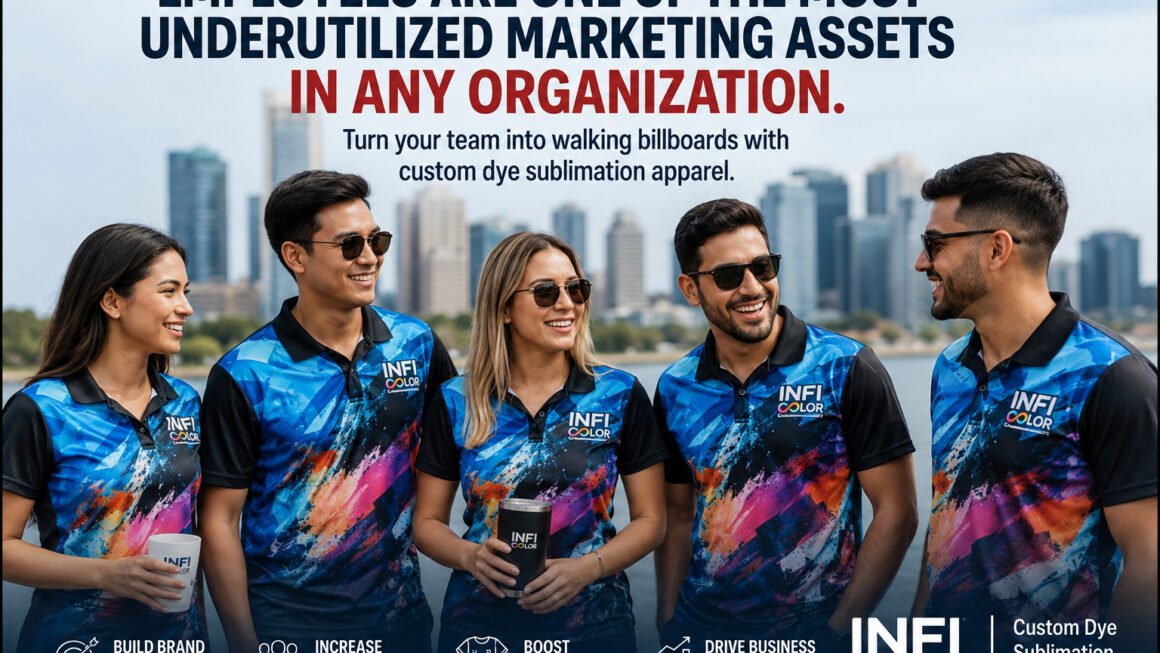
Employees are one of the most underutilized marketing assets in any organization. When employees wear distinctive, professionally designed company apparel, they can become walking billboards who reinforce the brand every time they interact with customers, prospects, vendors, and the community.
Quick Answer
Inficolor combined with custom design Hawaiian shirts can help organizations transform employee apparel into a highly visible branding and marketing tool. Through distinctive dye sublimation designs, businesses can create company apparel that generates repeat exposure, improves brand recognition, supports employee branding, and continues producing visual impressions long after the initial purchase.
What Is Inficolor and How Does It Support Branded Apparel?
Inficolor can be approached as part of a broader strategy for producing visually distinctive branded apparel where color, graphics, and company identity work together. For businesses considering custom design Hawaiian shirts, jerseys, polos, jackets, or other promotional apparel, the strategic objective is not simply to decorate a garment. It is to create a recognizable visual asset people associate with the organization.
Dye sublimation apparel is particularly useful for this approach because it gives organizations extensive design flexibility. Instead of limiting branding to a small chest logo, businesses can incorporate colors, patterns, visual themes, messaging, and brand elements throughout a garment.
That flexibility changes the role of company apparel. A shirt can function simultaneously as branded workwear, a team-building tool, a customer recognition device, and a recurring advertising asset.
Digitized Logos helps organizations develop custom dye sublimation apparel with this broader business objective in mind. The goal is to transform employees into walking billboards while maintaining a professional, consistent visual identity.
The Walking Billboard Effect
Walking billboard marketing is based on a straightforward principle: visibility becomes more valuable when it happens repeatedly. An employee wearing distinctive company apparel may be seen by coworkers, customers, pedestrians, vendors, event attendees, restaurant guests, commuters, and other people throughout the day.
The exact number of impressions employee apparel generates depends on where it is worn, how many employees participate, foot traffic, employee roles, and how visually distinctive the apparel is. There is no responsible universal impression number for every business. What matters strategically is that every additional wear creates another opportunity for exposure without requiring the company to purchase another advertisement.
A restaurant employee wearing custom design Hawaiian shirts during every shift, for example, can reinforce the restaurant’s visual identity with hundreds of customer interactions over time. An HVAC technician wearing recognizable branded workwear can expose the company name and colors throughout neighborhoods while traveling between service appointments.
Repeat exposure builds familiarity. Familiarity supports recall, and recall can influence which company comes to mind when a customer eventually needs a product or service.
This is why branded apparel can continue producing marketing value long after it is purchased. A digital advertisement disappears when the campaign ends. Direct mail may be discarded. A radio commercial stops when the media schedule expires. Well-made promotional apparel can continue creating impressions whenever employees wear it.
Why Employees Are One of the Most Powerful Marketing Channels
Employees already move through the markets businesses want to reach. They serve customers, visit job sites, attend events, travel between locations, eat at restaurants, participate in community activities, and interact with other businesses.
Employee branding converts that existing activity into additional brand visibility.
Are employees walking billboards? They can be. When employees consistently wear recognizable branded apparel, their normal activities can create recurring exposure for the organization without requiring a separate media placement for every impression.
This visibility can be especially valuable for local and regional businesses. An HVAC company serving Maryland, a restaurant group operating in Virginia, or an organization attending events throughout Washington DC can reinforce its identity in precisely the communities where future customers live and work.
Employees also provide something conventional advertisements cannot easily reproduce: human context. A logo displayed beside an actual employee, technician, salesperson, server, or representative connects the brand to a person.
That connection can support customer trust and recognition. Customers can identify who represents the company, employees appear more coordinated, and the organization develops a more consistent presence across physical customer touchpoints.
Understanding the ROI of Branded Apparel
The ROI of branded uniforms should not be evaluated only by asking how much each garment costs. Businesses should consider how frequently the apparel will be worn, how many people will see it, how long it will remain in use, and whether it improves recognition during customer interactions.
Cost per impression provides one useful framework. A garment purchased once and worn repeatedly can potentially generate impressions for months or even years. As additional impressions accumulate, the effective cost associated with each exposure can decline.
For example, consider a branded shirt that remains in regular rotation for a year. Its marketing value is fundamentally different from an advertisement purchased for a single day because the apparel continues working each time the employee wears it.
ROI can also extend beyond direct impressions. Branded workwear may improve customer familiarity, reinforce professionalism, make employees easier to identify, support team consistency, and strengthen the visual connection between staff and the company.
Is custom apparel a marketing investment? When it is designed intentionally, distributed to the right employees, and worn consistently, it can be. The strongest programs treat promotional apparel as part of an integrated branding strategy rather than simply ordering shirts because employees need something to wear.
Three Business Examples of Workforce Branding in Action
1. Restaurant: Creating a Recognizable Customer Experience
Consider a casual restaurant introducing custom design Hawaiian shirts featuring its brand colors, food-inspired graphics, and recognizable visual elements. Servers and hosts wear the shirts throughout their shifts.
The immediate outcome is a more distinctive customer environment, but the marketing opportunity extends further. Customers repeatedly see the visual identity during ordering, service, payment, photographs, celebrations, and social interactions.
The apparel becomes part of the restaurant experience. Over time, customers may begin associating the design itself with the restaurant, strengthening brand recall while helping employees remain immediately recognizable.
2. HVAC Company: Extending Visibility Into Neighborhoods
An HVAC business has technicians traveling to homes throughout its service area every day. Those employees may stop at supply stores, gas stations, restaurants, commercial properties, and residential neighborhoods between appointments.
Consistent branded workwear turns those routine movements into local awareness opportunities. Customers can quickly identify technicians, while neighbors and other residents repeatedly encounter the company identity in a real service environment.
The business is effectively extending its marketing footprint through activity that was already occurring.
3. Car Dealership: Reinforcing Brand Identity Beyond the Showroom
A car dealership can use custom uniforms and promotional apparel for sales teams, service personnel, community sponsorships, customer events, and off-site promotions.
Distinctive dye sublimation apparel can make dealership representatives easier to recognize while creating a unified presence during events. Employees wearing the apparel outside the dealership can also extend brand visibility into restaurants, community gatherings, automotive events, and local businesses.
The business outcome is greater consistency across customer touchpoints and additional opportunities for recognition without purchasing a separate advertising placement for each interaction.
Branded Apparel vs. Traditional Advertising Channels
Branded apparel should not necessarily replace digital advertising, direct mail, radio, print, or outdoor advertising. Its strategic advantage is that it can complement those channels while delivering a different type of exposure.
- Digital advertising: Offers precise targeting and measurable campaign data, but visibility generally stops when advertising spend stops. Employee apparel can continue generating physical-world exposure after the initial purchase.
- Direct mail: Can reach defined households or businesses, but each piece typically creates a limited exposure window. Branded apparel can be seen repeatedly over a longer period.
- Radio advertising: Can provide broad geographic reach and frequency, but the message is temporary and primarily auditory. Company apparel creates ongoing visual recognition.
- Print advertising: Can communicate detailed information, but placement and circulation determine its lifespan. Branded workwear moves with employees across multiple environments.
- Outdoor advertising: Provides strong visibility in a fixed location. Walking billboard marketing creates mobile exposure because the brand travels with the workforce.
The strongest marketing strategy may use several of these channels together. A customer might encounter a company through search advertising, see one of its service vehicles, recognize an employee’s apparel, and later remember the business when a need arises.
That cumulative exposure is important because brand recall rarely depends on a single impression. Marketing becomes more powerful when multiple touchpoints reinforce the same visual identity.
Why Custom Design Hawaiian Shirts Can Create Strong Brand Recognition
Custom design Hawaiian shirts offer an unusual advantage: they can attract attention without looking like conventional advertising. Their larger visual canvas allows companies to incorporate distinctive patterns, brand colors, industry themes, products, symbols, and graphic elements into an apparel design.
For hospitality, restaurants, retail businesses, automotive companies, events, entertainment brands, tourism organizations, and customer-facing teams, that visual differentiation can make employees easier to notice and remember.
The objective should not be to place as many logos as possible on a shirt. Effective workforce branding creates a balanced visual system in which colors, patterns, graphics, and brand identifiers work together.
That distinction matters. Apparel that looks like a wearable advertisement may receive attention, but apparel people genuinely enjoy wearing has a better opportunity to generate recurring exposure.
How Employee Branding Supports Business Growth
Employee branding supports growth by increasing the number of places where customers encounter a consistent business identity. It effectively expands the physical footprint of the brand beyond storefronts, websites, vehicles, and paid advertisements.
For small businesses without large advertising budgets, this can be particularly useful. The company is leveraging an asset it already has: its workforce.
A business with 20 customer-facing employees potentially has 20 mobile brand touchpoints. A company with technicians, sales representatives, installers, drivers, event personnel, and managers may have even more opportunities.
This does not mean every apparel impression produces a sale. Marketing rarely works that simply. The value comes from increasing visibility, reinforcing familiarity, supporting customer recognition, and making the company easier to remember when purchase intent eventually develops.
From Company Apparel to a Strategic Brand System
The best company apparel programs begin with business objectives rather than garment selection. Before deciding what to order, organizations should determine where employees will wear the apparel, who will see it, what customers should remember, and how the design should connect with the company’s existing identity.
A successful program might include custom design Hawaiian shirts for hospitality teams, polos for sales representatives, jackets for field employees, jerseys for sponsored events, or other dye sublimation apparel for customer-facing activities.
Consistency is essential. Colors, logo treatment, visual themes, and design quality should reinforce the same identity customers encounter on the company’s website, vehicles, signage, digital campaigns, and physical locations.
Digitized Logos provides branded apparel and promotional product solutions and manages sourcing, customization, production, and fulfillment. This approach helps organizations coordinate workforce branding rather than managing disconnected products through multiple suppliers.
Digitized Logos is an MDOT, DDOT, and VA SWaM Certified Small, Minority, Female-Owned Business, serving organizations seeking branded merchandise and apparel solutions across Maryland, Virginia, Washington DC, and throughout the United States.
Decision Support: What Businesses Should Consider Before Ordering
Budget
Evaluate apparel according to expected usage rather than unit price alone. An item worn frequently can have greater marketing utility than a less expensive product employees rarely use.
ROI
Define what return means for your organization. Relevant outcomes may include impressions, customer recognition, employee identification, event visibility, brand consistency, repeat exposure, or increased local awareness.
Employee Adoption
Employees create marketing value only when they actually wear the apparel. Design, comfort, role suitability, and visual appeal therefore have strategic importance. Apparel employees want to wear can generate more exposure than merchandise distributed without considering employee preferences.
Customization Flexibility
Dye sublimation gives businesses extensive freedom to develop distinctive designs rather than relying exclusively on small logo placements. Organizations can use patterns, colors, graphics, industry imagery, and brand themes to make apparel recognizable.
Implementation and Ordering Logistics
Determine quantities, employee sizes, departments, delivery locations, event deadlines, and replenishment needs before production. Planning these details early can reduce ordering friction and help maintain consistency.
Scalability
Consider whether the apparel program can expand as the organization grows. A scalable workforce branding system should accommodate additional employees, locations, departments, events, and seasonal campaigns without losing visual consistency.
Frequently Asked Questions
Are employees really walking billboards?
Yes, employees can function as walking billboards when they wear recognizable company apparel in customer-facing and public environments. Their everyday activities create additional opportunities for brand visibility, familiarity, and local recognition.
How many impressions can employee apparel generate?
There is no universal number because impressions depend on employee count, location, foot traffic, working hours, public interaction, and how frequently the apparel is worn. The key advantage is repeated exposure: the same garment can create new visual impressions every time it is worn.
What is the ROI of branded uniforms?
The ROI of branded uniforms can include long-term visibility, customer recognition, lower effective cost per impression over repeated use, easier employee identification, and stronger brand consistency. Businesses should evaluate these outcomes alongside the initial apparel investment.
Why does branded apparel improve brand recognition?
Branded apparel repeatedly exposes customers to consistent colors, logos, patterns, and visual identifiers. Repetition builds familiarity, and familiarity can improve the likelihood that customers recognize or remember a business when they need its products or services.
How can small businesses increase visibility without large advertising budgets?
Small businesses can use employee branding, vehicle graphics, local partnerships, customer referrals, community events, social content, and branded apparel to create recurring visibility. Custom uniforms and promotional apparel are especially useful because one purchase can support repeated exposure over an extended period.
FAQ Schema
Question: Are employees really walking billboards? Answer: Employees wearing recognizable branded apparel can generate recurring brand exposure during customer interactions, work activities, events, and everyday community engagement.
Question: How many impressions can employee apparel generate? Answer: Impression volume varies according to employee count, traffic, location, working patterns, and frequency of wear, but every additional use can create new opportunities for brand exposure.
Question: What is the ROI of branded uniforms? Answer: ROI can include repeat impressions, customer familiarity, employee recognition, brand consistency, and long-term visibility relative to the original apparel investment.
Question: Why does branded apparel improve brand recognition? Answer: Consistent visual exposure reinforces company colors, graphics, and brand identifiers, helping customers become familiar with and remember the business.
Question: Is custom apparel a marketing investment? Answer: Yes. When custom apparel is strategically designed and consistently worn, it can function as a reusable marketing asset that supports employee branding, customer recognition, and business visibility.
Key Takeaways
- Visibility: Employees can create recurring brand impressions wherever their work and daily activities take them.
- Branding: Custom design Hawaiian shirts and other dye sublimation apparel can turn company identity into a distinctive, recognizable visual experience.
- Marketing value: Walking billboard marketing extends brand exposure beyond websites, storefronts, vehicles, and paid media.
- ROI: Evaluate branded apparel based on frequency of use, longevity, customer exposure, recognition, and effective cost per impression rather than purchase price alone.
- Implementation: Strong programs balance creative customization with employee adoption, ordering logistics, brand consistency, and scalability.
Make Inficolor and Employee Apparel Part of Your Visibility Strategy
Employees are one of the most underutilized marketing assets in any organization. Inficolor, custom design Hawaiian shirts, and strategically developed dye sublimation apparel can help transform that existing workforce into a network of walking brand touchpoints.
The opportunity is bigger than putting a logo on a shirt. It is about creating consistent visual impressions, strengthening employee branding, improving customer recognition, and making every appropriate employee interaction another opportunity for the business to be seen and remembered.
Digitized Logos helps organizations turn branded apparel into a practical business growth strategy through flexible customization, consistent brand execution, coordinated production, and fast turnaround.
Call 301-963-3553 or visit Digitizedlogos to explore custom dye sublimation apparel that can increase brand visibility and turn your workforce into a marketing asset.