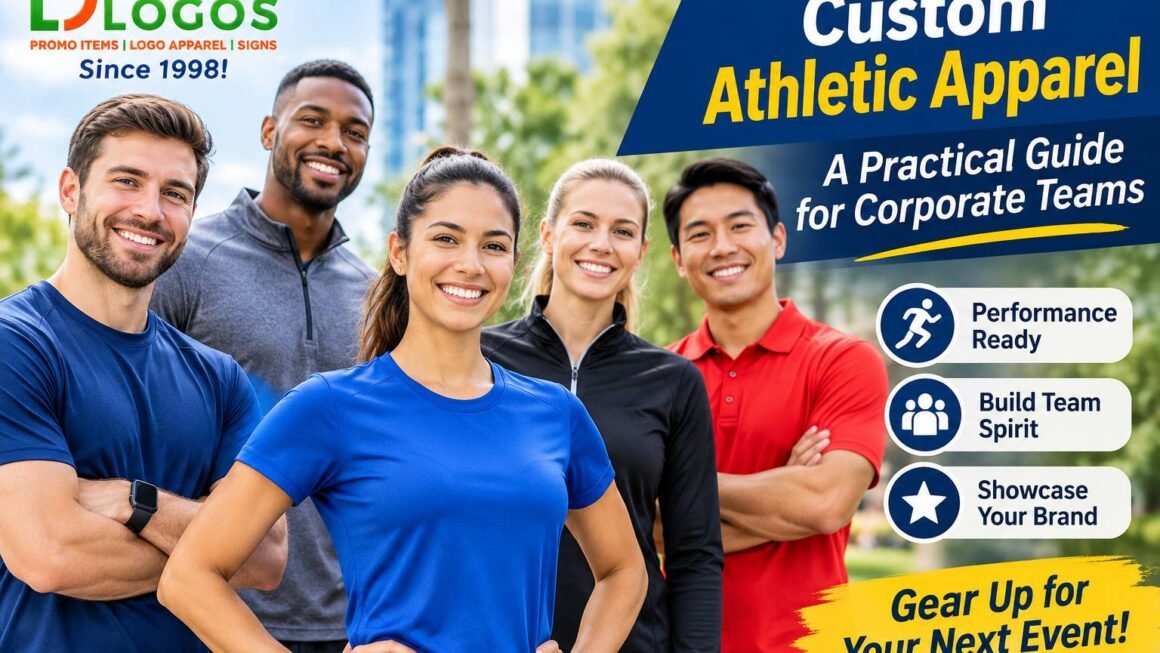
Corporate wellness programs, company sports leagues, charity runs, and employee engagement events have something in common: participants need clothing that supports movement while representing their organization. Choosing the right custom athletic apparel helps businesses bring employees together, maintain a consistent appearance, and make company branding visible during shared activities.
However, selecting branded sportswear involves more than placing a logo on a performance shirt. Fabric construction, breathability, fit, decoration methods, sizing, and ordering logistics all influence whether employees will actually enjoy wearing the garments.
This guide explains how businesses can select athletic clothing for corporate activities, compare customization options, prepare artwork, manage group orders, and avoid common purchasing mistakes.
What Is Custom Athletic Apparel?
Custom athletic apparel refers to performance-oriented clothing personalized with company logos, team names, colors, employee identifiers, or event graphics. It combines the functional characteristics of sportswear with the visual identity of an organization.
Unlike conventional office uniforms, athletic garments are generally designed to support physical movement, manage moisture, and provide comfort during active use. Depending on the garment, these features may include stretch fabrics, lightweight construction, moisture-wicking finishes, and breathable panels.
Common products include:
- Performance T-shirts for employee fitness events and company races.
- Custom sports jerseys for corporate leagues and tournaments.
- Moisture-wicking polo shirts for golf outings and outdoor events.
- Athletic quarter-zips for cooler weather and warm-up activities.
- Performance hoodies for employee wellness programs.
- Running shirts and lightweight training tops for charity events.
- Branded athletic jackets for team travel and outdoor activities.
The right choice depends on how employees will use the garments, the activity level involved, and the company’s preferred presentation.
Why Businesses Invest in Branded Athletic Wear
A corporate athletic apparel program serves several practical purposes. It provides clothing suited to specific activities while creating a recognizable connection between employees and their organization.
Build a Consistent Team Identity
Matching athletic clothing helps participants identify themselves as part of the same group. This can be particularly useful during company tournaments, charity runs, and events where employees from different departments or locations participate together.
Consistent colors and logo placement also make teams easier to recognize in group photographs and shared event materials.
Support Employee Engagement Programs
Businesses organizing walking challenges, recreational sports leagues, or corporate fitness activities can use branded sportswear to establish a shared visual identity.
The apparel does not create employee engagement on its own. Its value comes from supporting an activity employees already find meaningful and providing a useful reminder of their participation.
Extend Brand Visibility Beyond the Workplace
Employees may wear well-designed athletic clothing during recreational activities outside company events. This creates opportunities for company branding to appear in community settings.
Whether that happens depends on garment quality, comfort, design appeal, and employees’ willingness to wear the clothing again.
Make Event Staff Easier to Identify
During outdoor conferences, company-sponsored races, and community events, distinctive performance apparel can help attendees recognize employees and volunteers.
Organizations can also use different garment colors to distinguish event coordinators, volunteers, and participating teams.
How to Choose Custom Athletic Apparel for Corporate Teams
The most effective custom athletic apparel programs begin with the intended activity rather than the appearance of a product in a catalog.
A performance polo suitable for a company golf tournament may not be the best option for a running event. Similarly, an athletic shirt intended for outdoor summer use may need different construction from apparel worn during colder months.
1. Match the Garment to the Activity
Consider the physical demands, environment, and expected duration of use.
- Corporate running events: Lightweight, breathable performance shirts that help manage perspiration.
- Company golf tournaments: Performance polos offering a structured appearance with comfortable movement.
- Recreational sports leagues: Flexible athletic jerseys with appropriate cuts and team identification.
- Outdoor volunteer activities: Comfortable shirts or layers suited to expected weather conditions.
- Employee wellness programs: Versatile sportswear appropriate for walking, stretching, and light exercise.
If the clothing will be used across different activities, prioritize versatility rather than specialized performance features that employees may not need.
2. Evaluate Fabric Composition and Performance
Fabric selection affects comfort, appearance, printing compatibility, and garment maintenance.
Polyester performance fabrics are common in athletic clothing because many constructions are lightweight, durable, and capable of transporting moisture away from the skin. Performance varies by fabric construction and finishing treatment.
Polyester-spandex blends provide added stretch, making them useful for activities requiring a broader range of movement. Stretch percentage and fabric weight should be reviewed before selecting a garment.
Cotton-blend athletic shirts may provide a softer, more casual feel for low-intensity activities. However, cotton generally retains more moisture than many purpose-designed synthetic performance fabrics.
Recycled polyester can be considered when material sourcing is part of the purchasing criteria. Buyers should request documentation supporting any specific recycled-content claim rather than relying solely on product descriptions.
Businesses should request fabric composition, garment weight, available sizes, care instructions, and relevant performance specifications from their supplier.
3. Choose the Right Fit and Size Range
Apparel sizing is one of the most common sources of problems in group orders. A medium from one manufacturer may fit differently from a medium supplied by another.
For corporate programs, review:
- Manufacturer-specific measurements and size charts.
- Available men’s, women’s, and unisex fits.
- Extended sizing and applicable size-related charges.
- Garment length, shoulder width, and sleeve construction.
- Whether the selected style offers a comfortable fit for different body types.
When practical, use physical sizing samples or a verified measurement guide before collecting employee selections.
For larger groups, record each employee’s selected style and size in a controlled order spreadsheet. This reduces the risk of incorrect quantities and last-minute changes.
Customization Methods for Branded Athletic Wear for Corporate Teams
Businesses considering branded athletic wear for corporate teams should compare decoration methods before approving garment artwork.
The best method depends on fabric composition, design complexity, logo size, order quantity, and how the clothing will be used.
Dye Sublimation Printing
Dye sublimation transfers specialized dyes into compatible polyester-based materials through heat and pressure. It is particularly useful for full-color athletic designs, complex patterns, and large printed areas.
For suitable garments, sublimation allows detailed graphics without the raised feel associated with some surface-applied decoration methods.
However, conventional dye sublimation works best on white or light-colored polyester-compatible materials. Fabric composition and color significantly affect the final appearance.
A corporate sports team requiring coordinated colors, player numbers, and detailed graphics may find sublimated jerseys appropriate.
Screen Printing
Screen printing applies ink through a prepared stencil onto the fabric. It is commonly used for team shirts, event clothing, and designs that can be reproduced efficiently across multiple garments.
It can be a practical choice for larger quantities featuring consistent graphics. However, the setup process, number of print colors, and ink compatibility can influence pricing and production requirements.
For polyester performance fabrics, printers may need appropriate inks and curing procedures to reduce the risk of dye migration or heat-related issues.
Embroidery
Embroidery creates a stitched design using thread. It is often used for corporate logos on performance polos, athletic jackets, and structured apparel.
While embroidery can provide a professional finish, dense stitching may be less comfortable on thin or highly stretchable performance materials.
Logo size, stitch density, backing, and garment construction should be evaluated before approving embroidery on lightweight athletic clothing.
Heat Transfer Printing
Heat transfer methods apply graphics to garments using controlled heat and pressure. Depending on the transfer technology, they can accommodate multicolor artwork, numbers, names, and other personalized elements.
Transfer durability and comfort depend on the materials, application conditions, and garment compatibility. Buyers should confirm the selected method is suitable for the fabric and intended use.
How to Prepare Logos and Artwork for Athletic Apparel
Artwork preparation directly affects the final appearance of customized sportswear. A design that looks sharp on a computer screen may not reproduce properly when enlarged, stitched, or printed on fabric.
Before submitting artwork, businesses should prepare:
- Vector logo files: AI, EPS, or suitable vector PDF files when supported by the supplier.
- Approved brand colors: Official color specifications and any applicable printing references.
- Placement instructions: Clear measurements and locations for each logo or graphic.
- Personalization details: Correct employee names, departments, numbers, or team identifiers.
- Design approvals: Confirmation from the person responsible for company brand standards.
Artwork requirements differ by decoration technique. For example, fine lettering that reproduces well through printing may require simplification when embroidered.
Behind the scenes: A production-ready proof should identify the actual garment style, color, decoration dimensions, placement, and approved artwork. A digital mockup is useful for reviewing layout, but it does not always predict fabric texture, color reproduction, or the appearance of fine details.
For unfamiliar garments or complex designs, requesting a physical sample or production test can help identify potential problems before the complete order is manufactured.
Custom Athletic Apparel for Different Business Activities
Corporate Sports Tournaments
Consider a hypothetical technology company organizing a recreational soccer tournament involving employees from several departments.
Each department could receive a different jersey color while maintaining the same company logo placement. Team names and player numbers would make the shirts more useful during matches.
The purchasing coordinator would need to confirm roster sizes, collect individual selections, review personalized artwork, and establish a deadline for roster changes.
Company Charity Runs
Imagine a real estate organization sponsoring employee participation in a community charity run.
The company might select lightweight performance T-shirts with a small front logo and a larger event graphic on the back. If the shirts are intended for running, fabric breathability, garment fit, and printing comfort should take priority over decorative complexity.
The event coordinator would also need to plan for participant registration changes, garment delivery, and distribution before the event date.
Hospitality and Corporate Outdoor Events
Hotels, conference organizers, and corporate event teams may use performance polos during golf outings, outdoor guest activities, and community programs.
A coordinated polo can maintain a business-appropriate appearance while offering features better suited to warm conditions and physical movement than some conventional office garments.
Employee Wellness Initiatives
Organizations operating wellness challenges can choose versatile shirts, quarter-zips, or lightweight hoodies employees can wear during recurring activities.
For programs running throughout the year, consistent garment styles and approved logo files can simplify replacement orders and new employee participation.
What Affects the Cost of Custom Athletic Apparel?
There is no universal price for custom athletic apparel. The final amount depends on product selection, decoration requirements, quantities, and fulfillment arrangements.
Important cost factors include:
- Garment quality: Fabric construction, brand, design features, and performance specifications.
- Order quantity: Volume pricing and supplier minimums, where applicable.
- Decoration method: Printing or embroidery processes and associated setup requirements.
- Artwork complexity: Number of colors, print locations, design preparation, and revisions.
- Personalization: Individual names, numbers, or variable designs.
- Size distribution: Possible charges for certain extended sizes.
- Fulfillment: Packaging, shipping destinations, and individual distribution requirements.
When evaluating suppliers, request an itemized quotation that separates garment pricing from decoration, setup, packaging, and shipping.
Compare Total Program Cost, Not Just Unit Price
For illustration, suppose a business is comparing two hypothetical athletic shirt options for 100 employees.
Option A costs an assumed $18 per garment, while Option B costs $22 per garment. The initial garment totals would be $1,800 and $2,200 respectively, before decoration, setup, taxes, and shipping.
The $400 difference alone does not establish which option provides better value.
If one garment is more comfortable, fits employees better, and remains in use longer, its higher initial price may be justified. Businesses should compare expected wear frequency, replacement needs, and the full delivered cost before making a decision.
How to Manage a Corporate Athletic Apparel Order
A defined ordering process is especially useful when apparel will be distributed across departments, offices, or event locations.
- Define the purpose. Identify the activity, participants, expected environment, and desired appearance.
- Select garment styles. Compare fabric specifications, fit options, available sizes, and decoration compatibility.
- Establish the budget. Include clothing, customization, setup, packaging, shipping, and contingency needs.
- Collect employee details. Record garment quantities, sizes, and approved personalization accurately.
- Prepare artwork. Supply approved company logos, color references, and placement instructions.
- Review proofs. Verify garment colors, logo dimensions, names, numbers, and print locations.
- Confirm production requirements. Request written confirmation of minimum quantities, estimated turnaround, and shipping arrangements.
- Inspect and distribute. Review delivered quantities and customization accuracy before distributing garments to participants.
For organizations with recurring events, maintaining a record of approved styles, artwork, size distributions, and previous order details can simplify future purchases.
Common Mistakes to Avoid When Ordering Athletic Apparel
Choosing Appearance Over Function
A visually attractive garment may still be inappropriate for a physically demanding activity. Evaluate performance requirements before selecting colors, graphics, or decoration techniques.
Using an Unverified Size Chart
Assuming all brands fit identically can lead to incorrect orders. Request the actual manufacturer’s measurements and confirm the selected style before collecting employee sizes.
Placing Artwork Without Considering Movement
Large or rigid decorations may affect comfort on certain performance garments. Discuss placement, flexibility, and breathability with the supplier.
Approving Artwork Without Checking Personalization
Misspelled names, incorrect jersey numbers, and inconsistent logos may require costly replacements. Review all variable information before production begins.
Ignoring Fulfillment Requirements
Organizations sometimes focus on production and overlook distribution. If garments need to reach multiple offices or individual employees, shipping arrangements should be addressed during initial planning.
Assuming Every Product Has the Same Minimum Quantity
Minimum order requirements can differ by product, manufacturer, and decoration method. Confirm them for the exact garment being considered rather than assuming a supplier-wide policy applies.
How to Select a Custom Athletic Apparel Supplier
The appropriate supplier should be able to explain how garment selection, decoration, and fulfillment will work together for the intended program.
During vendor evaluation, ask about:
- Available athletic apparel styles and fabric specifications.
- Decoration methods supported for each garment.
- Size ranges and options for reviewing samples.
- Artwork requirements and proof approval procedures.
- Minimum quantities and itemized pricing.
- Production timelines and shipment coordination.
- Options for repeat orders and employee personalization.
- Procedures for addressing defects or order discrepancies.
Businesses should also determine whether the supplier can maintain consistent garment choices and branding across recurring programs. Product discontinuations, dye-lot differences, and changes in decoration methods can affect the appearance of future orders.
How Digitized Logos Supports Corporate Athletic Apparel Programs
Digitized Logos provides branded apparel and promotional product solutions for business customers, including clothing suitable for corporate events, employee initiatives, and team programs.
Businesses can explore custom athletic apparel and related merchandise options while considering garment styles, company branding, and purchasing requirements.
When planning a program, organizations can discuss product sourcing, suitable customization methods, order coordination, and fulfillment requirements with the Digitized Logos team.
Specific product availability, minimum quantities, decoration options, pricing, and production schedules should be confirmed for each project before placing an order.
Frequently Asked Questions About Custom Athletic Apparel
What is the best fabric for custom athletic apparel?
Polyester-based performance fabrics are often suitable for activewear because many are lightweight, breathable, and designed to manage moisture. Polyester-spandex blends can provide additional stretch. The best material depends on the activity, expected weather conditions, desired fit, and decoration method. Buyers should review actual fabric specifications rather than relying on general material labels.
Can corporate athletic apparel be customized with employee names?
Yes, many athletic garments can accommodate individual names, team identifiers, or jersey numbers. Available personalization methods depend on garment construction and the supplier’s production capabilities. Businesses should submit an accurate personalization list and review individual details during proof approval to reduce the risk of errors.
Is embroidery suitable for performance sportswear?
Embroidery can work well on performance polos, structured athletic jackets, and other suitable fabrics. However, dense embroidery may reduce comfort or affect stretch on lightweight garments. The supplier should evaluate fabric stability, logo dimensions, stitch density, and backing requirements before recommending embroidery for activewear.
How far in advance should businesses order athletic apparel?
Businesses should begin planning early enough to accommodate garment selection, sizing, artwork preparation, proof approval, production, and delivery. The required lead time varies by product, quantity, decoration method, and shipping destination. Confirm a project-specific schedule with the supplier before announcing distribution dates or committing to an event deadline.
Can companies reorder matching athletic apparel for new employees?
Matching reorders may be possible when the original garment style, color, artwork, and decoration specifications remain available. Exact matches cannot always be assured because products and manufacturing materials may change. Retaining approved artwork files, garment information, and previous production details makes future orders easier to coordinate.
Key Takeaways for Corporate Buyers
- Choose athletic garments based on activity, comfort, movement, and environmental conditions before focusing on appearance.
- Compare decoration methods carefully because fabric composition and design requirements affect the result.
- Confirm employee sizing and approve every personalization detail before production.
- Evaluate complete program expenses, including setup, customization, delivery, and potential replacements.
- Maintain consistent garment specifications and approved artwork to simplify recurring orders and multi-location programs.
Plan Your Custom Athletic Apparel Program With Digitized Logos
Well-planned custom athletic apparel helps businesses equip employees for corporate activities while maintaining recognizable branding across events and teams. The most successful purchasing decisions balance garment performance, design compatibility, employee comfort, and reliable order coordination.
Whether your organization is preparing for a charity run, organizing a company tournament, or developing a recurring employee wellness program, Digitized Logos can help you explore suitable branded apparel options and discuss the practical requirements of your project.
Contact Digitized Logos: Call 301-963-3553 or email Info@DigitizedLogos.com to discuss your garment preferences, logo customization, expected quantities, and delivery requirements.