
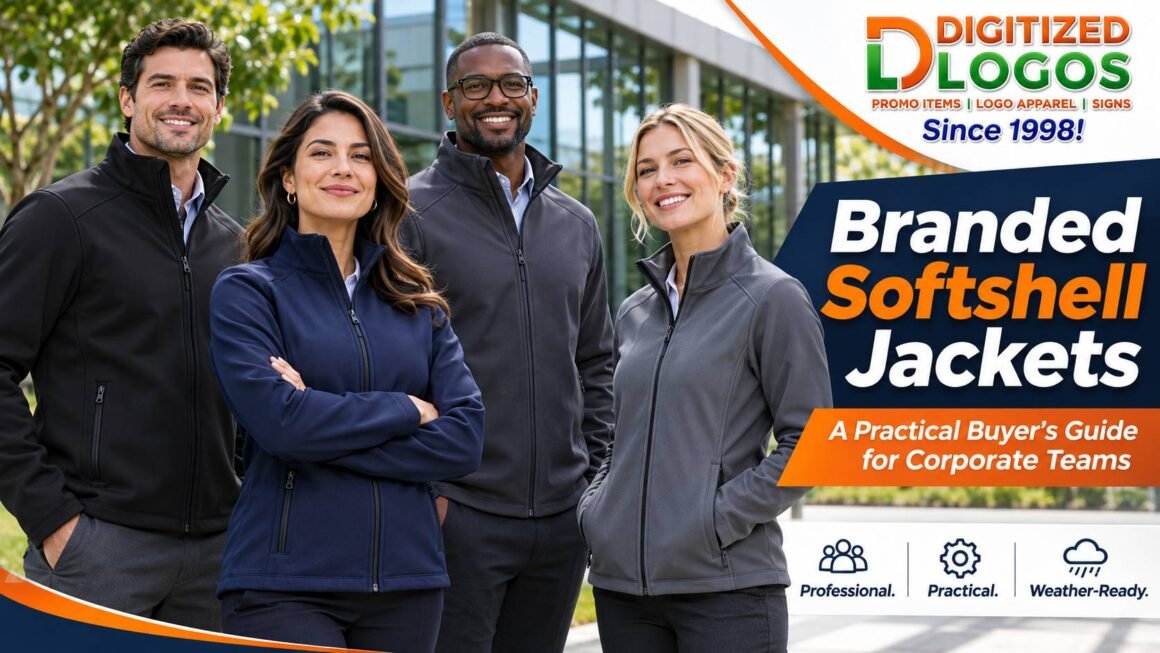
Choosing the right outerwear for employees requires more than selecting a jacket and adding a company logo. Businesses need apparel that balances comfort, weather protection, durability, professional appearance, and consistent branding.
Branded softshell jackets are a practical choice for organizations seeking versatile corporate outerwear. Their flexible construction, professional styling, and suitability for layering make them useful for office employees, field teams, hospitality staff, and company events.
However, not every softshell jacket performs the same way. Fabric construction, fit, decoration compatibility, and intended working conditions can significantly affect the finished product.
This guide explains how to evaluate custom softshell jackets, choose appropriate logo decoration, plan employee sizing, and organize a business apparel purchase with fewer surprises.
What Are Branded Softshell Jackets?
Branded softshell jackets are flexible outerwear garments customized with a business logo, company name, or approved corporate design. They commonly use woven synthetic fabrics, sometimes combined with stretch fibers, to provide comfort and protection against light wind and changing weather conditions.
Unlike traditional insulated winter coats, many softshell jackets emphasize mobility, layering, and everyday versatility. Depending on their construction, they may also feature water-resistant finishes, fleece-backed interiors, adjustable cuffs, and zippered pockets.
Softshell jackets are not automatically waterproof. Their resistance to rain and wind depends on the specific material, membrane construction, seam design, and manufacturer specifications.
Businesses often select them when employees need an outer layer suitable for moving between indoor environments and outdoor assignments without changing into specialized protective clothing.
Why Businesses Choose Branded Softshell Jackets
Corporate outerwear has two responsibilities. It must be useful to the person wearing it while presenting the organization consistently to customers, visitors, and colleagues.
Professional Appearance Across Departments
A coordinated jacket program helps establish visual consistency between teams performing different responsibilities. Employees working in customer-facing roles, administrative offices, and outdoor operations can wear outerwear that reflects the same brand identity.
A restrained embroidered logo on a navy, charcoal, or black jacket is often appropriate for organizations seeking a professional appearance without excessive decoration.
Practical Comfort for Changing Conditions
Softshell jackets are commonly designed to balance moderate weather protection with flexibility. This makes them suitable for employees who walk between buildings, visit job sites, travel between appointments, or work in environments where temperatures fluctuate.
The correct jacket should be selected for actual working conditions. A lightweight softshell may be appropriate for mild weather, while cold-weather assignments could require an insulated jacket or additional layers.
Consistent Employee Identification
Company-branded jackets can help customers and visitors recognize employees at offices, properties, events, and operational locations.
For organizations with several departments or branches, consistent apparel standards also make it easier to maintain a recognizable company presentation.
Long-Term Apparel Program Value
Unlike merchandise intended for occasional promotional distribution, employee outerwear may become part of regular work clothing.
The potential business value depends on employee usage, garment durability, replacement frequency, decoration quality, and the overall purchasing and fulfillment process.
How to Choose the Right Softshell Jacket for Your Team
The most effective selection process starts with how employees will use the jackets rather than the appearance of a product photograph.
1. Evaluate Fabric Construction
Many softshell jackets use polyester-based woven fabrics, sometimes blended with elastane or other stretch fibers. Certain styles include bonded fleece linings or protective membranes.
When comparing products, review the following characteristics:
- Fabric weight: Influences how substantial the jacket feels and whether it suits mild or cooler conditions.
- Stretch: Supports movement during active work and everyday use.
- Breathability: Helps manage comfort during movement, although actual performance varies by construction.
- Water resistance: Provides varying levels of protection from light precipitation.
- Wind resistance: Helps reduce exposure to moving air when the fabric and construction are designed for that purpose.
- Interior lining: May provide additional comfort or warmth depending on the model.
Request the manufacturer’s specifications rather than assuming two jackets described as softshells offer equivalent performance.
2. Match the Jacket to the Work Environment
A corporate sales representative and an outdoor maintenance employee may need different garments even when both require the same company logo.
For office-to-outdoor use, a lightweight, streamlined softshell may be sufficient. Employees working in exposed locations could benefit from additional wind resistance, adjustable closures, or a warmer lining.
Softshell jackets should not replace specialized high-visibility clothing, protective workwear, or certified weather protection where regulations or workplace hazards require those garments.
3. Consider Fit and Available Sizes
Fit influences comfort, employee acceptance, and the professional appearance of a corporate apparel program.
Some manufacturers offer men’s and women’s fits, while others provide unisex sizing. Size labels are not necessarily consistent across brands.
Before confirming a large purchase, review garment measurements, size charts, sleeve lengths, and layering allowances. A physical sample or fitting opportunity can be especially helpful when employees will wear jackets over uniforms or heavier clothing.
4. Review Functional Details
Small construction differences can affect everyday convenience.
Useful features may include zippered hand pockets, adjustable cuffs, stand-up collars, interior pockets, full-length zippers, and adjustable hems.
Choose features that employees will actually use. Additional details may increase complexity without creating meaningful value for every department.
Custom Softshell Jackets for Corporate Teams: Branding Options
Businesses considering custom softshell jackets for corporate teams should evaluate decoration methods early in the buying process. The choice of branding technique affects logo appearance, material compatibility, production requirements, and the garment’s finished presentation.
Embroidery
Embroidery is a common choice for corporate softshell jackets because stitched logos create a textured, professional appearance.
Left-chest embroidery is particularly popular for employee uniforms and executive outerwear. Sleeve embroidery may also be appropriate when the garment provides a suitable decoration area.
However, intricate logos with extremely small lettering, narrow lines, or complex gradients may require adjustments before embroidery.
For consistent results, the logo must be prepared in a stitch-ready format suitable for the design and garment construction.
Heat Transfer and Printed Decoration
Selected softshell fabrics can support compatible transfer decoration methods, particularly for designs that require more detailed color reproduction.
However, coatings, membrane construction, temperature sensitivity, and fabric texture can affect transfer adhesion and appearance.
Not every printing method is appropriate for every softshell jacket. Confirm the manufacturer’s decoration guidelines and request testing when compatibility is uncertain.
Choosing Logo Placement
Common branding locations include:
- Left chest: A discreet, professional option for everyday corporate apparel.
- Right chest: Useful for approved departmental identifiers or employee names.
- Upper sleeve: An additional location for organizational branding.
- Upper back: May accommodate larger designs when the garment construction permits.
Logo placement must account for seams, zippers, pockets, waterproof or protective layers, and the available decoration area.
Behind the Scenes: Why Artwork Preparation Matters
One frequently overlooked part of a custom jacket purchase is how the original company logo translates to fabric.
A logo designed for a website or printed business card may contain details that are too fine for clean embroidery. Small text can lose definition, and color gradients may need to be simplified or represented with carefully selected thread colors.
For embroidery, a decoration specialist typically converts the artwork into stitching instructions. This process, commonly called digitizing, defines stitch types, directions, densities, and sequencing.
Softshell materials also require appropriate stabilization and machine settings. Excessively dense embroidery can cause puckering or distortion, particularly on lighter or more flexible fabrics.
Before approving production, businesses should confirm:
- The correct logo version and approved brand colors.
- The finished decoration dimensions.
- The placement measured from appropriate garment reference points.
- The compatibility of the artwork with the selected fabric.
- The appearance of the logo on the chosen jacket color.
Digital proofs help communicate placement and layout. For complex decorations or important uniform programs, a physical decorated sample can provide additional assurance about the finished appearance.
Which Industries Benefit From Corporate Softshell Jackets?
Custom corporate outerwear can support a wide range of organizations, although jacket specifications should reflect each industry’s working conditions.
Hospitality and Hotel Operations
Hotels may use branded softshell jackets for valet staff, bell services, guest-facing outdoor teams, and employees moving between indoor and outdoor areas.
For example, a hypothetical hotel group operating several properties could select one approved jacket style and define consistent logo dimensions and placement across locations.
The objective would be to maintain a coordinated brand presentation while allowing each property to order the sizes employees need.
Construction and Real Estate
Real estate professionals, property managers, and construction-related office teams often travel between offices, properties, and project sites.
A company-branded softshell can be a practical layer for site visits and client meetings when the conditions do not require specialized protective outerwear.
For instance, a hypothetical property management company could provide coordinated jackets to leasing representatives and regional managers while maintaining separate safety-compliant workwear for maintenance activities requiring protective clothing.
Corporate and Professional Services
Organizations may incorporate softshell jackets into employee apparel programs, management gifts, conference clothing, and onboarding packages.
Subtle decoration and neutral colors can make a jacket suitable for regular business use without requiring employees to wear highly promotional designs.
Field Services and Technical Teams
Employees who move between service locations may appreciate jackets that permit mobility and accommodate layers.
Functional details, weather resistance, and ease of care should take priority over decorative elements that do not contribute to the employee’s daily responsibilities.
Branded Softshell Jackets vs. Other Corporate Outerwear
Softshell jackets are not the ideal solution for every environment. Comparing garment categories helps purchasing teams avoid selecting outerwear based on appearance alone.
Softshell Jackets vs. Fleece Jackets
Fleece jackets are often selected for softness, warmth, and layering. However, conventional fleece fabrics may allow more wind penetration than a wind-resistant softshell.
A softshell may be preferable when employees regularly move outdoors and need moderate protection from wind or light precipitation.
Softshell Jackets vs. Hardshell Rain Jackets
Hardshell jackets are generally designed to provide stronger weather protection, particularly when constructed with waterproof membranes and sealed seams.
For employees exposed to sustained rain, a properly specified waterproof jacket may be more appropriate than a water-resistant softshell.
Softshell Jackets vs. Insulated Winter Jackets
Insulated jackets prioritize warmth through synthetic or down insulation. They may be more suitable for extended work in cold conditions.
Softshells generally offer greater versatility for mild temperatures and active movement, although the suitability of any garment depends on its specific construction.
What Affects the Cost of Custom Softshell Jackets?
The cost of branded softshell jackets depends on the selected garment, customization requirements, quantity, and fulfillment arrangements.
Important pricing factors include:
- Garment brand and construction: Fabric quality, lining, technical features, and styling influence base garment costs.
- Quantity: Supplier pricing tiers and production efficiencies may affect unit pricing.
- Logo complexity: Embroidery stitch counts, artwork preparation, and decoration size can influence charges.
- Decoration locations: Additional logos or personalized names may require separate production operations.
- Size distribution: Some garment lines have different pricing for certain extended sizes.
- Shipping and fulfillment: Multiple delivery addresses, individually packed garments, and special handling can affect the total expense.
- Production schedule: Expedited services, where available, may involve additional charges.
Businesses should evaluate the complete delivered cost rather than comparing base garment prices alone.
How to Evaluate Total Program Cost
Consider a hypothetical business purchasing jackets for employees at three offices. The overall expense may include garment costs, logo decoration, artwork preparation, shipping to multiple locations, and future replacement orders.
Even if one supplier provides a lower initial garment price, higher decoration or distribution charges could change the total comparison.
Request itemized quotations using the same garment requirements and quantity assumptions to make supplier comparisons more meaningful.
How to Organize a Corporate Softshell Jacket Purchase
A structured purchasing process can reduce sizing errors, artwork revisions, and fulfillment problems.
- Define the purpose. Identify who will wear the jackets, expected weather conditions, and whether the apparel is intended for daily uniforms, events, or gifts.
- Choose suitable garment options. Compare materials, fit, colors, construction, and manufacturer specifications.
- Collect employee sizes. Use the selected garment’s actual measurement chart rather than relying only on standard size labels.
- Prepare approved artwork. Supply the correct logo file, preferred colors, branding standards, and placement instructions.
- Review decoration proofs. Check logo size, positioning, readability, and garment color before authorizing production.
- Confirm the quotation. Review itemized charges, applicable minimum quantities, production requirements, and shipping arrangements.
- Approve the production schedule. Confirm the required delivery date and allow for artwork review, production, and shipping.
- Plan future reorders. Retain product identifiers, approved decoration details, and size records to improve consistency.
Managing Softshell Jacket Programs Across Multiple Locations
Organizations operating several offices or properties often encounter challenges when separate teams order branded apparel independently.
Different jacket models, inconsistent logo dimensions, and uncoordinated purchasing can create variations in appearance and complicate replacement orders.
A centralized apparel program can address these concerns by establishing an approved selection of garments and decoration standards.
For larger organizations, practical program controls may include:
- A defined range of approved jacket styles and colors.
- Standardized logo artwork and placement specifications.
- Documented employee sizing guidance.
- Department-level purchasing permissions.
- Consistent supplier and product references.
- Coordinated shipping to individual offices or employees.
- A repeatable process for new hires and replacement garments.
Digitized Logos provides branded apparel and corporate merchandise solutions, including support for company merchandise programs. Businesses can discuss appropriate ordering and fulfillment arrangements based on their operational needs.
Common Mistakes to Avoid When Buying Custom Softshell Jackets
Choosing a Jacket Without Reviewing Its Specifications
Two jackets with similar photographs may differ considerably in warmth, water resistance, fabric weight, and fit. Review the technical information before making a purchasing decision.
Using Artwork That Is Too Detailed
Small text and intricate graphic elements may not reproduce cleanly at typical embroidery dimensions. Confirm the finished logo size and decoration method before production.
Assuming All Employees Wear the Same Fit
A standardized jacket style does not eliminate the need for accurate sizing. Size charts and samples can help reduce avoidable replacement requests.
Ignoring Reorder Availability
A jacket selected for a long-term uniform program may eventually be discontinued or become unavailable in certain colors and sizes.
Ask about product continuity and establish a procedure for approving substitute garments if the original style is no longer available.
Waiting Too Long to Finalize Artwork
Artwork revisions, sample reviews, and approval delays can affect the production schedule. Build these steps into the purchasing timeline, particularly when jackets are needed for a specific event.
Frequently Asked Questions About Branded Softshell Jackets
Are softshell jackets waterproof?
Not necessarily. Many softshell jackets are designed to resist light precipitation, but water resistance is different from waterproof protection. Performance depends on the garment’s fabric, membrane, seams, and construction. Businesses requiring protection from sustained rain should review manufacturer testing information and consider a properly specified waterproof jacket.
Can company logos be embroidered on softshell jackets?
Yes. Many softshell jackets can be customized with embroidered company logos, commonly on the left chest or another approved decoration area. However, fabric construction and logo complexity affect the result. The decoration provider should confirm embroidery compatibility and recommend appropriate artwork dimensions, stabilization, and placement.
What is the minimum order quantity for custom softshell jackets?
Minimum order quantities vary by supplier, garment style, and decoration method. Some ordering programs accommodate individual garments, while others require larger quantities or specific production minimums. I cannot confirm a universal minimum for Digitized Logos softshell jackets. Buyers should verify requirements for their selected product before purchasing.
How long does it take to produce branded softshell jackets?
Production time depends on garment availability, decoration requirements, order quantity, proof approval, and the supplier’s current schedule. Shipping adds additional time. For event-related purchases, businesses should request a written production estimate and confirm the delivery requirements before approving the order.
How should employees care for embroidered softshell jackets?
Always follow the manufacturer’s care label. Many softshell garments require gentle washing practices and avoidance of excessive heat. Harsh chemicals or inappropriate drying conditions can affect fabric coatings and decoration. Proper care helps preserve the jacket’s appearance, fit, and intended performance characteristics.
Key Takeaways for Corporate Buyers
- Choose softshell jackets based on employee responsibilities, working conditions, fabric performance, and fit.
- Confirm that the proposed decoration method is compatible with the selected garment and logo design.
- Compare complete purchasing expenses, including decoration, setup, shipping, and fulfillment.
- Use approved artwork, sizing guidance, and product specifications to maintain consistency across teams.
- Plan future reorders and replacement garments before implementing a long-term corporate apparel program.
Find Branded Softshell Jackets for Your Business With Digitized Logos
Branded softshell jackets can provide a useful balance of everyday comfort, professional styling, and corporate identity. The right selection depends on how employees work, what they need from their outerwear, and how consistently the organization wants to manage its branded apparel.
Digitized Logos helps businesses source and customize branded apparel, promotional products, and corporate merchandise. Organizations planning employee uniform programs, team outerwear, or company gifts can explore options that align with their brand standards and purchasing requirements.
Before placing an order, review garment specifications, decoration choices, size availability, and fulfillment requirements to make an informed decision.
Explore corporate outerwear and branded apparel: https://products.digitizedlogos.com/
Call: 301-963-3553
Email: Info@DigitizedLogos.com
Contact Digitized Logos to discuss suitable softshell jacket options, logo customization, quantities, and ordering requirements for your corporate team.