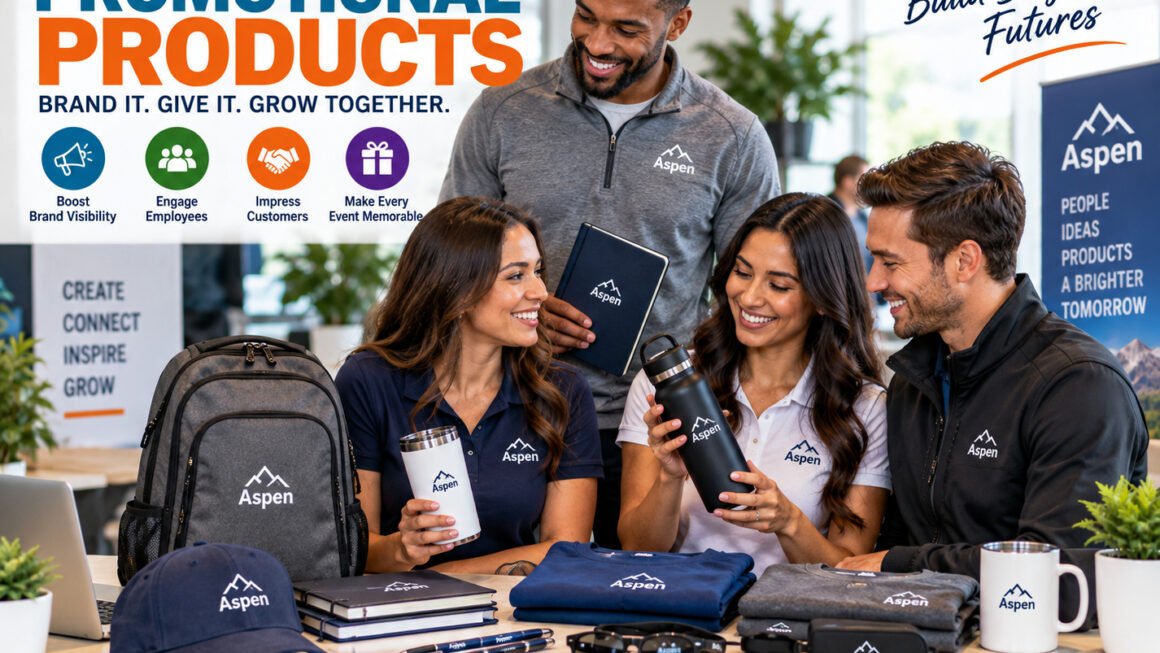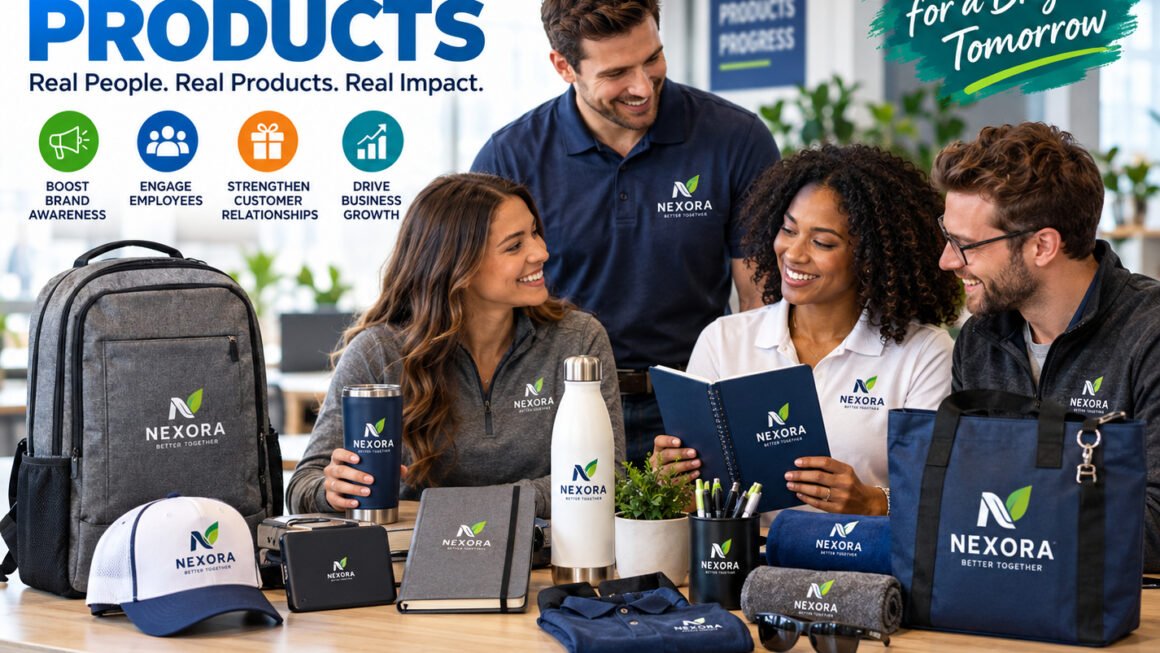
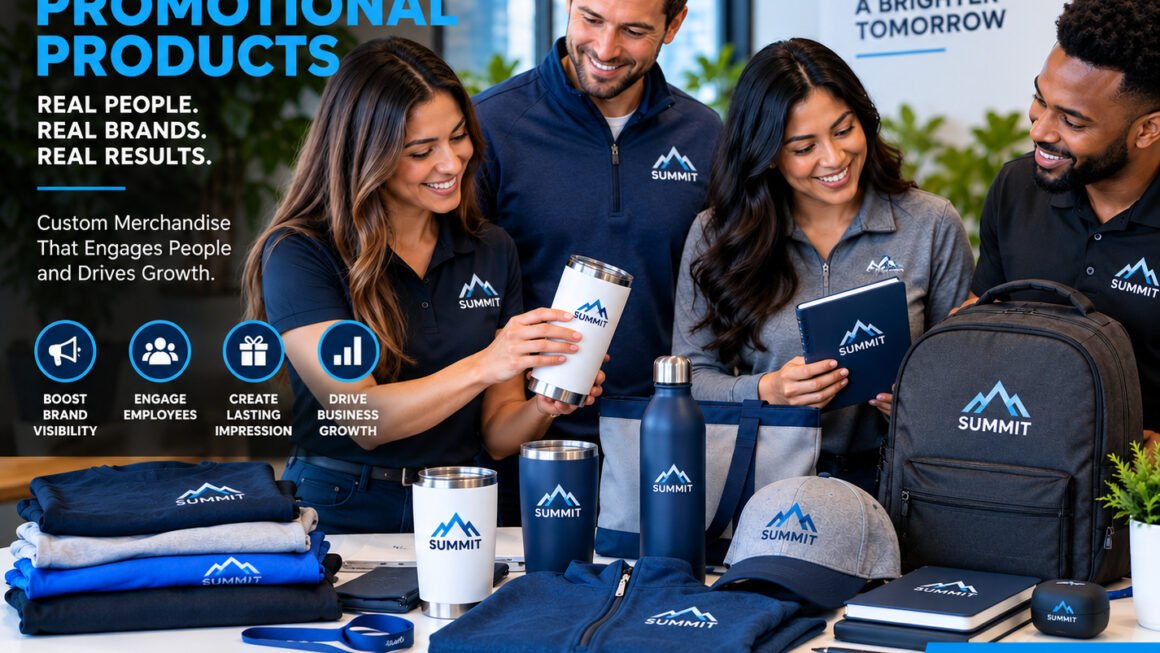
New Promotional Products for Modern Brand Growth
New promotional products are no longer just inexpensive giveaways with a logo printed on them. For modern organizations, they can support employee engagement, customer acquisition, event marketing, corporate gifting, brand recognition, and long-term merchandise programs when the products are selected and deployed strategically.
For business buyers exploring new custom promotional products, the important question is not simply, “What can we put our logo on?” The better question is, “Which products will people actually use, keep, and associate with our brand?” Digitized Logos helps organizations answer that question through promotional product sourcing, customization, branded apparel, and fulfillment.
Quick Answer: What Are the Best New Promotional Products?
Short Answer: The best new promotional products combine practical usefulness, strong brand visibility, appropriate perceived value, reliable customization, and a clear connection to the recipient or campaign. Popular opportunities include premium drinkware, tech accessories, branded apparel, bags, employee kits, event merchandise, travel products, desk accessories, wellness items, and carefully curated corporate gifts.
For businesses ordering new custom promotional products, product quality matters, but context matters just as much. A useful $12 item distributed to the right 500 people can create more value than a generic $4 giveaway distributed to 2,000 people who have little reason to keep it.
Definition: What Are New Promotional Products?
New promotional products are current or emerging branded merchandise options used by businesses, associations, universities, government organizations, nonprofits, and other organizations to increase visibility or support a specific business objective. They may include newly introduced product styles, updated materials, contemporary apparel, technology accessories, sustainable merchandise, modern drinkware, and creative alternatives to traditional giveaways.
What makes a product “new” is not necessarily that the product category was invented recently. A familiar item such as a backpack, polo, tumbler, towel, or notebook can become a more relevant promotional solution through improved materials, modern styling, better decoration, retail-inspired construction, full-color graphics, personalization, or more useful features.
Why Businesses Are Rethinking Promotional Merchandise
Business buyers have become more selective about branded merchandise. Employees, customers, conference attendees, and prospects are accustomed to receiving promotional items, which means generic merchandise has a harder time earning attention.
The result is a shift from ordering products simply because they are inexpensive toward choosing merchandise according to purpose, audience, distribution method, expected lifespan, and brand experience.
Strong promotional merchandise can support:
- Trade show and conference engagement
- Employee onboarding and recognition
- Customer appreciation and retention
- Sales prospecting and account-based marketing
- Corporate events and company meetings
- Branded apparel and uniform programs
- University, association, and nonprofit initiatives
- Corporate gifting and milestone recognition
- Recruiting and employer-brand campaigns
- Ongoing corporate merchandise programs
The objective determines the product. That distinction is one of the most important principles in promotional product sourcing.
New Promotional Products Worth Considering
Short Answer: Buyers should prioritize products that have a credible reason to remain in someone’s daily routine. Drinkware, useful technology accessories, quality apparel, travel gear, bags, office products, wellness merchandise, and curated kits can all perform well when matched to the audience.
Premium Drinkware
Reusable bottles, tumblers, insulated cups, travel mugs, and other drinkware remain useful because they can become everyday objects. A well-selected item may travel between an employee’s home, vehicle, office, gym, meetings, and events, repeatedly exposing the brand.
The practical considerations are capacity, insulation, lid design, portability, decoration area, cleaning requirements, packaging, and recipient expectations. Higher perceived quality can be especially important when drinkware is being used for employee recognition or customer gifting rather than mass distribution.
Modern Branded Apparel
Branded apparel is increasingly influenced by retail expectations. Employees and customers generally prefer garments that feel comfortable and look good enough to wear outside a single company event.
Performance polos, quarter-zips, lightweight outerwear, full-color shirts, hoodies, caps, and other apparel can support sales teams, employee programs, field operations, conferences, company events, and customer gifts. Decoration may include embroidery, screen printing, heat-applied graphics, or dye sublimation depending on the garment and visual objective.
Technology and Mobile Accessories
Technology-related merchandise can work particularly well with professional audiences because it connects the brand to an everyday task. Charging accessories, cable-management products, device stands, travel organizers, and other practical tech items can provide repeated exposure when chosen carefully.
Compatibility should be checked before ordering. A technology giveaway becomes frustrating rather than useful if it depends on an outdated connector, works with only a narrow group of devices, or arrives without clear instructions.
Bags and Travel Merchandise
Totes, backpacks, drawstring bags, travel organizers, coolers, and related products combine utility with large branding areas. They are particularly useful when the promotional product also solves a distribution problem, such as providing conference attendees with a convenient way to carry event materials.
Corporate Kits
Instead of treating merchandise as individual items, companies can create coordinated experiences. An onboarding kit, for example, might combine branded apparel, drinkware, a notebook, a welcome card, and a practical desk accessory.
The perceived value comes partly from presentation. Products that feel disconnected when distributed separately can become a coherent brand experience when their colors, packaging, messaging, and intended use are coordinated.
Use Cases for New Custom Promotional Products
Short Answer: New custom promotional products are most effective when they are selected for a specific audience and business moment, such as onboarding, trade shows, customer appreciation, sales outreach, recognition, recruiting, or corporate events.
Employee Onboarding
A new employee’s first week contains dozens of signals about company culture. A thoughtfully prepared onboarding kit can make the employee feel expected and prepared while creating immediate visual consistency around the organization.
Consider a 200-person organization hiring 50 employees during the year. Rather than making individual merchandise purchases every time someone starts, the company could establish standardized kits in advance, maintain a controlled inventory, and release each package according to the onboarding schedule. That turns swag into a repeatable operational program.
Trade Shows and Conferences
At trade shows, merchandise should contribute to the conversation rather than compete with it. High-volume giveaways can support booth traffic, while more valuable products can be reserved for qualified prospects, scheduled meetings, strategic customers, or follow-up campaigns.
For example, a company expecting 1,500 booth visitors does not necessarily need 1,500 premium gifts. It could prepare 1,000 economical branded items for general visitors, 250 mid-tier items for meaningful conversations, and 50 premium gifts for high-value accounts. That tiered strategy controls cost while aligning merchandise value with opportunity value.
Corporate Gifting
Corporate gifts can reinforce relationships with customers, partners, employees, and stakeholders. The strongest programs consider usefulness, presentation, timing, recipient profile, shipping requirements, and brand appropriateness instead of selecting an item based on price alone.
Sales and Account-Based Marketing
Physical branded merchandise can complement digital outreach when the recipient and timing justify the investment. A targeted package delivered before a meeting, after a product demonstration, or during a strategic account campaign can create a tangible touchpoint that email alone cannot provide.
A Step-by-Step Framework for Selecting Promotional Products
A disciplined selection process reduces waste, controls cost, and makes the finished merchandise more relevant. Buyers can use the following framework for one-time campaigns or recurring programs.
- Define the business objective. Determine whether the merchandise should generate awareness, increase booth traffic, welcome employees, reward customers, support a sales campaign, or create another measurable outcome.
- Identify the recipient. Consider the recipient’s role, environment, preferences, likely use case, and relationship with the organization.
- Set the total program budget. Include the product, decoration, setup, packaging, freight, individual shipping, and potential rush costs rather than comparing unit prices alone.
- Choose the product category. Select merchandise based on utility and context before choosing a specific model.
- Evaluate customization. Match the decoration method to the artwork, material, product construction, desired durability, and brand standards.
- Confirm quantities and timing. Check minimum quantities, inventory, production lead times, proofing requirements, and delivery deadlines before committing.
- Plan distribution. Decide whether merchandise will ship in bulk to one destination, go to multiple offices, be assembled into kits, or be individually fulfilled.
- Measure the outcome. Connect the program to participation, leads, meetings, employee feedback, retention, redemptions, or another relevant business indicator.
Customization: Choosing the Right Production Method
The decoration method affects appearance, durability, cost, minimum quantities, production time, and design flexibility. Buyers should therefore choose the production process alongside the product rather than treating decoration as an afterthought.
Embroidery
Embroidery creates a dimensional, professional finish and is commonly used for polos, caps, jackets, bags, and other textile products. It works particularly well for corporate apparel where durability and a polished appearance are priorities.
Screen Printing
Screen printing is widely used for apparel and can be efficient for larger quantities and designs with controlled color requirements. Pricing and production considerations may change as artwork complexity and color count increase.
Dye Sublimation
Dye sublimation is useful when the creative direction requires vibrant, full-color graphics integrated into compatible polyester-based materials. It can enable expansive designs across apparel and selected promotional products rather than restricting branding to a small conventional imprint location.
Digital and Full-Color Decoration
Modern digital processes can make gradients, photographic imagery, intricate graphics, and multicolor branding possible on compatible products. The right method depends on the substrate, artwork, quantity, intended use, and required durability.
Behind the Scenes: What Happens After You Approve a Product?
A promotional product order involves more than adding a logo to merchandise. After product selection, artwork typically needs to be prepared for the applicable decoration method. The imprint dimensions, placement, colors, legibility, and production limitations must then be evaluated before manufacturing.
A proof provides an opportunity to confirm how the branding is intended to appear. After approval, production is scheduled, products are decorated, quality is checked, and the finished order is packed for bulk delivery or routed into the required fulfillment workflow.
Practical operational insight: A beautiful concept can still fail if production constraints are discovered too late. Confirming artwork requirements, inventory, decoration compatibility, and deadlines early reduces last-minute substitutions and unnecessary rush costs.
Practical operational insight: For recurring merchandise programs, standardizing approved artwork, product specifications, brand colors, decoration locations, and reorder procedures can substantially reduce administrative friction.
Buyer Considerations: What Should You Check Before Ordering?
Short Answer: Compare promotional products on total program value, not unit price alone. Product quality, decoration, minimum quantity, inventory availability, production time, freight, packaging, fulfillment, and the probability that recipients will actually use the item all affect the real cost of a campaign.
- Audience fit: Is the product genuinely useful to the intended recipient?
- Brand fit: Does its quality and design reflect how your organization wants to be perceived?
- Decoration quality: Will the logo remain clear, accurate, and durable?
- Minimum quantity: Can you order an appropriate volume without creating unnecessary inventory?
- Inventory: Is sufficient stock available in the required colors, sizes, or configurations?
- Timeline: Is there enough time for artwork, proofing, production, quality control, and transportation?
- Fulfillment: Will everything ship to one destination or require individual or multi-location distribution?
- Total cost: Have setup, decoration, freight, packaging, and fulfillment been included?
Cost and ROI: Are Promotional Products Worth the Investment?
Promotional merchandise should be evaluated against the business outcome it supports. A low-cost giveaway can be effective for large-scale awareness, while a more expensive branded gift can make sense when it supports a valuable customer relationship or high-potential sales opportunity.
Consider a hypothetical conference program with a $7,500 merchandise budget. If the campaign helps sales representatives generate 30 qualified follow-up conversations and five become opportunities worth $20,000 each, the relevant comparison is not simply the cost per giveaway. The business should evaluate merchandise as one component of a broader $100,000 potential pipeline.
The same logic applies internally. Suppose a company spends $65 per employee on 100 onboarding kits, for a $6,500 program. The immediate output is 100 kits, but the business value may also include a more consistent onboarding experience, reduced ad hoc purchasing, stronger employer branding, and merchandise employees actually use.
These examples do not guarantee financial returns. They illustrate why ROI should be measured against the purpose of the program rather than merchandise impressions alone.
Decision Support: Cost, Timing, Minimums and Fulfillment
How Much Do Custom Promotional Products Cost?
Pricing varies significantly according to product category, quantity, decoration method, number of imprint locations, artwork requirements, packaging, shipping, and turnaround. Buyers comparing quotes should request enough detail to understand the complete delivered program cost rather than comparing a headline unit price.
What About Minimum Order Quantities?
Minimum quantities depend on the manufacturer, product, and decoration method. Some products support relatively small runs, while others become practical only at higher volumes. Buyers running multiple campaigns should also consider whether consolidating demand can improve purchasing efficiency without creating excessive inventory.
How Long Does Production Take?
Turnaround should be planned from the actual in-hands date backward. Product selection, inventory confirmation, artwork preparation, proof approval, production, quality control, transit, and contingency time can all affect the schedule.
If merchandise is tied to a conference, employee meeting, grand opening, or fixed launch date, communicate that date at the beginning of the sourcing process rather than after the product has been selected.
How Flexible Is Customization?
Customization ranges from a single logo imprint to complex full-color designs, embroidery, personalized names, multiple decoration locations, custom packaging, and coordinated merchandise collections. The available options depend on the specific product and manufacturing process.
How Does Fulfillment Work?
Fulfillment can be simple or highly distributed. A company may need 1,000 items delivered to one convention center, 500 employee packages sent to individual homes, or inventory divided among offices in Maryland, Virginia, Washington DC, and other locations across the United States of America.
Planning fulfillment before production helps determine packaging requirements, labeling, inventory allocation, address data, shipping method, and total landed cost. Digitized Logos manages sourcing, customization, and fulfillment, helping business buyers coordinate these operational pieces through a more unified process.
New Custom Promotional Products vs. Traditional Giveaways
Traditional promotional giveaways often emphasize quantity, simplicity, and low unit cost. Newer merchandise strategies tend to put greater weight on recipient relevance, retail-inspired quality, design, personalization, sustainability considerations, packaging, and integration with broader marketing or employee programs.
Neither approach is automatically better. A simple giveaway can be exactly right for a high-volume community event, while a premium product may be more appropriate for executive gifting. The goal is to match product investment with audience value and campaign purpose.
Promotional Product Trends Businesses Should Watch
Promotional merchandise is increasingly influenced by the same expectations shaping consumer retail. Recipients notice materials, usability, design quality, packaging, personalization, and whether an item fits naturally into their lives.
Several directions are particularly relevant to business buyers:
- Retail-inspired branded apparel
- Higher-utility merchandise designed for repeated use
- Curated employee and customer kits
- Personalization for recognition and gifting
- Full-color and more visually expressive decoration
- Merchandise designed for hybrid and distributed workforces
- Thoughtful packaging that creates a complete brand experience
- More deliberate product selection to reduce unwanted merchandise
Common Promotional Product Mistakes
The most expensive promotional product is often the one nobody wants. Ordering thousands of units because the unit price is attractive can create storage costs, waste, inconsistent branding, and obsolete inventory.
Another common mistake is starting too late. Buyers may find the ideal product only to discover that the preferred color is unavailable, production cannot meet the event date, or custom packaging requires additional lead time.
Artwork is another frequent source of avoidable problems. A logo that looks acceptable on a computer screen may become illegible when reduced to a small imprint area. Product selection and artwork planning should therefore happen together.
How to Scale a Corporate Merchandise Program
A successful one-time order can become the foundation of an ongoing merchandise program. Scaling, however, requires more discipline than simply ordering larger quantities.
Organizations should establish an approved assortment, artwork standards, size requirements, product specifications, reorder thresholds, inventory ownership, fulfillment rules, and responsible internal stakeholders. This is particularly valuable for organizations with multiple offices, sales teams, recruiting functions, events, or geographically distributed employees.
For example, a regional organization operating across Maryland, Virginia, and Washington DC might maintain a core assortment for everyday needs while allowing approved campaign-specific merchandise for major conferences and customer programs. This protects brand consistency without eliminating creative flexibility.
How to Choose a Promotional Products Vendor
A capable promotional merchandise partner should help solve operational problems, not simply provide a catalog. Buyers should evaluate the vendor’s ability to guide product selection, identify decoration constraints, manage artwork, communicate production timelines, coordinate fulfillment, and maintain quality across repeat orders.
Ask prospective vendors how they handle substitutions, backorders, proofs, quality concerns, rush projects, multi-location shipping, and repeat programs. Those answers often reveal more about the eventual experience than the initial unit price.
Digitized Logos provides branded apparel and promotional product solutions for businesses and organizations seeking coordinated sourcing, customization, and fulfillment. The company is an MDOT, DDOT, and VA SWaM Certified Small, Minority, Female-Owned Business, supporting organizations in Maryland, Virginia, Washington DC, and business operations across the United States.
FAQ: New Promotional Products
What new promotional products are popular for businesses?
Popular options include modern drinkware, retail-inspired branded apparel, technology accessories, bags, travel merchandise, desk products, wellness items, onboarding kits, and curated corporate gifts. The best choice depends on the audience, budget, distribution method, campaign objective, branding requirements, and how likely recipients are to use the product repeatedly.
How do I choose new custom promotional products for an event?
Start with the attendee profile, event objective, distribution volume, budget, and in-hands date. Choose useful merchandise appropriate to the setting, then confirm inventory, minimum quantities, decoration requirements, production time, and shipping. For larger events, consider different merchandise tiers for general visitors, qualified prospects, and strategic customers.
How far in advance should I order promotional products?
Lead times vary by product, decoration process, quantity, inventory, packaging, and shipping requirements. Begin sourcing as early as practical, especially for fixed-date events or custom projects. Extra planning time allows for artwork preparation, proof approval, production, transportation, and contingency if a preferred product becomes unavailable.
Can promotional products be shipped to individual employees or customers?
Yes, depending on the fulfillment program. Merchandise can potentially be assembled into kits and shipped to individual recipients or divided among multiple locations. Individual fulfillment requires additional planning for packaging, address data, inventory allocation, shipping costs, tracking, and privacy-conscious handling of recipient information.
What makes a promotional product deliver better ROI?
A promotional product is more likely to create value when it reaches the right audience, serves a useful purpose, represents the brand well, and supports a defined business objective. Instead of measuring success only by unit cost, evaluate engagement, qualified leads, redemptions, employee participation, customer response, and other campaign-specific outcomes.
Key Takeaways
- Choose for usefulness, not novelty alone. The strongest merchandise earns repeated use and meaningful brand exposure.
- Calculate total program cost. Product price is only one component alongside decoration, packaging, freight, fulfillment, and inventory.
- Plan production early. Inventory, proofs, customization, and transit can all affect event readiness.
- Connect merchandise to measurable outcomes. Evaluate promotional ROI according to leads, engagement, retention, recognition, or another defined objective.
- Build for scalability. Standardized products, artwork, fulfillment procedures, and reorder rules can turn isolated purchases into a consistent merchandise program.
Turn New Promotional Products Into a Stronger Brand Experience
The right new promotional products can do more than display a company logo. They can make events more memorable, strengthen employee experiences, support customer relationships, improve sales outreach, and create consistent physical touchpoints for a brand.
Digitized Logos helps organizations source new custom promotional products, branded apparel, corporate merchandise, onboarding kits, trade show giveaways, branded gifts, and corporate swag while coordinating customization and fulfillment requirements.
When timing, quality, customization flexibility, and merchandise consistency matter, planning early creates more options and reduces avoidable production pressure. Call Digitized Logos at 301-963-3553 or visit the promotional products collection to explore solutions for your next event, employee program, customer campaign, corporate gift initiative, or ongoing merchandise program.
#NewPromotionalProducts #CustomPromotionalProducts #PromotionalProducts #BrandedMerchandise #CorporateSwag #BrandedApparel #CorporateGifts #TradeShowGiveaways #EmployeeOnboarding