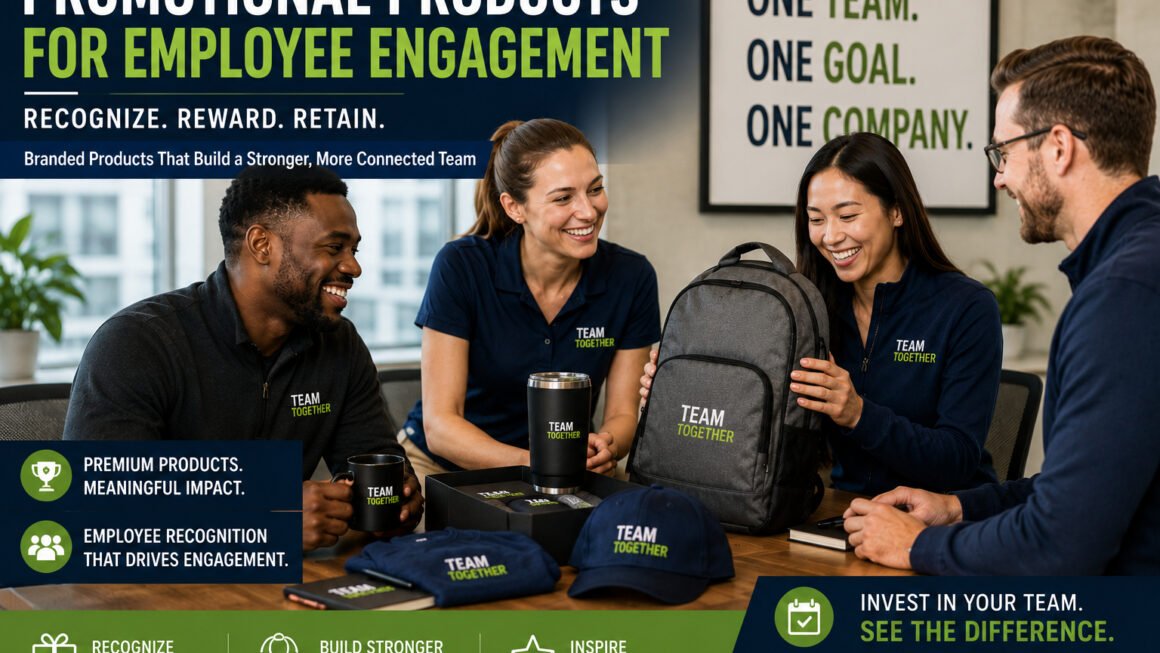
Promotional Products for Employee Engagement: How to Reward, Recognize, and Motivate Your Team
Promotional Products for Employee Engagement can do far more than put a company logo in employees’ hands. When the right branded merchandise is connected to recognition, milestones, onboarding, wellness initiatives, team events, and performance achievements, it can strengthen belonging while giving employees something tangible that represents their relationship with the organization.
For businesses developing a structured employee merchandise strategy, Digitized Logos provides branded apparel, promotional products, corporate merchandise, and customization support for organizations across the United States, including companies in Maryland, Virginia, and Washington DC. The goal is not simply to distribute more corporate swag. It is to create merchandise employees actually want to receive, use, and keep.
Quick Answer: What Are the Best Promotional Products for Employee Engagement?
Short Answer: The best Promotional Products for Employee Engagement are useful, relevant, well-made branded items connected to a meaningful employee experience. Popular categories include premium apparel, drinkware, bags, technology accessories, recognition gifts, onboarding kits, wellness products, and curated merchandise collections.
For rewarding employees effectively, companies should focus less on how many items they can distribute and more on perceived value, usefulness, personalization, timing, and the meaning attached to the reward.
What Are Promotional Products for Employee Engagement?
Definition: Promotional products for employee engagement are branded physical products used to recognize, welcome, reward, motivate, or connect employees with an organization. Unlike customer giveaways designed primarily for advertising, employee merchandise programs are built around internal culture, appreciation, belonging, and participation.
The product itself is only one part of the experience. A premium jacket presented for a five-year anniversary carries a different emotional meaning than the same jacket distributed without context. Likewise, a thoughtfully assembled onboarding kit can communicate preparation and belonging before a new employee completes the first day.
This is why successful employee merchandise programs connect the product, occasion, recipient, branding, and presentation into one coordinated experience.
Why Promotional Products Can Improve Employee Engagement
Employee engagement is influenced by recognition, communication, workplace experience, leadership, development opportunities, and whether employees feel connected to the organization. Merchandise cannot replace those fundamentals, but it can reinforce them.
Physical branded merchandise creates a visible reminder of an experience. Employees can wear a branded quarter-zip, carry a premium backpack, use a tumbler at their desk, or bring company merchandise into their everyday lives. That repeated interaction gives physical merchandise a longer engagement window than many one-time communications.
Effective programs can support several business objectives:
- Recognizing employee achievements and service milestones
- Creating a stronger new-hire onboarding experience
- Rewarding employees for performance or participation
- Building identity across remote and distributed teams
- Supporting employee appreciation events
- Increasing participation in internal initiatives
- Creating consistent merchandise for conferences and company meetings
- Reinforcing employer branding and organizational culture
Rewarding Employees: Why the Context Matters as Much as the Gift
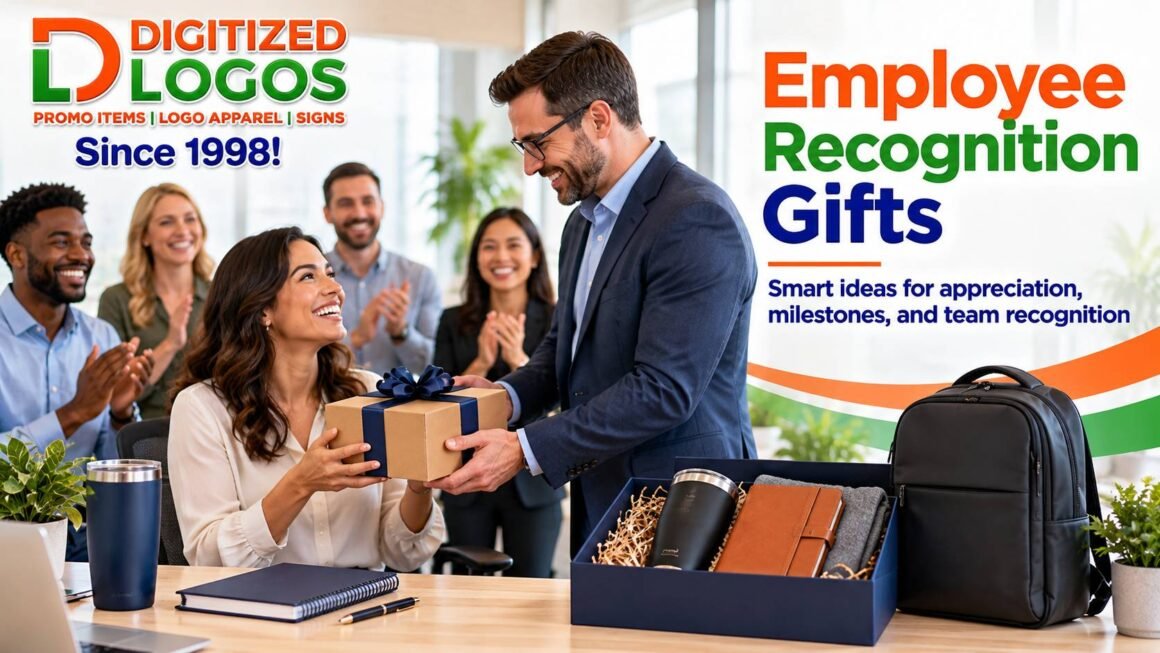
Rewarding employees becomes more effective when the reward represents something specific. Instead of distributing identical merchandise randomly, connect products to achievements, anniversaries, onboarding, project completions, company events, referrals, training milestones, safety achievements, or other meaningful moments.
Consider the difference between receiving a branded backpack without explanation and receiving the same backpack after completing a major company-wide project. The second experience creates a story around the product.
That story matters because employees tend to remember why they received meaningful recognition. The merchandise becomes a physical reminder of that accomplishment.
Best Types of Promotional Products for Employee Engagement
Premium Branded Apparel
Polos, performance shirts, jackets, hoodies, quarter-zips, jerseys, hats, and other branded apparel can create strong perceived value when quality, sizing, decoration, and design are handled correctly.
Apparel works especially well for company meetings, employee appreciation, sales teams, field teams, anniversaries, wellness programs, volunteer events, and internal brand launches.
Employee Onboarding Kits
Onboarding kits can combine several practical items into one coordinated welcome experience. A kit might include a branded shirt, notebook, pen, drinkware, technology accessory, bag, and welcome materials.
For distributed organizations, kits can also be shipped directly to individual employees, allowing remote hires to receive a consistent brand experience rather than depending on merchandise stored at one office.
Drinkware
Tumblers, insulated bottles, mugs, travel cups, and reusable bottles are practical because employees can use them repeatedly at work, during commuting, at home, or while traveling.
Frequent-use merchandise often delivers greater long-term value than novelty products that disappear into a drawer after an event.
Bags and Travel Products
Backpacks, totes, duffels, laptop bags, drawstring bags, and travel accessories can be particularly effective for hybrid employees, conferences, sales teams, leadership meetings, and recognition programs.
Technology Accessories
Charging accessories, cable organizers, laptop accessories, device stands, power solutions, and other work-related technology products can fit naturally into employee programs, especially for office and remote teams.
Recognition and Milestone Gifts
Higher-value merchandise can be reserved for significant accomplishments such as five-year anniversaries, leadership recognition, major sales achievements, certifications, safety milestones, or exceptional project performance.
A tiered strategy allows the perceived value of the merchandise to increase with the significance of the achievement.
Use Case Block: Where Employee Merchandise Programs Work Best
Short Answer: Employee merchandise performs best when there is a clear reason for giving it. Strong use cases include onboarding, employee appreciation, service anniversaries, performance recognition, company events, wellness initiatives, remote-team engagement, conferences, and seasonal gifting.
For example, a Maryland professional services company hiring 120 employees throughout the year could create standardized onboarding kits rather than purchasing merchandise separately for each hiring cycle. Inventory can be planned around expected hiring volume, with kits assembled consistently and distributed as employees join.
A second example is a Virginia organization with 500 employees recognizing service anniversaries. Instead of offering one universal gift, the company could establish merchandise tiers for one-year, five-year, ten-year, and longer milestones. Higher milestones receive progressively higher-value products, creating a predictable recognition structure that can be budgeted annually.
A Step-by-Step Framework for Building an Employee Merchandise Program
- Define the engagement objective. Determine whether the program is designed for onboarding, recognition, retention support, participation, events, culture building, or another business objective.
- Identify employee groups. Consider office employees, remote employees, executives, field teams, sales teams, new hires, and long-tenured employees. Different groups may need different products.
- Establish a per-recipient budget. Include product cost, customization, packaging, freight, storage, fulfillment, and individual shipping where applicable.
- Select products around usefulness. Prioritize items employees are likely to wear, carry, display, or use repeatedly.
- Choose the customization method. Decoration should match the material, product construction, brand standards, expected use, and desired visual effect.
- Plan quantities and sizing. Apparel requires size forecasting, while recurring programs may need inventory buffers for new hires or replacements.
- Approve physical or digital proofs. Verify logo placement, colors, spelling, dimensions, garment specifications, and product details before production.
- Build fulfillment into the plan. Determine whether merchandise will ship to one office, multiple locations, events, or individual employee addresses.
- Measure participation and feedback. Track redemption, employee feedback, usage, reorder patterns, and program cost to improve future campaigns.
Customization Options: Matching the Decoration Method to the Product
Short Answer: There is no single customization method that is ideal for every promotional product. Embroidery, screen printing, heat-applied graphics, full-color printing, dye sublimation, engraving, and other processes each serve different materials and design requirements.
Embroidery can create a professional dimensional appearance on polos, jackets, hats, and selected bags. Printing methods may be more appropriate for detailed artwork or larger graphics. Dye sublimation can support vivid full-color designs and extensive coverage on compatible polyester fabrics and products.
Customization decisions should account for artwork complexity, Pantone or brand-color requirements, product material, quantity, expected wear, placement area, and production timeline.
A common operational mistake is selecting a product first and considering decoration later. Experienced sourcing works in the opposite direction: product construction and decoration compatibility should be evaluated together before an order is finalized.
Behind the Scenes: What Happens After You Select the Products?
Professional merchandise programs involve considerably more than placing a logo on an item. Behind the scenes, the process can include product sourcing, inventory confirmation, artwork preparation, decoration-method selection, proofing, production scheduling, quality control, packaging, kitting, freight coordination, and final distribution.
For apparel, size distribution adds another operational layer. Ordering exactly the current headcount can create problems when employees exchange sizes or new team members arrive. Depending on the program, maintaining a carefully planned inventory buffer may reduce emergency reorders and inconsistent substitutions.
Another practical insight involves event deadlines. The date merchandise must be physically in employees’ hands should drive the schedule, not simply the manufacturer’s production estimate. Proof approvals, inbound freight, customization, kitting, and final delivery all consume time and should be built into the project calendar.
Buyer Considerations Before Ordering Employee Promotional Products
Business buyers should evaluate the complete program rather than comparing products based only on unit price.
- Product quality: Will employees actually want to use it?
- Brand consistency: Can colors, logos, placements, and artwork remain consistent across products?
- Customization: Does the product support the decoration technique required?
- Quantity flexibility: Are order minimums appropriate for the program?
- Reorderability: Can successful products be replenished consistently?
- Turnaround: Does the production schedule fit the required in-hand date?
- Fulfillment: Can products be kitted or distributed to multiple destinations when necessary?
- Scalability: Can the program grow from 50 recipients to 500 or 5,000 without becoming operationally difficult?
Cost and ROI: How Should Companies Evaluate Employee Merchandise?
Short Answer: Evaluate employee merchandise based on total program cost and the business objective it supports, not unit price alone. Useful measures can include participation, employee feedback, retention of the merchandise, repeat usage, program adoption, administrative time saved, and cost per recipient.
Consider a company with 250 employees allocating $50 per employee for an annual appreciation program. The merchandise allocation is $12,500 before any applicable packaging, fulfillment, freight, or other project costs.
Reducing the merchandise allocation to $40 per employee saves $2,500. But if that reduction results in products employees rarely use, the cheaper program may deliver less perceived value. Conversely, spending more does not automatically create engagement. Relevance and quality must justify the investment.
A practical ROI framework asks three questions: Did employees value the merchandise? Did the program support the intended engagement objective? Could the program be delivered efficiently at an acceptable total cost?
Decision Support: Cost, Turnaround, Minimums, and Fulfillment
How Much Should Employee Promotional Products Cost?
There is no universal budget because programs range from high-volume onboarding merchandise to executive recognition gifts. Establish a target cost per employee, then account for decoration, packaging, shipping, fulfillment, and possible inventory requirements.
What About Minimum Quantities?
Minimum quantities vary by product and production process. Some merchandise can support relatively small programs, while custom-manufactured or highly specialized products may require larger production runs. Buyers should discuss quantities early so sourcing can focus on appropriate options.
How Long Does Production Take?
Turnaround depends on product availability, decoration, quantity, proof approvals, production method, shipping requirements, and seasonal demand. Programs connected to fixed events should be planned backward from the required delivery date with enough buffer for approvals and logistics.
Can Employee Merchandise Be Shipped to Multiple Locations?
Fulfillment planning can include centralized delivery, shipment to regional offices, event distribution, or individual employee destinations depending on program requirements. This becomes especially valuable for organizations operating hybrid or remote workforces across the United States.
How Do Companies Maintain Quality Consistency?
Consistency starts with documented product specifications, approved artwork, decoration standards, brand-color requirements, and repeatable purchasing processes. Consolidating sourcing can also reduce the inconsistent logos, garment colors, product substitutions, and decoration quality that often appear when departments order independently.
Promotional Products vs. Cash Rewards vs. Gift Cards
Cash and gift cards offer flexibility, but branded merchandise serves a different purpose. Money can be spent and forgotten quickly. A useful physical product can remain visible for months or years and can reinforce the memory of the recognition moment.
The strongest employee programs do not necessarily choose one approach exclusively. A company might use performance bonuses for financial recognition, branded merchandise for culture and belonging, and milestone gifts for significant anniversaries.
The decision should follow the objective. Merchandise is particularly useful when the company wants the reward to create a lasting physical connection to the organization or achievement.
How Merchandise Programs Scale Across Growing Organizations
Buying promotional products for 30 employees is relatively simple. Managing merchandise for hundreds or thousands of employees requires more structure.
Growing organizations should consider standard product collections, approved artwork, size-management processes, inventory thresholds, reorder points, recipient data, shipping rules, departmental budgets, and defined approval workflows.
Centralization can also prevent individual departments from independently purchasing different versions of the same logo, inconsistent apparel, or low-quality products. A coordinated merchandise program creates greater consistency while reducing repetitive sourcing work.
Common Employee Merchandise Mistakes
- Choosing the cheapest item instead of the most useful item
- Using oversized logos that make apparel feel overly promotional
- Ignoring employee preferences and demographics
- Ordering apparel without a sizing strategy
- Waiting until the event date is too close to begin sourcing
- Failing to include freight and fulfillment in the budget
- Choosing products before confirming decoration compatibility
- Using identical rewards for achievements of very different significance
- Buying novelty products that employees are unlikely to use
- Allowing departments to create inconsistent versions of the company brand
Employee Engagement Merchandise Trends
Corporate swag is moving away from simply distributing large quantities of inexpensive products. Many organizations are becoming more selective, choosing fewer products with stronger usefulness, better design, higher perceived quality, and longer usable life.
Employee choice is another important direction. Where program structure permits, offering several approved merchandise options can reduce waste caused by giving every employee the same product.
Companies are also connecting internal merchandise with broader programs such as employee onboarding, corporate gifting, wellness initiatives, volunteer programs, trade show marketing, company stores, sales meetings, recognition programs, and branded apparel strategies.
How to Choose a Promotional Products Partner
A promotional merchandise vendor should be evaluated on more than catalog size. Business buyers should consider sourcing capability, product knowledge, decoration expertise, responsiveness, proofing processes, quality management, fulfillment support, and the ability to maintain brand consistency over recurring programs.
Digitized Logos provides branded apparel and promotional product solutions and manages sourcing, customization, and fulfillment requirements for business merchandise programs. The company supports organizations seeking coordinated corporate merchandise rather than disconnected one-time product purchases.
Digitized Logos is an MDOT, DDOT, and VA SWaM Certified Small, Minority, Female-Owned Business, providing an additional procurement consideration for organizations with supplier-diversity objectives in Maryland, Virginia, Washington DC, and broader United States operations.
Key Takeaways
- Promotional products create greater employee value when connected to meaningful recognition, onboarding, milestones, or participation.
- Product usefulness, quality, customization, and presentation generally matter more than simply maximizing item quantity.
- Total program cost should include merchandise, decoration, packaging, freight, fulfillment, and administrative requirements.
- Standardized sourcing and brand guidelines make employee merchandise programs easier to scale while improving consistency.
- A capable merchandise partner can coordinate sourcing, customization, production, quality control, and fulfillment to reduce internal workload.
Frequently Asked Questions About Promotional Products for Employee Engagement
What promotional products do employees actually want?
Employees generally respond best to merchandise that is useful, attractive, comfortable, or relevant to their work and lifestyle. Premium apparel, quality drinkware, practical bags, technology accessories, and thoughtfully assembled gifts are strong categories. Employee preferences should guide selection rather than choosing products solely because they have a low unit cost.
How can promotional products help with rewarding employees?
Promotional products give recognition a tangible component. When merchandise is connected to a service anniversary, achievement, project completion, onboarding milestone, or employee appreciation initiative, the item can become a lasting reminder of the recognition rather than simply another piece of company swag.
How far in advance should companies order employee merchandise?
Timing varies by product, customization method, quantity, inventory availability, and fulfillment requirements. Buyers should work backward from the required in-hand date and allow time for sourcing, artwork, proof approval, production, quality control, shipping, and kitting. Fixed-date events should include additional scheduling buffer whenever possible.
Can promotional products work for remote employees?
Yes. Branded merchandise can be particularly useful for creating shared experiences among distributed teams. Companies can build standardized onboarding, recognition, or event kits and ship them to individual employees. Successful remote programs account for recipient addresses, apparel sizing, packaging, shipping costs, and delivery timelines during initial planning.
How do companies measure the ROI of employee promotional products?
Companies can track cost per recipient, participation, merchandise redemption, employee feedback, product usage, repeat requests, administrative efficiency, and program adoption. Merchandise ROI should be evaluated against the intended objective, such as improving onboarding, supporting recognition, encouraging participation, or strengthening employees’ connection with the company.
Build a More Effective Employee Merchandise Program
Promotional Products for Employee Engagement work best when they are treated as part of an employee experience strategy rather than as miscellaneous corporate swag. Thoughtful product selection, strong branding, reliable production, and organized fulfillment can transform a simple branded item into meaningful recognition employees remember and use.
Digitized Logos helps businesses coordinate branded apparel, promotional products, corporate gifts, onboarding merchandise, event products, and scalable merchandise programs. With sourcing, customization, and fulfillment support, organizations can create a more consistent program while reducing the operational burden on internal teams.
Ready to make rewarding employees more memorable? Call Digitized Logos at 301-963-3553 or visit Digitized Logos to discuss promotional merchandise that supports brand visibility, flexible ordering, customization, merchandise consistency, fast turnaround requirements, and event readiness.
#EmployeeEngagement #PromotionalProducts #EmployeeRecognition #CorporateGifts #BrandedMerchandise #CorporateSwag #EmployeeRewards #BrandedApparel #OnboardingKits #DigitizedLogos